Gold’s relentless rally is becoming less a trade on falling real yields and more a vote of no confidence in the financial system that has underpinned reserve management for decades.
Gold Rally Driven by Reserve Diversification

That is the central message behind the latest surge in bullion and the rush to digitize the market around it. Gold-backed exchange-traded funds are again attracting attention, bullion prices remain near record territory, and the metal is drawing support from central banks that are steadily lifting allocations as they hedge against fiscal and geopolitical risk.
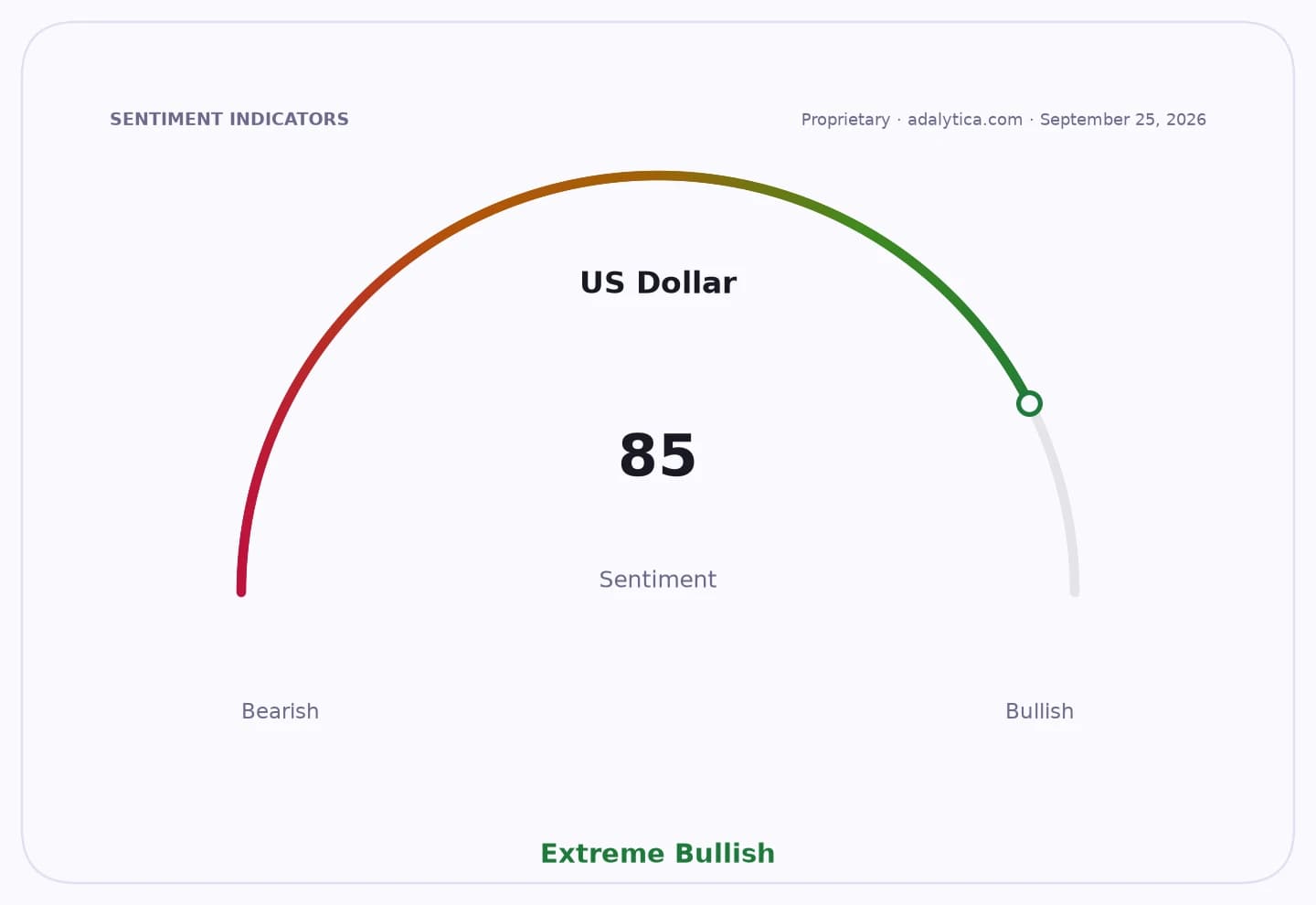
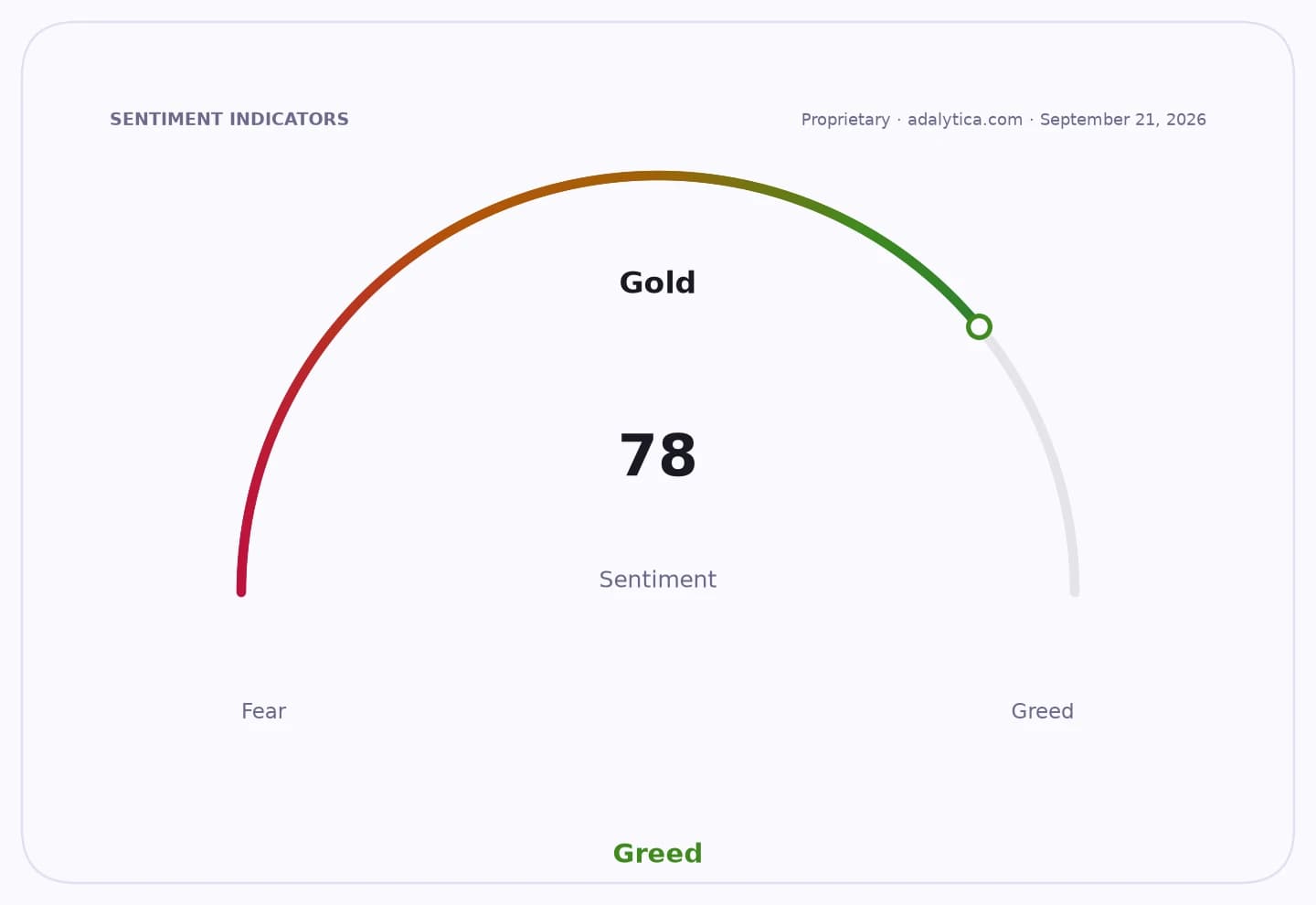
Sentiment IndicatorsⓘProprietary · adalytica.com · September 6, 2026
This is a snapshot — live sentiment, awareness and momentum for 130+ markets update continuously in the dashboard.Open AlphaPulse

The shift matters because it speaks to a deeper change in how investors and official reserve managers think about safety. In the old framework, higher US real yields usually meant lower gold prices. That relationship has broken down. UBS strategist Bhanu Baweja argues the turning point came in February 2022, when Western governments froze Russia’s foreign reserves. The message to reserve holders was stark: sovereign bonds may be liquid, but they are not always reachable.
For central banks, particularly in emerging markets, that has made gold look less like a relic and more like a neutral reserve asset. UBS says gold’s share of reserves at emerging-market central banks and sovereign wealth funds has risen to 11% from 5%-7% in 2022, still below the 26% share in developed economies. That gap suggests the buying cycle may have further to run. Baweja also notes that gold has kept advancing even as US real yields stayed elevated, with the metal up 7% from March 2022 to October 2023 while five-year real yields rose more than four percentage points — a move that would once have crushed prices.

The macro backdrop reinforces that thesis. US public debt stands at about $32 trillion, and deficits remain wide even with the economy at or near full employment. That has sharpened fears of fiscal dominance, in which monetary policy is eventually pulled toward the financing needs of the state. Similar pressures are familiar in Japan and increasingly visible in other heavily indebted economies. In that environment, gold’s appeal is straightforward: it is no one’s liability.
Investors have already been voting on that logic. The SPDR Gold Shares ETF, one of the biggest bullion proxies, has tracked a sharp rerating in the metal this year, even after recent volatility. Standard technical indicators for GLD show the fund trading near its 50-day moving average, while momentum has cooled from earlier overbought readings, suggesting the market is digesting a very strong move rather than abandoning it. Futures have followed the same pattern, with gold holding well above levels that prevailed earlier in the year.
The story is not only about price, though. It is also about market structure. London still dominates global gold trading, accounting for about 70% of turnover by World Gold Council estimates, but regulators are now trying to write rules for tokenized gold — digital claims linked to physical bullion stored by the issuer. That is more than a fintech experiment. Tokenization could make gold easier to use as collateral, improve market plumbing and preserve London’s role as a wholesale hub as trading migrates toward more digitized venues.
That is why the United Kingdom’s regulatory push matters. The Financial Conduct Authority sits in a grey area: it does not regulate physical gold trading, but it does oversee derivatives and listed products tied to bullion. Tokenized gold could fall somewhere in between, especially if it begins to circulate as collateral in wholesale markets. Chris Woolard, the UK official overseeing wholesale digital markets, has said faster digitization could add as much as 33 billion pounds to the economy. HSBC says its own tokenized gold product in Hong Kong has already generated more than $2.2 billion in trading volume, suggesting there is real demand beyond the rhetoric.
For investors, the bull case is that gold is no longer just an inflation hedge or a response to falling rates; it is a structural hedge against reserve fragmentation, fiscal strain and geopolitical coercion. The bear case is that much of that fear is already in the price, and that a stronger dollar or a sustained rise in real yields could still trigger sharp pullbacks.
| Entity | Gains | Losses |
|---|---|---|
| Gold bulls | ▲Reserve hedge demand | ▼Near-term price pullbacks |
| Central banks | ▲Sanctions-proof reserves | ▼Reliance on sovereign debt |
| London bullion market | ▲Tokenization leadership | ▼Share to rival hubs |
| US Treasuries | ▲— | ▼Safe-haven credibility |