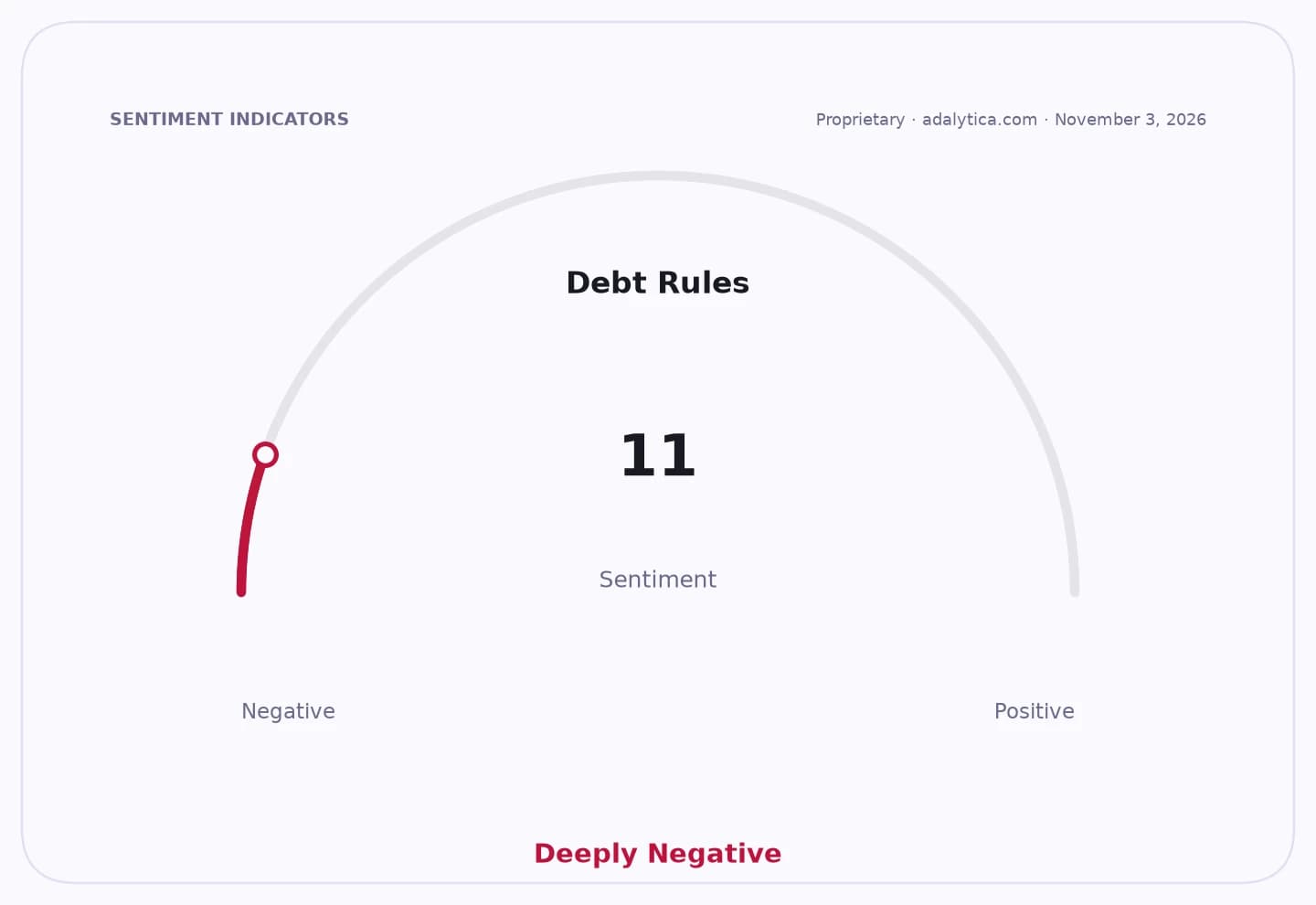
Greece is moving to lock in a 3% fixed rate for eligible borrowers in its out-of-court debt workout system and to lift maximum penalties on debt servicers to 5 million euros, a sharper regulatory turn that could ease household repayment burdens while raising the cost of misconduct in a market still scarred by non-performing loans.
Greece sets 3% fixed rate for debt workouts

The measures matter because they change both the price of debt relief and the enforcement backdrop for one of the country’s most sensitive financial issues: private debt. For vulnerable and eligible borrowers, including parts of the middle class, the new rule would eliminate the step-up that currently pushes interest higher after the first three years of a restructuring and leaves repayments exposed to Euribor. That makes monthly instalments more predictable and lowers the risk that restructured loans become unaffordable just as households begin to stabilize.
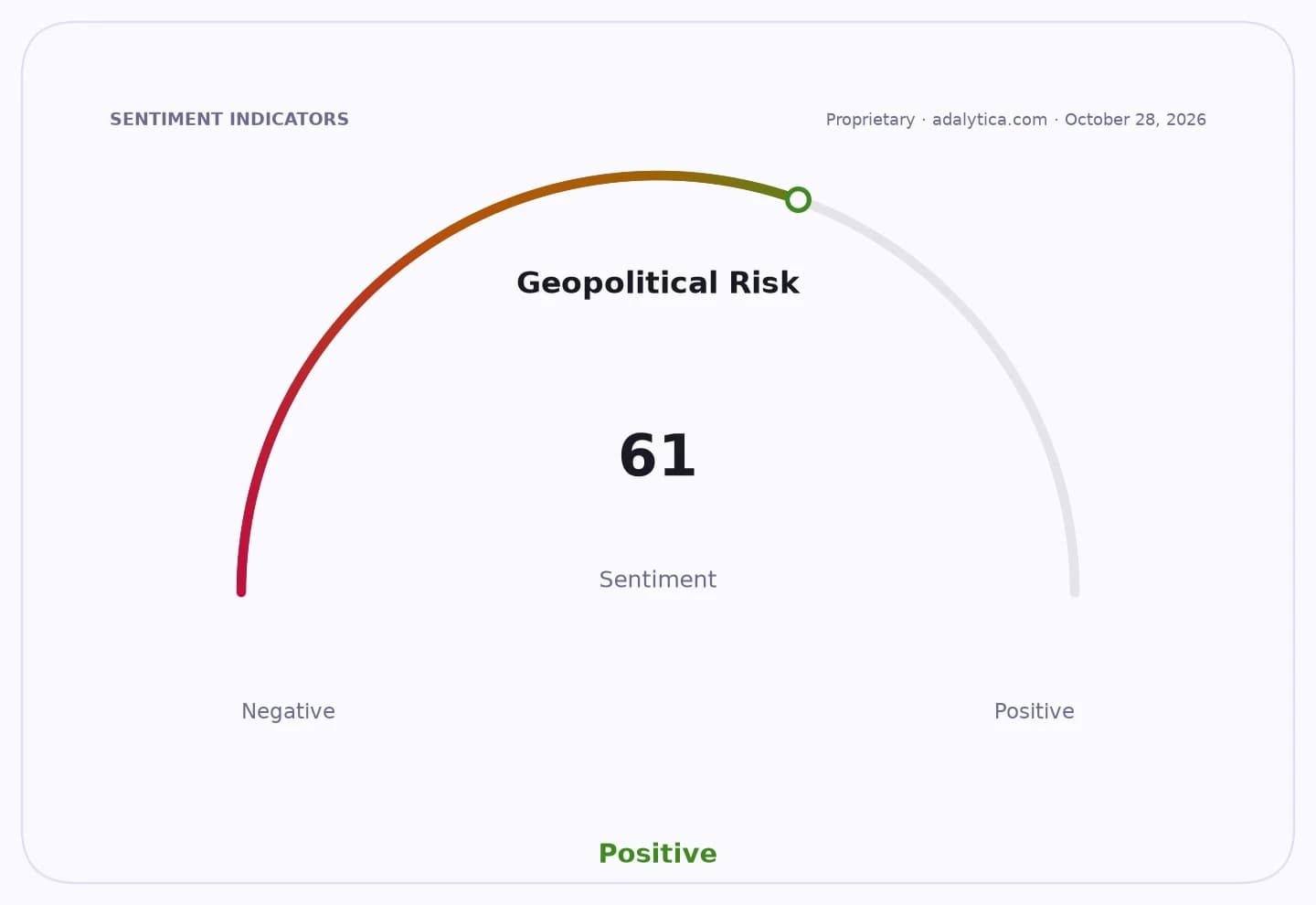
Sentiment Indicators
Under the current framework, the out-of-court mechanism applies 3% for the first three years on secured debt and 4% on unsecured debt, before switching to floating rates tied to three-month Euribor plus 2.5 to 3 percentage points. Based on the 2.67% Euribor cited in the proposal, that would leave post-year-three rates near 5.17% for secured loans and 5.67% for unsecured ones. The new regime would hold the rate at 3% for the full life of the restructuring, regardless of collateral or lender type, and make that term mandatory in the contract.
The difference is material for borrower cash flow. On a 100,000-euro debt over 20 years, the ministry’s examples show a monthly payment of 554.60 euros under the new plan. Under the existing system, the payment would rise to 653.50 euros after the third year on secured debt and 685.56 euros on unsecured debt. Over the full term, the borrower savings are estimated at about 20,200 euros and 28,600 euros respectively. That could increase take-up of restructurings, reduce defaults and improve recovery prospects for lenders if more debtors stay current.
The tougher line on servicers carries a different economic message. The Bank of Greece would be able to fine debt management companies up to 5 million euros, up from 500,000 euros, in cases ranging from poor complaints handling and weak governance to unlawful outsourcing and improper treatment of borrowers. The increase suggests policymakers want a stronger deterrent against aggressive collection practices at a time when debt workouts are central to household balance-sheet repair.
For investors, the proposal has a dual impact. Banks and credit buyers could benefit if lower, fixed repayment costs translate into more successful restructurings and fewer legal or collection disputes. But the tighter rules also reduce pricing flexibility and could compress returns on distressed consumer portfolios, particularly if servicers face a much higher compliance burden and larger downside from errors. That is especially relevant for firms with heavy exposure to Greek private debt and for investors who have counted on floating-rate step-ups to offset credit risk.
The broader significance is that Athens is prioritizing social stability and debt resolution over margin preservation in a sector that remains politically sensitive. The new rules would not erase the underlying debt overhang, but they would shift leverage toward borrowers and regulators. Whether that improves long-term recoveries or simply delays recognition of losses will depend on how aggressively the mechanism is used once the changes take effect on Dec. 1, 2026.
| Entity | Gains | Losses |
|---|---|---|
| Borrowers | ▲Lower, fixed repayments | ▼Less flexibility for lenders |
| Servicers | ▲Clearer rules | ▼Higher fines and scrutiny |
| Banks / credit buyers | ▲More restructurings completed | ▼Lower yield on restructured debt |
| Greek households | ▲Greater payment predictability | ▼Fewer rate pass-through benefits |