Turkey’s corporate debt restructuring wave is gathering speed as companies squeezed by tight financing conditions rush to renegotiate bank loans, with 108 firms entering the formal process in the first nine months and 52 closing deals on 32.66 billion lira of debt, according to the Turkish Banks Association.
Turkey corporate debt restructurings accelerate in 2026
The pace matters because restructuring is increasingly becoming a pressure valve for companies struggling to roll over liabilities in an environment of weak liquidity, higher funding costs and a more fragile bond market. A growing queue of borrowers also signals stress in sectors that depend heavily on bank credit to fund working capital and capex, particularly manufacturing, retail-linked businesses and capital-intensive industries such as energy and leasing.
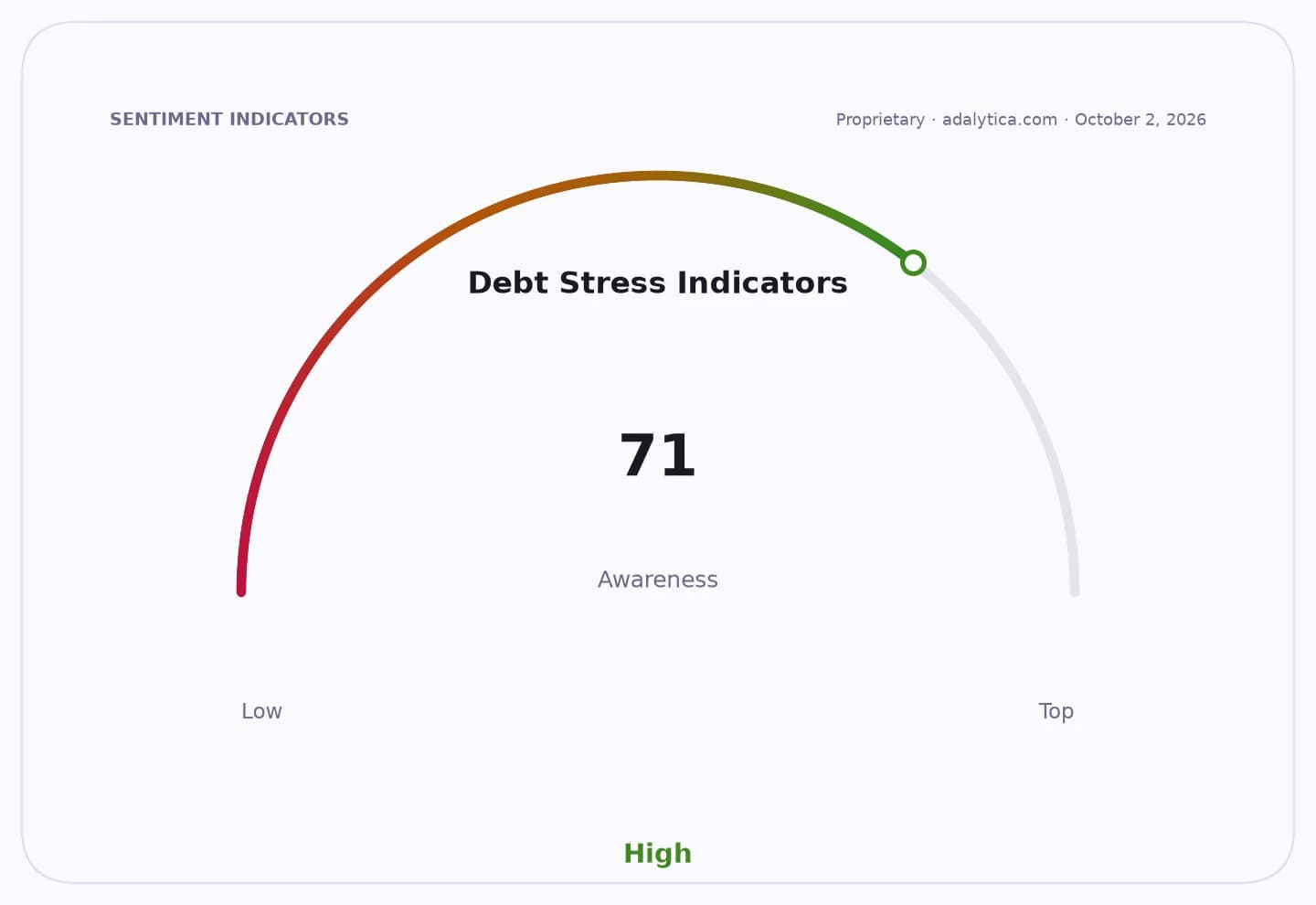
Sentiment Indicators
Fresh cases show the trend is broadening beyond one-off problem names. Kale Seramik filed for financial restructuring, while Vestel, Borlease and Anel Elektrik are still in talks; Zorlu Enerji has asked Eurobond holders to delay a $60.5 million interest payment due Oct. 23 to April 2027. Borlease said lenders in principle approved the framework, but no binding deal has been signed, underscoring how drawn-out these negotiations can be.
The numbers point to a clear acceleration. September alone accounted for 7.15 billion lira of agreed restructuring, the second-highest monthly total this year, while 11 companies completed agreements in the month. The biggest deal of 2026 remains March, when eight firms wrapped up 13 billion lira of debt agreements.
Kale Seramik’s request quickly fed through to credit markets: JCR Eurasia cut the company’s rating to BB+ from BBB+, citing the restructuring application and higher bank borrowing, even as it kept the outlook stable. For investors, that illustrates the immediate cost of restructuring for issuers — lower ratings, tighter refinancing access and a likely reset in terms for equity holders and bond investors.
The broader backdrop is still supportive of caution. The high-yield spread has remained elevated, 10-year US Treasury yields are near 4.9%, and Turkish borrowers are dealing with the spillover from a tightening domestic liquidity environment. Market participants are watching whether the recent uptick in restructuring spreads from corporate loans into bonds and Eurobonds, which could widen the pool of stressed names if financing conditions do not improve.
For banks, the wave creates a trade-off: restructuring can preserve recoveries and keep borrowers alive, but it also delays recognition of stress and can tie up capital in weak credits. For creditors and shareholders, the next catalyst is whether talks at Vestel, Borlease, Anel Elektrik and Zorlu Enerji turn into signed deals or drag on into more painful terms.
| Entity | Gains | Losses |
|---|---|---|
| Borrowing companies | ▲More time to service debt | ▼Dilution, higher costs |
| Banks | ▲Better chance of recovery | ▼Capital tied up longer |
| Bondholders | ▲Potential negotiated payout | ▼Payment delays, haircuts |
| Shareholders | ▲Avoids immediate default | ▼Lower valuations, rating cuts |