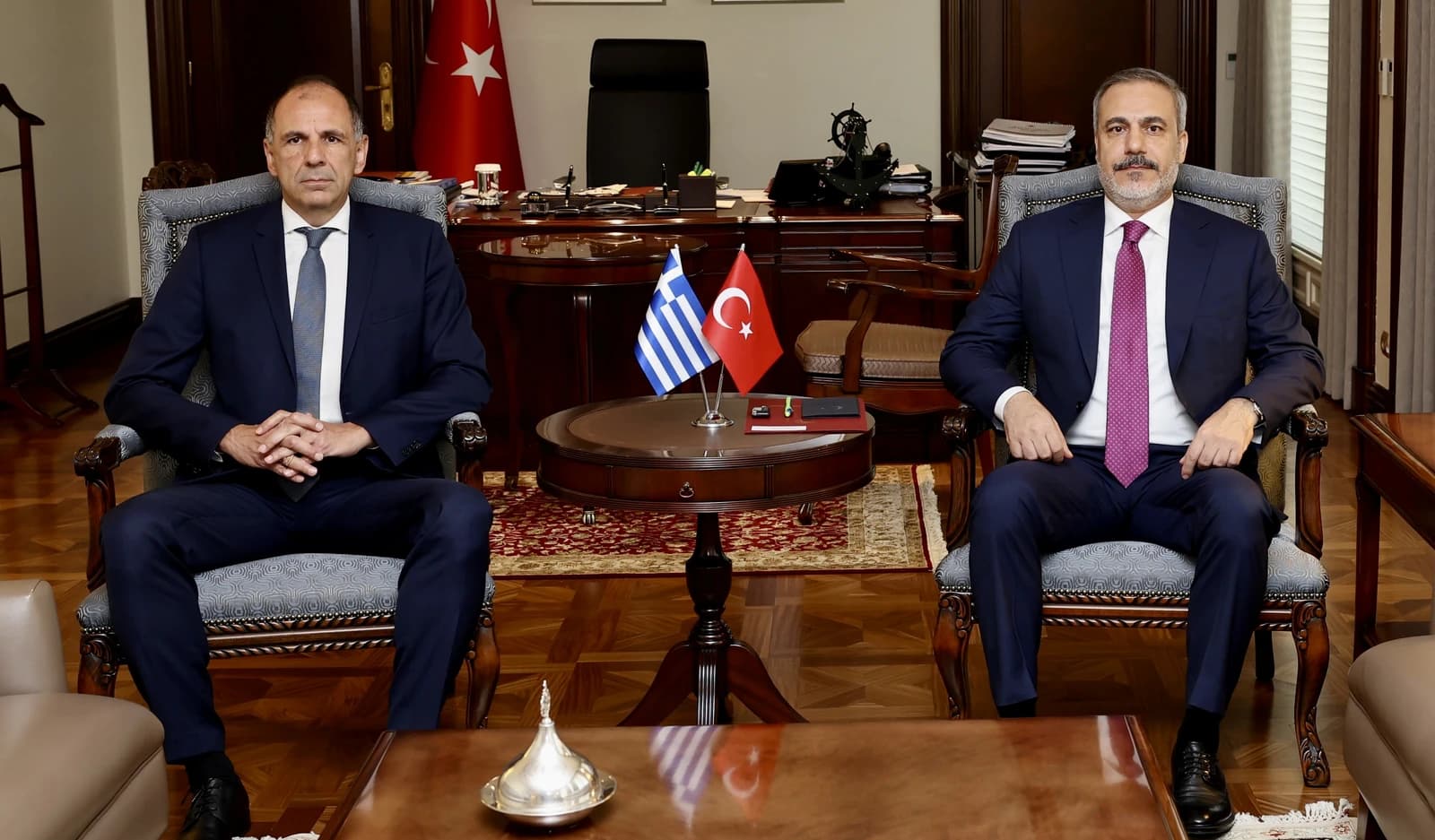
Greece’s political risk in the Aegean remains contained for now, even as Prime Minister Kyriakos Mitsotakis says there is no imminent meeting with Turkish President Recep Tayyip Erdogan and frames the latest tensions as little more than a “slight ripple” in the waters.
Greece Keeps Aegean Tensions Contained
That matters because the line comes as Athens is trying to reassure investors that border frictions with Turkey will not derail a broader strategic push centered on defense spending, energy links and connectivity projects backed by Washington and Brussels.
Mitsotakis used a radio interview to stress that Greece’s relationship with the United States has been strengthened by Secretary of State Marco Rubio’s rare visit to Athens, which he said underscored Greece’s role as an “indispensable strategic partner” in the eastern Mediterranean. He said the visit reinforced cooperation not just on security and diplomacy but also on energy, connectivity and investment.
For investors, the significance is twofold. First, Greece is signaling continuity in defense procurement and allied alignment at a time when regional volatility can quickly spill into shipping, energy and infrastructure risk premiums. Second, the government is trying to position the country as a hub in the India-Middle East-Europe Corridor, with Mitsotakis again highlighting power interconnectors and other cable projects as strategic assets rather than isolated national schemes.
The prime minister also sought to separate Greece’s ties with Israel from the current Israeli government, saying the relationship is with the state of Israel and delivers direct benefits, including access to advanced technology for the planned “Achilles Shield” air-defense system. He said Greece’s security buildup, including F-35 purchases, F-16 upgrades and the Belharra frigate program, reflects a deliberate choice to preserve a qualitative military edge.
That defense push is not cost-free. Mitsotakis said Greece is spending about 3.5% of GDP on defense while still running primary surpluses, arguing that security has to remain the country’s top priority even if that means fewer resources for other uses such as energy support.
The Aegean calm he described may be temporary. Turkey-Greece tensions remain a recurring market and diplomatic risk, and the lack of a planned Erdogan meeting suggests the two sides are not yet moving toward a reset. For now, the message from Athens is that the weather in the Aegean may be choppy, but the strategic course remains unchanged.
| Entity | Gains | Losses |
|---|---|---|
| Greece | ▲U.S. backing, defense credibility | ▼Budget flexibility |
| Turkey | ▲Limited room to escalate diplomatically | ▼Pressure on Aegean leverage |
| U.S. / EU allies | ▲Stronger eastern Mediterranean partner | ▼Higher regional security exposure |
| Defense contractors | ▲Orders for F-35s, F-16 upgrades, Belharra, air-defense systems | ▼Pricing pressure from procurement scrutiny |