A widening backlash over U.S. envoy Tom Barrack’s pro-Turkey posture is putting Washington’s Eastern Mediterranean strategy under a harsher spotlight and raising the political cost of any move to loosen pressure on Ankara over F-35s and Russian S-400 sanctions.
Turkey Policy Debate Hits East Med Strategy
That matters because the balance the Trump administration is trying to strike — using Turkey as a regional counterweight while keeping allies such as Greece and Israel aligned — could reshape security architecture, arms flows and energy routes across one of the world’s most contested geopolitical corridors. If Barrack’s approach prevails, the market has to price a more permissive U.S. stance toward Turkey, even as critics warn it could deepen instability rather than contain it.
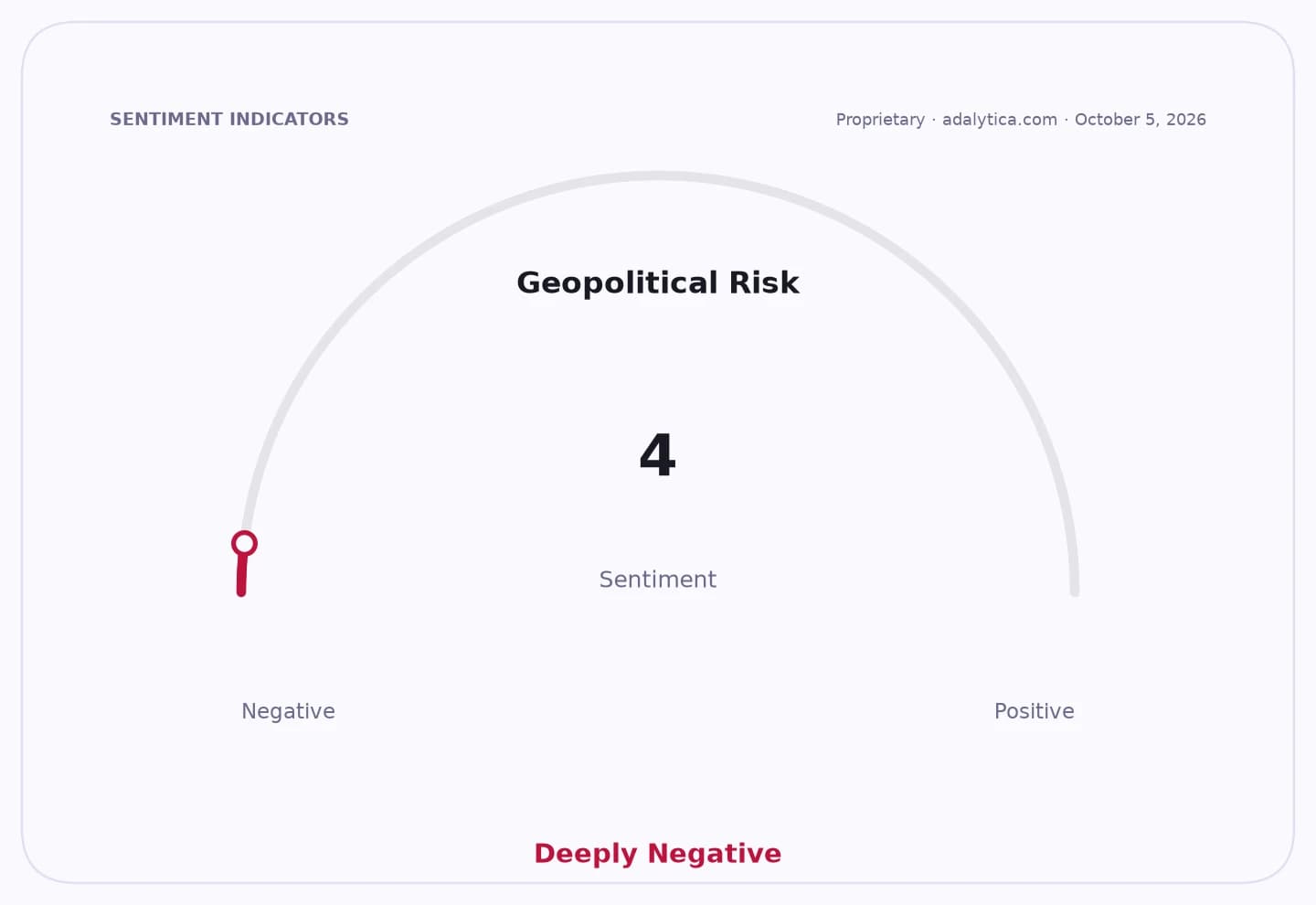
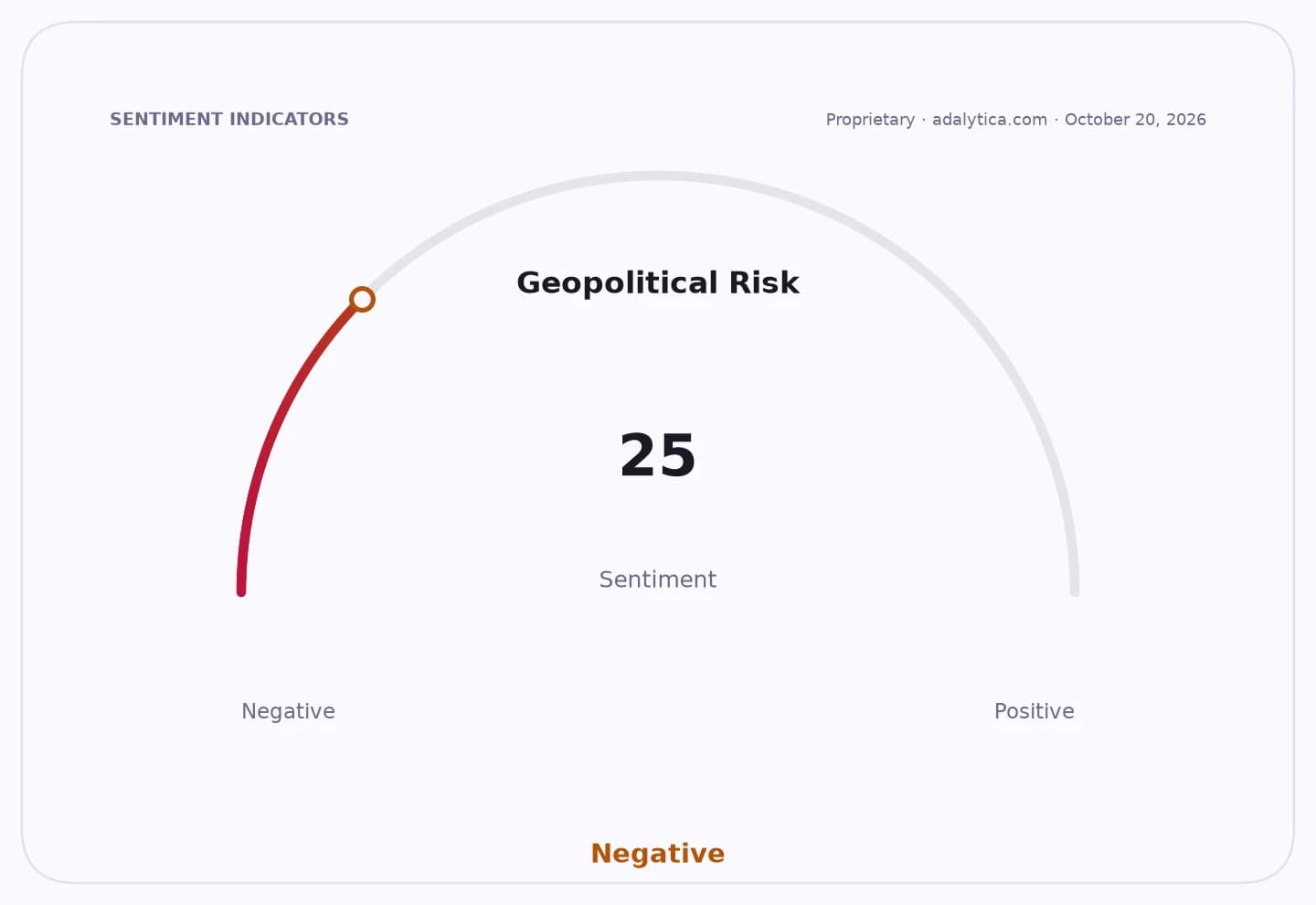
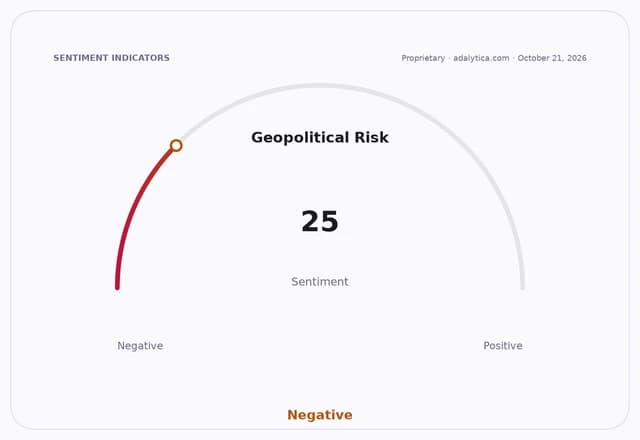
Sentiment IndicatorsⓘProprietary · adalytica.com · October 21, 2026
This is a snapshot — live sentiment, awareness and momentum for 130+ markets update continuously in the dashboard.Open AlphaPulse
Michael Rubin’s warning that Barrack could “tear down Trump’s legacy” reflects more than diplomatic infighting. It is an argument that Washington is repeating an old strategic error: backing a regional strongman in the hope of achieving balance, only to empower a more assertive actor with its own ideological agenda. In Rubin’s telling, Turkey is not a stabilizer but a force that could intensify friction from Syria to the Aegean.
For investors, the immediate implication is not abstract geopolitics. It is risk pricing across defense, energy and currencies. A more Turkey-friendly U.S. posture could lower the odds of hard constraints on Ankara, support talk of restored defense ties and eventually reopen the path to F-35 cooperation. That would be a negative for Greece-focused hedges and a positive for Turkish strategic optionality. Turkey’s U.S.-listed ETF, the iShares MSCI Turkey ETF, has already been trading with stark volatility, while Greece’s EWG has lagged on the back of persistent regional uncertainty.
The underlying tension is also spilling into energy. Reuters has reported Barrack’s role in promoting a 15 billion dollar plan to restore the Kirkuk-Baniyas oil pipeline, a project that fits the broader U.S. push for regional energy connectivity. That makes the issue bigger than a bilateral squabble: Washington is effectively choosing between competing visions of East Mediterranean order, with implications for trade routes, reconstruction capital and sanctions enforcement.
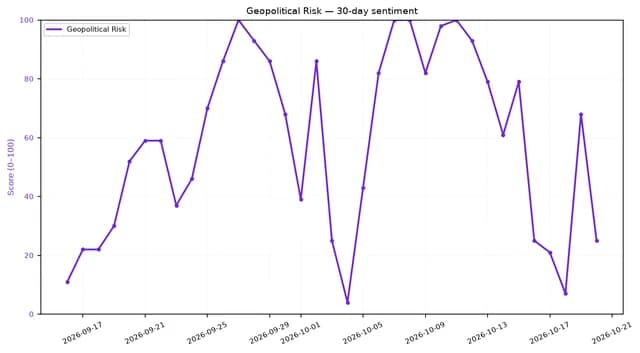
The market should not ignore the second-order effects. Geopolitical stress is feeding demand for hard assets and defense exposure, while U.S. Treasury yields and oil prices reflect a world in which conflict premiums can reappear quickly. The 10-year yield has held near 5.1%, oil has pushed back above 100 dollars in recent trading, and Treasury buyers have been cautious as geopolitical fear metrics from Adalytica show extreme stress in global stability and FX volatility.
That is why this story matters now. If the White House leans further toward Turkey, the winners are Ankara-linked assets, energy intermediaries and U.S. defense contractors that benefit from higher regional spending. The losers are Greek and Cypriot strategic positions, and any investor betting on a clean de-escalation in the Eastern Mediterranean. My view is that the market underestimates how quickly this dispute can turn into a portfolio issue, not just a diplomatic one.
For now, the actionable takeaway is clear: stay positioned for higher geopolitical volatility, prefer defense and energy exposure over complacent Europe-periphery trades, and treat any thaw in U.S.-Turkey relations as a catalyst — not a guarantee — for renewed fragmentation in the Eastern Mediterranean.
| Entity | Gains | Losses |
|---|---|---|
| Turkey | ▲Defense leverage | ▼Sanctions pressure |
| Greece | ▲Diplomatic backing | ▼Regional bargaining power |
| U.S. defense contractors | ▲Higher security demand | ▼Policy uncertainty |
| East Med energy projects | ▲Connectivity momentum | ▼Stability premium |