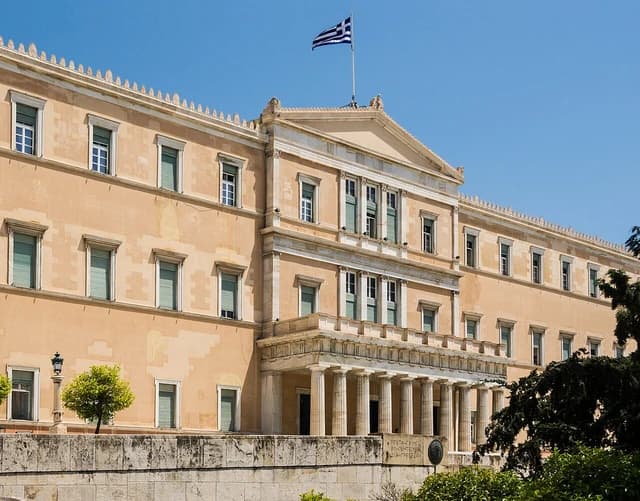
Marco Rubio’s visit to Athens comes as the Eastern Mediterranean is turning from a diplomatic backwater into one of the most important pressure points in global security, energy and capital flows. For investors, that matters because the region’s disputes are no longer just about flags and borders; they are increasingly about infrastructure, LNG, defense spending, undersea cables and the leverage that comes with controlling chokepoints between Europe, the Middle East and the Black Sea.
Greece Turkey Tensions Rise Over East Med Projects
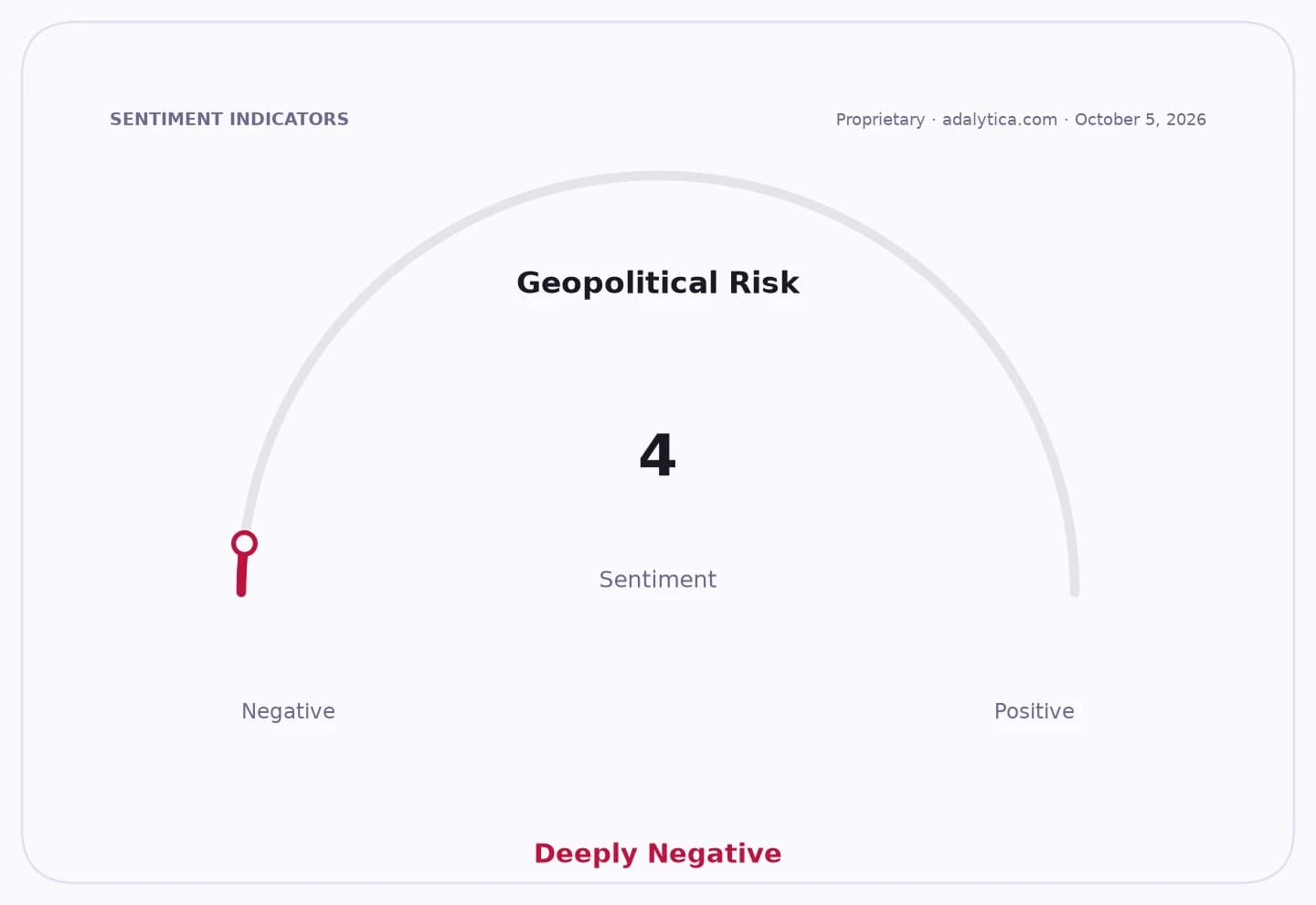
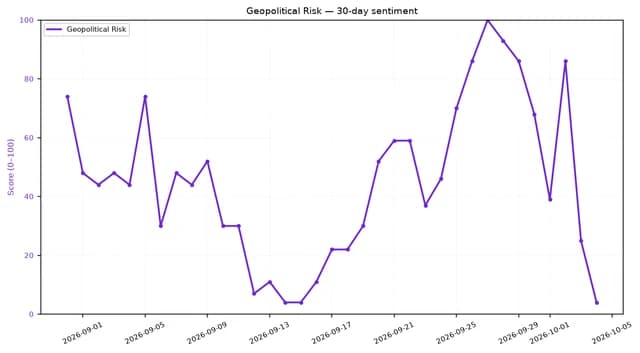
Greece is suddenly sitting on a strategic fault line. The sixth U.S.-Greece Strategic Dialogue is meant to cover defense, energy, the economy and regional security, but the real story is the widening contest with Turkey over the Aegean, Cyprus and maritime zones. After a period of relative calm, Ankara has revived its rhetoric on the demilitarization of Greek islands, a reminder that the “quiet waters” phase in Greek-Turkish relations may be ending just as Washington is trying to keep both NATO allies aligned.
Sentiment IndicatorsⓘProprietary · adalytica.com · October 5, 2026
This is a snapshot — live sentiment, awareness and momentum for 130+ markets update continuously in the dashboard.Open AlphaPulse
The most immediate flashpoint is the Great Sea Interconnector, the power cable linking Greece and Cyprus. What should be an energy project is becoming a test of sovereignty, international law and regional control. Reports that Nexans may notify Turkey around Oct. 26 about surveys — without that being treated by Athens or Paris as a request for permission — underscore how commercial infrastructure in the eastern Med is now inseparable from geopolitics. That is important because projects like this are the backbone of Europe’s long-term energy diversification strategy, and any delay or escalation raises risk premiums across the region.
Turkey is responding with its own parallel playbook, pushing a subsea gas pipeline toward the occupied north of Cyprus and using the Oruc Reis in related surveys. That creates two competing energy architectures: Greece-Cyprus-Europe through electricity, and Turkey-the occupied north through gas. The market implication is clear. The east Med is becoming a long-duration capital allocation story, with winners in grid links, cables, defense systems and LNG logistics, and losers among any party betting that territorial ambiguity can be preserved forever without cost.
Israel adds another layer. Greece’s deepening defense cooperation with Israel, including new air-defense and missile-protection systems, is sharpening Turkey’s discomfort and widening the strategic triangle. The market underestimates how much this matters for procurement cycles and industrial beneficiaries: as regional fear rises, defense modernization in Greece and Cyprus becomes more durable, not less. For investors, that points to sustained demand for air defense, surveillance, naval systems and critical-infrastructure security.
Libya remains the wildcard that keeps the whole chessboard unsettled. Turkey’s maritime memorandum with Libya still gives Ankara a legal and political lever in the Mediterranean, and Athens clearly sees the Libyan file as part of the same contest over sea lanes and exclusive economic zones. Add the wars and flashpoints in Gaza, Syria and Iran, and the result is a single security arc stretching from North Africa to the Levant. Greece is not at the edge of that arc; it is in the middle of it.
Rubio’s visit therefore matters far beyond a bilateral meeting. It is a signal that Washington sees southeastern Europe as a hinge zone between the Ukraine war, Europe’s energy reshaping and the broader Middle East security crisis. That is why the timing is so important: when almost every nearby front is active at once, even routine diplomacy can become market-moving.
The investment takeaway is straightforward. The market should treat Greece not as a peripheral European story but as a strategic platform for defense spending, energy interconnection, infrastructure resilience and allied capital deployment. In a world where geopolitics is increasingly priced through supply chains and cables rather than speeches, the eastern Mediterranean looks less like a risk to avoid and more like an asymmetric opportunity to own early.
| Entity | Gains | Losses |
|---|---|---|
| Greece | ▲Defense spending, strategic relevance | ▼Calm border assumptions |
| Turkey | ▲Leverage from ambiguity | ▼Diplomatic trust, risk premium |
| Cable and defense contractors | ▲Project demand, modernization spending | ▼Delay if tensions escalate |
| Cyprus and EU energy planners | ▲Diversification, grid security | ▼Higher geopolitical risk |