Greece has taken a concrete step toward building its own AI economy with the launch of Daedalus, a €58.9 million supercomputer that could become a catalyst for research, startups and industrial productivity.
Greece launches Daedalus AI supercomputer

That matters because in the AI race, computing power is not just an IT upgrade — it is productive capacity. Countries that can train models, run simulations and process sensitive data at home are better positioned to keep talent, attract investment and compete in sectors ranging from healthcare to energy and shipping.
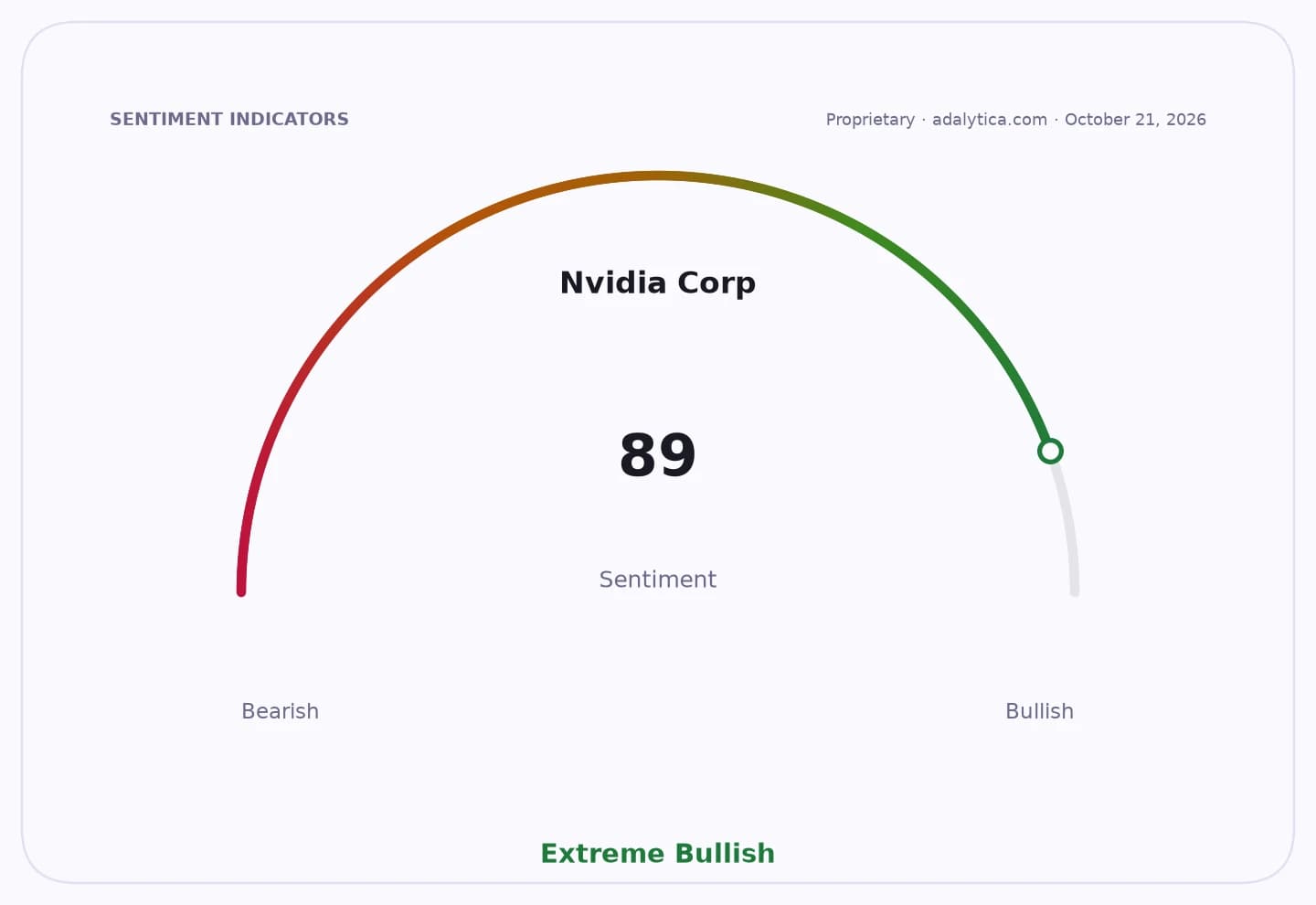
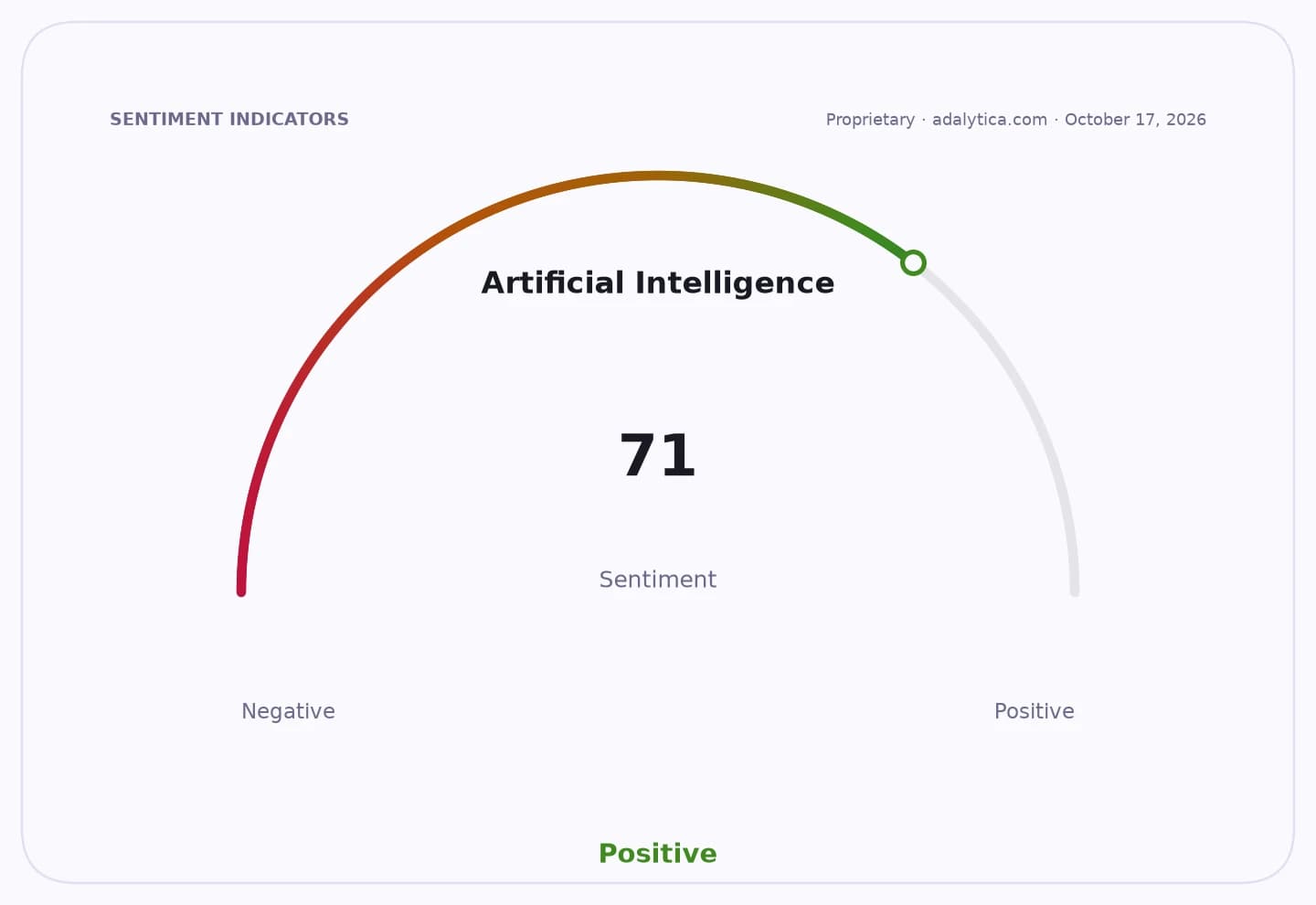
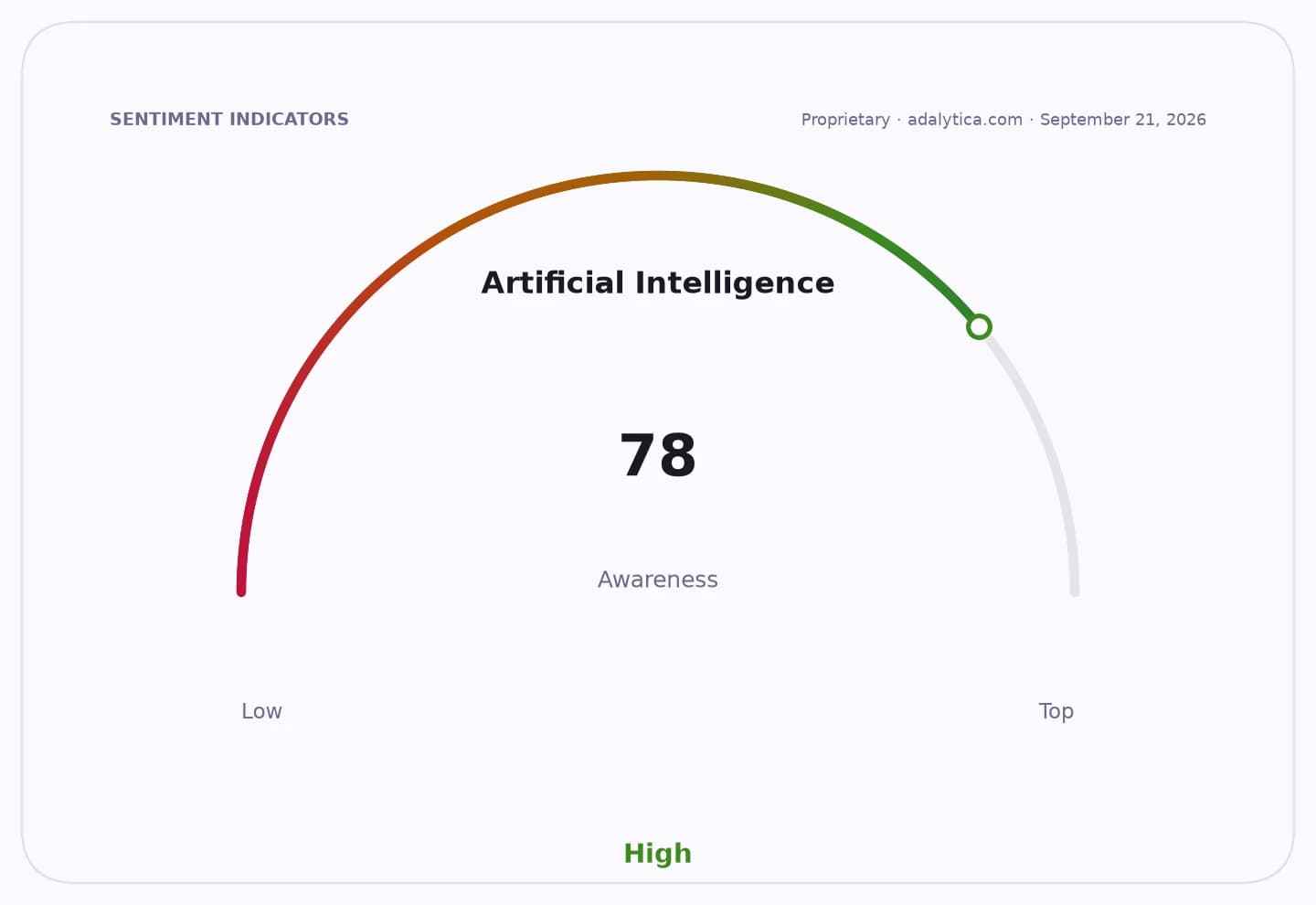
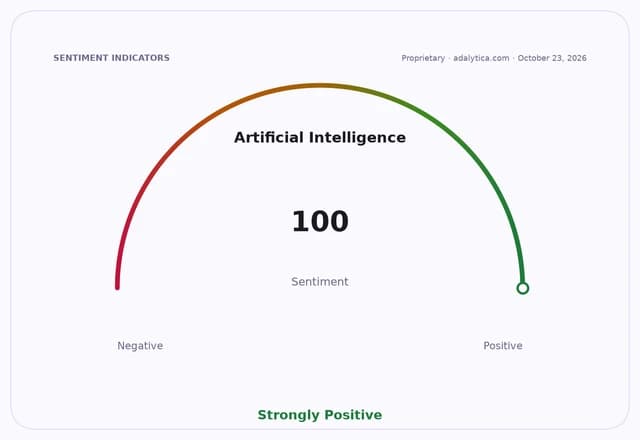
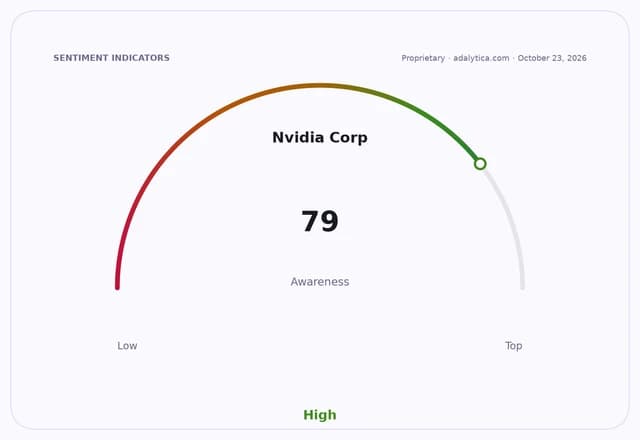
Sentiment IndicatorsⓘProprietary · adalytica.com · October 23, 2026
This is a snapshot — live sentiment, awareness and momentum for 130+ markets update continuously in the dashboard.Open AlphaPulse
Prime Minister Kyriakos Mitsotakis framed the project as part of Greece’s digital future, and the symbolism is hard to miss. Daedalus sits inside a new data center built at the former Lavrio Power Station, turning a landmark of industrial Greece into infrastructure for the data economy. For investors, that is the real story: a government trying to turn European recovery money into long-lived assets that can lift the country’s growth potential.
The project was delivered by GRNET with backing from Greece’s Recovery and Resilience Plan, NextGenerationEU and the EuroHPC Joint Undertaking. That funding mix is important because it shows Greece is not trying to build this alone. It is plugging into a wider European push to reduce dependence on foreign cloud and AI infrastructure, a strategic goal that matters as much in Brussels as it does in Athens.
Daedalus is not small-scale symbolism either. The system’s measured performance of about 85.69 petaflops puts it 31st in the latest TOP500 ranking, while its 23rd-place Green500 ranking suggests the machine has been built with energy efficiency in mind — a growing issue as AI workloads consume more electricity and hardware. In other words, Greece is buying capability, not just headlines.
For long-term investors, the key question is whether this infrastructure becomes a multiplier. If universities, research institutes and startups can access the machine cheaply and quickly, Daedalus could help generate new AI tools, better climate and energy models, and more advanced industrial applications. That would support productivity, which is the real engine of durable earnings growth in any economy.
There is also a broader market angle. The buildout of sovereign and regional AI infrastructure supports demand for semiconductors, networking gear, data-center systems and cloud-adjacent services. That is why names like Nvidia, Microsoft and AMD remain central to the AI capital-spending story, even if individual project economics differ from country to country. The wave of investment is still moving from ambition to infrastructure.
The risk, of course, is execution. Supercomputers do not create growth on their own. The payoff depends on access rules, skilled personnel, operating budgets and whether Greek institutions and companies can turn processing power into commercial products. If that link is weak, Daedalus becomes a prestige project. If it is strong, it could help Greece move from technology consumer to technology producer.
For investors, the takeaway is straightforward: Greece is signaling that AI infrastructure is now a national priority, and that is the kind of policy shift that can matter over years, not quarters. It is worth watching as a sign of where European digital investment is headed, and as a reminder that the next stage of the AI boom is about who can actually use the compute.
| Entity | Gains | Losses |
|---|---|---|
| Greek universities and startups | ▲Cheaper access to high-end compute | ▼Reliance on foreign infrastructure |
| Greece and the Mitsotakis government | ▲Digital credibility and growth capacity | ▼Risk of weak project execution |
| Nvidia, AMD, Microsoft and AI infrastructure suppliers | ▲More compute demand and ecosystem spending | ▼Less room if sovereign systems lag |
| External cloud providers | ▲Indirect demand from AI expansion | ▼Some local workloads shift home |