Greece’s plunge in real household income is the clearest warning yet that the country’s post-crisis recovery is not translating into broad-based purchasing power, and that gap now threatens growth, fiscal room and consumer demand across the economy.
Greece real household income fell 3.6% as GREK outperforms
The OECD’s 3.6% drop in real household income puts a hard number on what investors have been seeing in Greece for months: inflation and energy costs are still eating into wages faster than the recovery can repair them. That matters because household income is the backbone of domestic demand, and when it weakens, retailers, lenders and the broader services economy feel it quickly. It also raises the political stakes for Athens as it seeks more budget flexibility from the European Union to support energy resilience and defense spending without derailing growth.
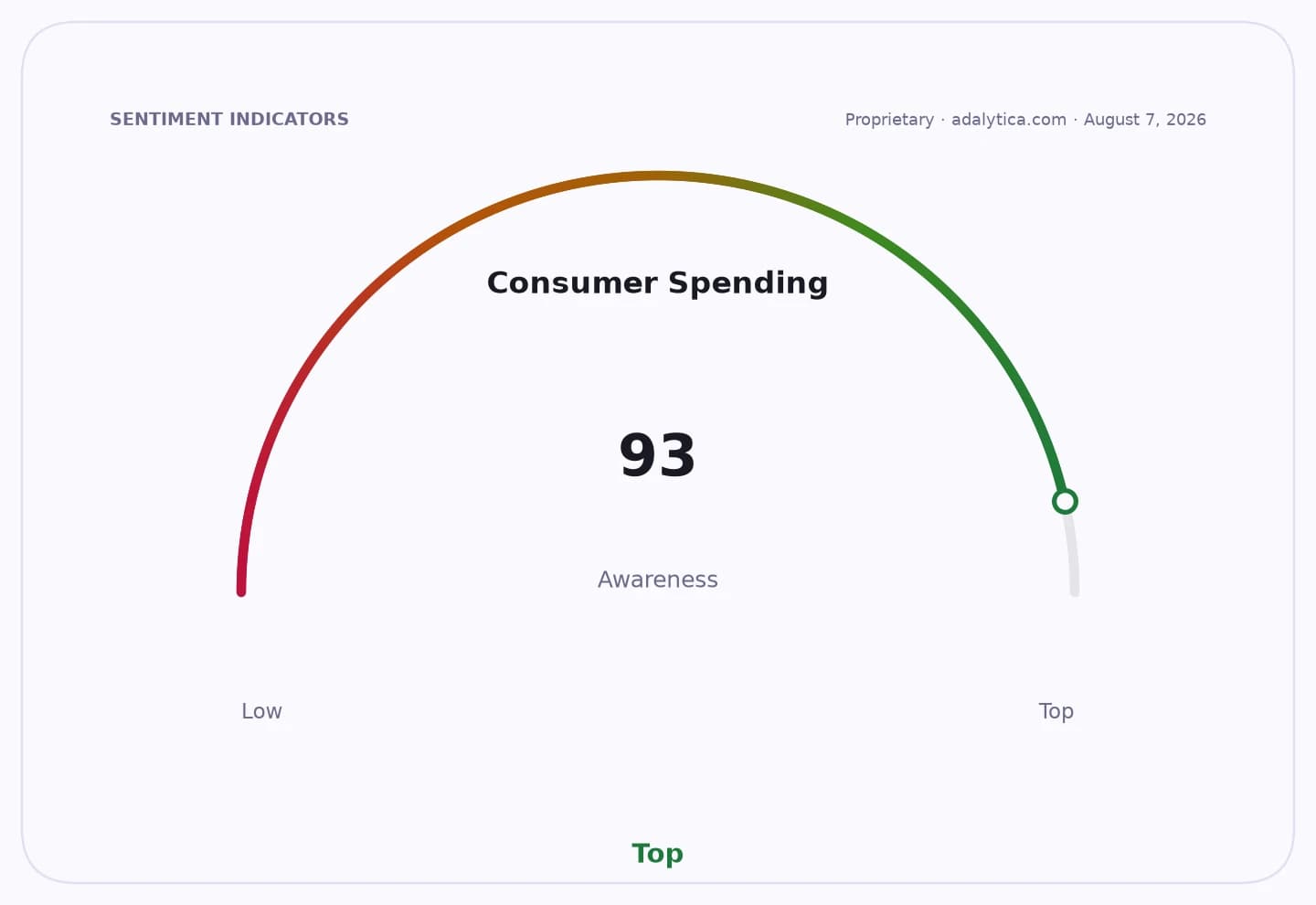
Sentiment IndicatorsⓘProprietary · adalytica.com · August 7, 2026
This is a snapshot — live sentiment, awareness and momentum for 130+ markets update continuously in the dashboard.Open AlphaPulse
For markets, the message is more nuanced. Greece has been one of Europe’s stronger rebound stories, and that has helped the country’s benchmark stock ETF, the GREK, outperform on a technical basis, with the fund trading well above both its 50-day and 200-day moving averages. But the income data suggests the rally still rests on a fragile consumer foundation. The market can price in growth and reform, but it cannot ignore a household sector that is losing real spending power.
That makes the EU escape-clause request more than a bureaucratic footnote. Athens is asking for more than 3.4 billion euros of fiscal flexibility through 2028, with more than 1 billion euros aimed at energy storage, renovations and infrastructure, and about 2.4 billion euros earmarked for defense. In other words, Greece is trying to convert fiscal room into structural resilience: lower energy vulnerability, more investment, and less pressure on households. If Brussels approves the request, it would reinforce the case for energy and infrastructure spending across the region; if it hesitates, Greece could be forced to lean more heavily on consumers already under strain.
That is the investable story here. The market underestimates how much of Greece’s next leg depends on second-order beneficiaries of public spending and energy transition rather than the household economy itself. Domestic consumption may stay pressured, but companies tied to grid modernization, storage, renovations, construction and defense procurement should see the stronger tailwind. For equity investors, that argues for staying selective on Greece: own the beneficiaries of fiscal reallocation and energy resilience, not the consumer exposed to another round of real income erosion.
| Entity | Gains | Losses |
|---|---|---|
| Greek energy and infrastructure firms | ▲More public investment | ▼Slower consumer demand |
| Greece government | ▲Fiscal flexibility | ▼Household political pressure |
| GREK ETF holders | ▲Policy-backed upside | ▼Consumer weakness risk |
| Greek households | ▲Temporary relief if support arrives | ▼3.6% real income drop |