Greece’s inflation held at 5.6% in October, keeping price growth well above the eurozone average and underscoring how energy costs are still feeding through to the wider economy.
Greece Inflation Holds at 5.6% in October
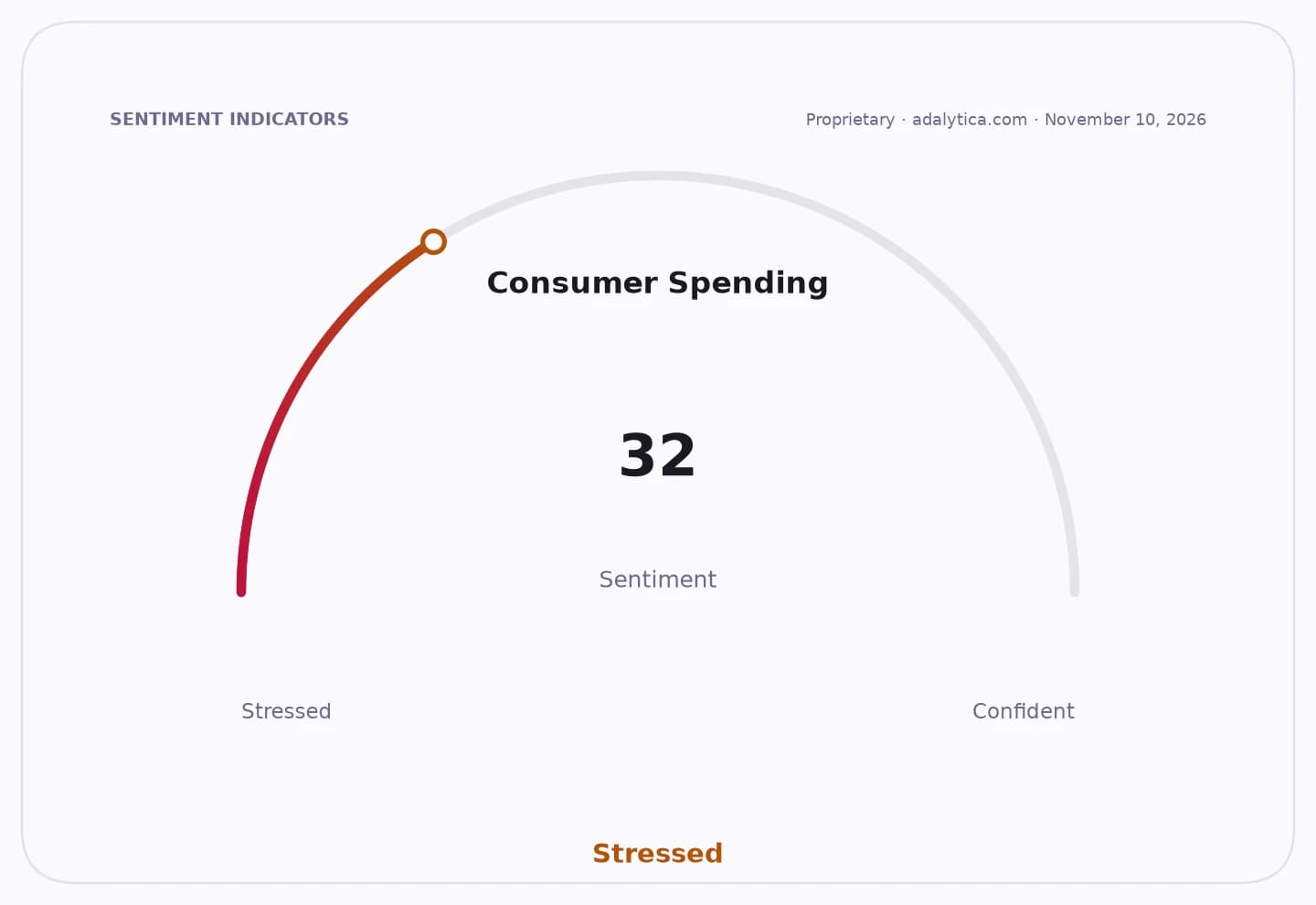
Consumer Spending
The reading, up from 5.1% in September, left Greece with the third-highest harmonized inflation rate in the euro area after Lithuania and Bulgaria, according to Eurostat estimates. It also stood materially above the eurozone’s 4% rate, reinforcing the case that Greece is facing a more persistent cost-of-living squeeze than many of its peers.
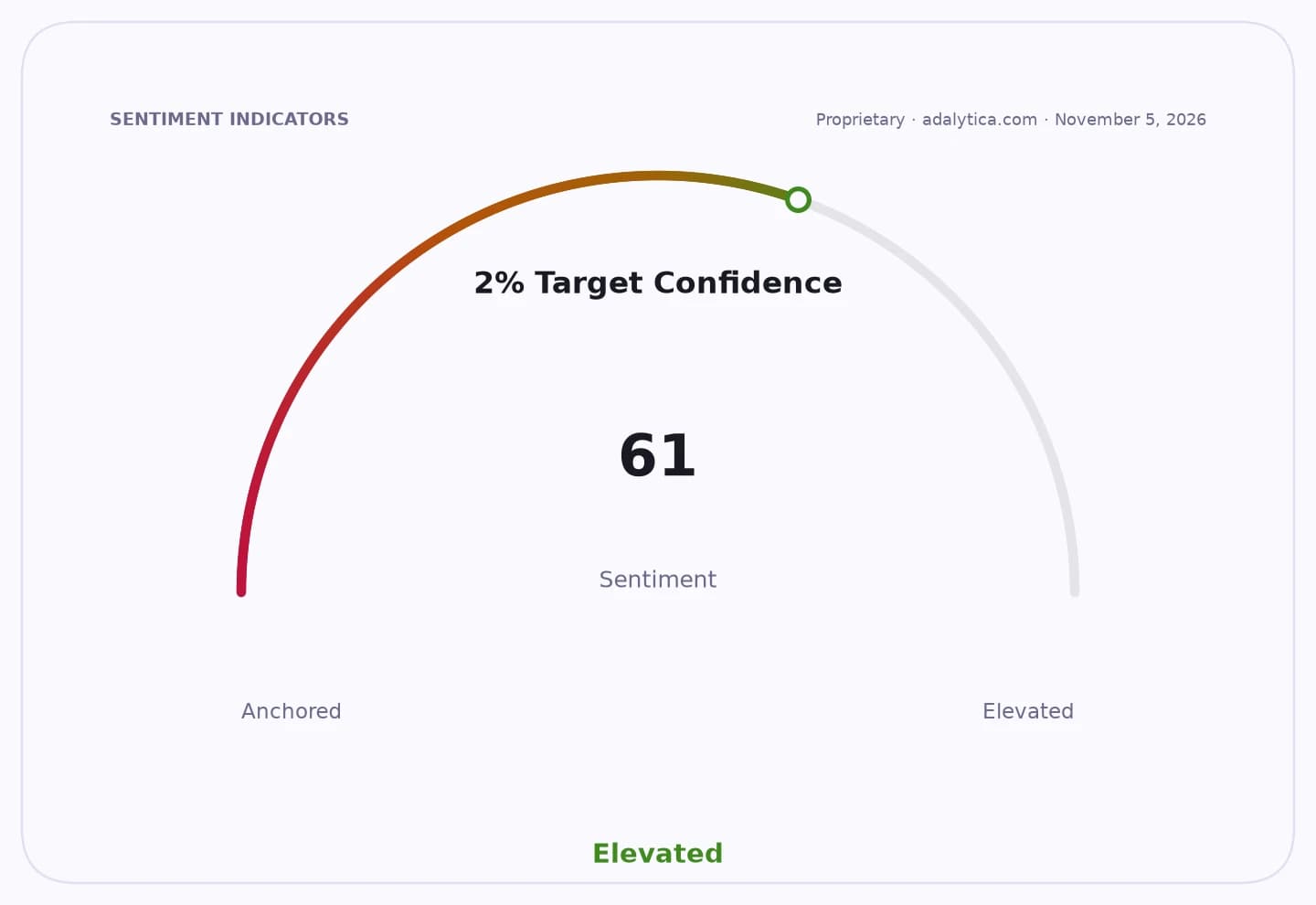
Sentiment Indicators
The composition of the rise matters as much as the headline number. Energy prices in Greece jumped 26.5% from a year earlier, faster than the 20.8% increase across the eurozone, driven by higher fuel costs, electricity tariffs and expensive natural gas. Average nationwide petrol and diesel prices remain above €2.12 a liter, keeping transport costs elevated and limiting relief for households even as global oil prices have eased only marginally from near $100 a barrel.
The more economically important warning sign is food inflation. The disappearance of negative food-price readings suggests energy costs are now being passed through more broadly to groceries, which tends to make inflation harder to reverse. That raises the risk that the current price shock becomes embedded in wage negotiations, retail pricing and consumer expectations, rather than fading as a temporary energy episode.
For policymakers, the data complicates the European Central Bank’s task. Eurozone inflation is still running at 4%, well above the ECB’s 2% target, and the persistence of energy-led pressures in countries such as Greece gives little room for complacency. If inflation stops easing, pressure will remain on the ECB to keep policy restrictive for longer, even as growth slows and credit conditions tighten.
For investors, the implications are twofold. Higher-for-longer rates support the euro and short-dated fixed income relative to risk assets, while also increasing the odds of more volatility in consumer-sensitive sectors. In Greece, that points to pressure on discretionary spending, margin risk for retailers and continued strain on lower-income households, even as banks and other financial stocks may benefit from firmer interest margins in the near term.
The key question is whether October marks the peak of the energy pass-through or the start of a broader inflation cycle. If food prices continue to accelerate, Greece’s inflation problem will become more entrenched and more important for eurozone policy than its size alone would suggest.
| Entity | Gains | Losses |
|---|---|---|
| ECB | ▲tighter-policy credibility | ▼growth flexibility |
| Greek consumers | ▲none | ▼purchasing power |
| Retailers/food sellers | ▲pass-through pricing power | ▼demand volumes |
| Banks | ▲higher-for-longer rates | ▼credit-risk pressures |