Greece’s pharmaceutical industry is pressing the government to overhaul the clawback mechanism, arguing that the mandatory payback system is draining investment capital just as the country tries to position itself as a regional manufacturing and innovation hub.
Greece Pharma Pushes Clawback Reform
At the annual general assembly of the Panhellenic Association of Pharmaceutical Industry, PEF president Theodoros Tryfon said the treatment of clawback is “a critical point” for policy in the coming years, framing it as the key obstacle to higher production, export growth and technology investment. His comments came as ministers from the finance and development portfolios, along with health-system officials, signaled broad political support for the sector but offered no immediate detail on a structural fix.
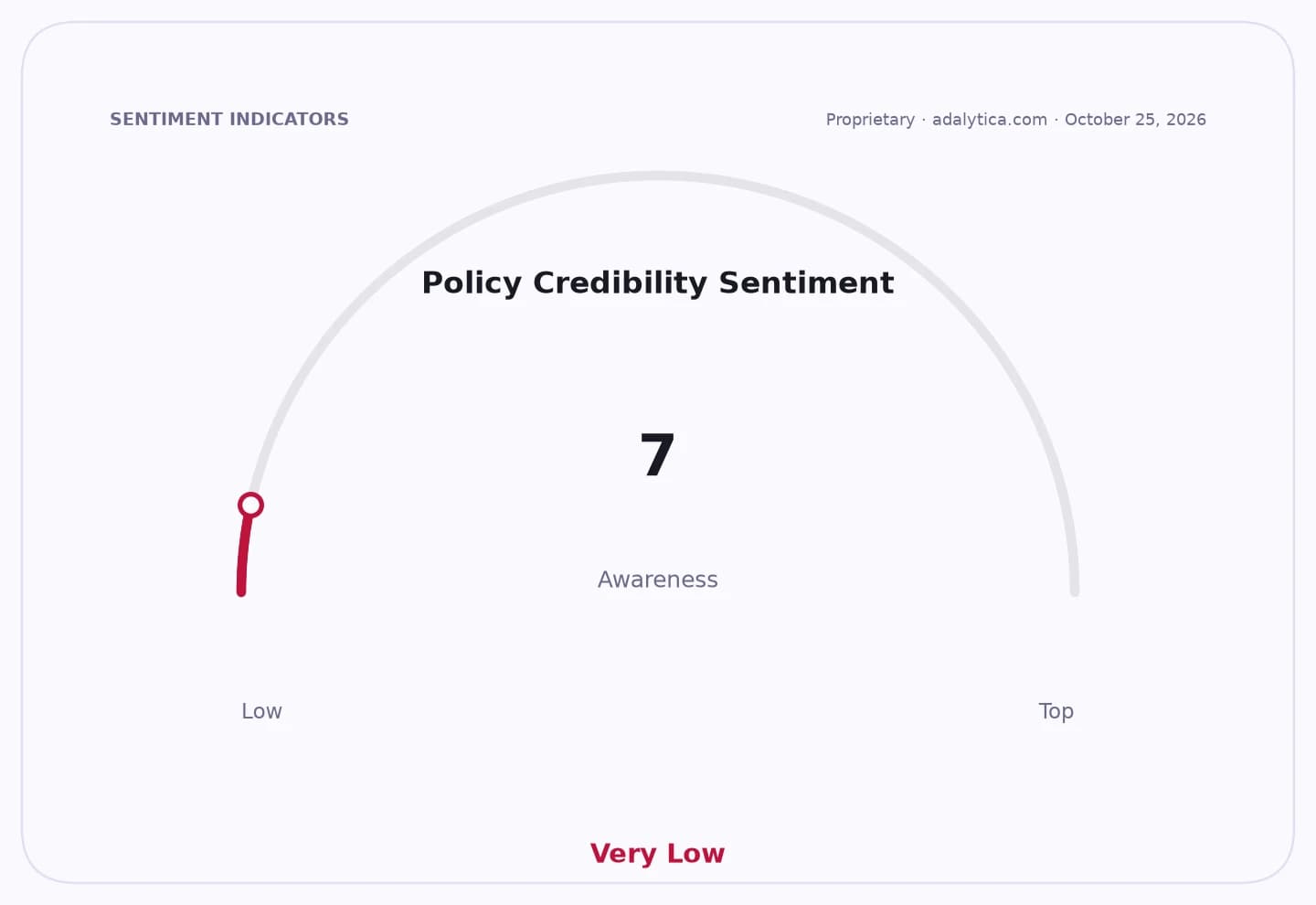
Sentiment IndicatorsⓘProprietary · adalytica.com · October 24, 2026
This is a snapshot — live sentiment, awareness and momentum for 130+ markets update continuously in the dashboard.Open AlphaPulse
The issue matters economically because clawback has become one of the most distortionary features of Greece’s drug policy. The mechanism forces companies to return spending above a preset public budget, effectively turning a portion of sales into a retrospective levy. For manufacturers, that reduces free cash flow and can delay capacity expansion, research spending and new hiring. For the state, it helps cap near-term pharmaceutical outlays. But for the wider economy, it also weakens a sector that officials increasingly describe as a strategic industrial asset.
Tryfon argued that competitive energy costs, stronger investment incentives and a stable regulatory framework are all needed if Greece is to accelerate production upgrades and shift toward cleaner manufacturing. He also linked the sector’s future to closer ties between education, research and industry, saying productivity gains and higher-value jobs depend on that connection.
The government used the gathering to underscore its backing for the industry. Finance Minister Kyriakos Pierrakakis said the state is supporting the sector through financing tools and incentives, including a higher return through the investment clawback program for 2026-2027. That suggests policymakers are leaning toward using targeted rebates and capital incentives rather than a wholesale abolition of clawback, at least in the near term.
That distinction will matter to investors and executives. A more generous investment clawback can help tilt capital toward Greek plants and R&D, but it does not remove the underlying uncertainty around how much of each year’s sales will be returned to the state. A more predictable formula, or a gradual reduction in the levy’s burden, would be more meaningful for margin visibility and long-term planning.
The sector’s lobbying push also fits a broader European industrial policy shift. With supply-chain resilience, medicine security and domestic production rising up the policy agenda, governments are under pressure to support local manufacturing. Greece’s drug makers are arguing that they can deliver on all three: exports, jobs and supply security. The state, meanwhile, is trying to preserve fiscal discipline without undermining a sector it sees as central to a higher-value production model.
For investors, the near-term catalyst is whether Athens turns today’s political support into a durable framework for 2027-2030. If it does, Greek pharma could attract more capacity spending and strengthen its position in European supply chains. If it does not, clawback will likely remain a drag on capital allocation and a source of recurring policy risk.
| Entity | Gains | Losses |
|---|---|---|
| Greek pharma manufacturers | ▲More predictable policy, higher investment capacity | ▼Clawback burden, margin pressure |
| Greek government | ▲Domestic production, exports, jobs | ▼Higher fiscal outlays if clawback eases |
| Patients and health system | ▲Stronger drug supply security | ▼Risk of slower investment if policy stays uncertain |
| Investors in Greek pharma | ▲Better visibility if reform advances | ▼Policy risk if clawback remains unchanged |