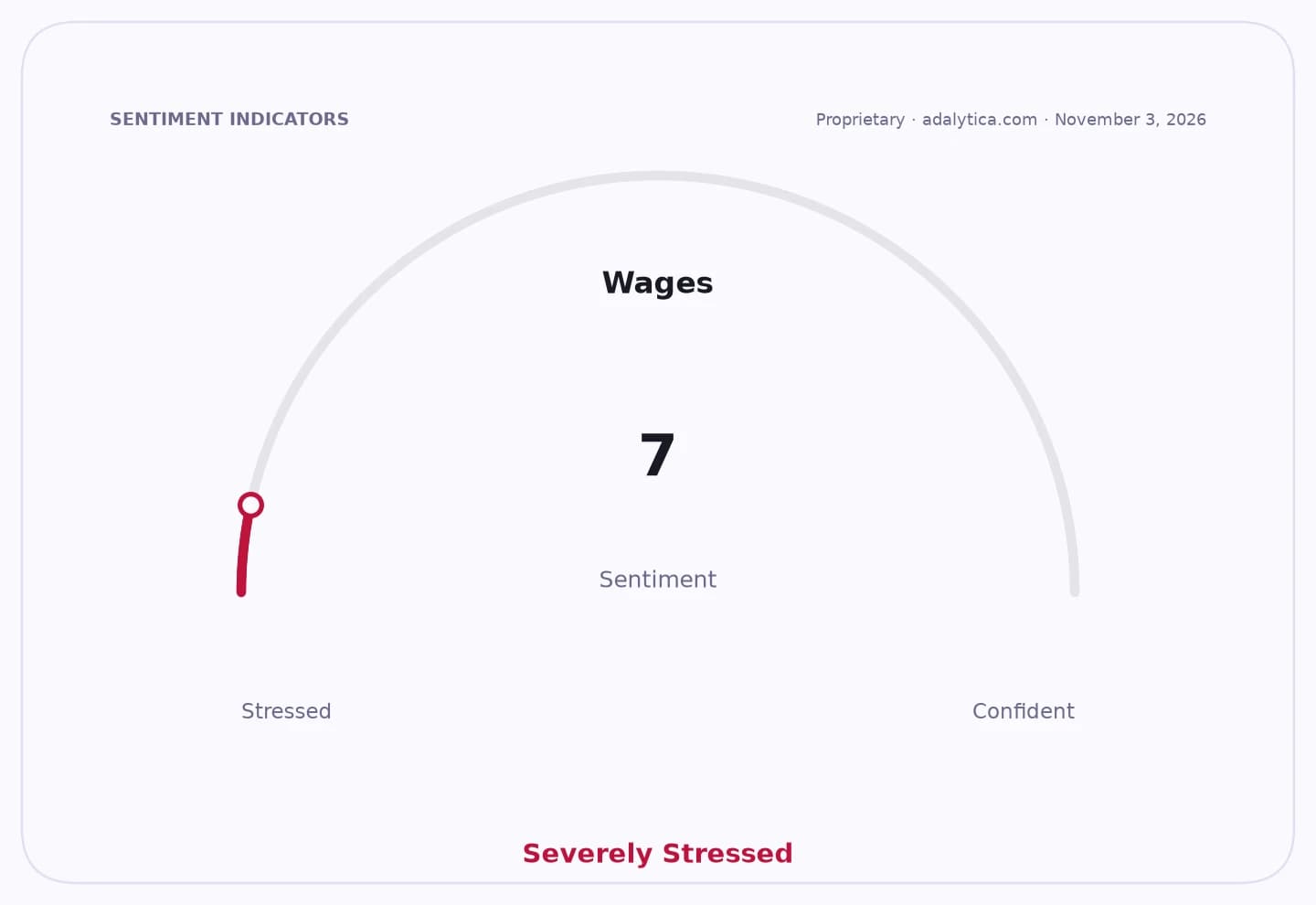
Greek employers should lift pay as the economy’s industrial base expands, Deputy Prime Minister Kostis Hatzidakis said, arguing that stronger competitiveness and productivity can support higher wages without undermining growth.
Greece Pushes Wages as Industry Expands
Job Market
The message matters because Athens is trying to turn a post-crisis recovery into a more durable, investment-led expansion. Hatzidakis said industry’s share of gross value added has risen to 15.8% from 13.8% in 2019, while the sector has added more than 60,000 jobs and goods exports have climbed 50% to 48 billion euros in 2025.
Sentiment Indicators
At the same time, he framed wage growth as part of a broader push to improve living standards and keep workers from lagging behind the rebound. Greece’s average wage is now ranked 17th among the 27 EU members, he said, while the minimum wage stands 13th among 22 countries.
The comments also signal that the government wants private sector pay-setting to do more of the heavy lifting as the minimum wage moves toward collective bargaining rather than a government decision. For investors, that points to a labor market where stronger pay, if matched by productivity gains, could support consumption and domestic demand, but also add pressure on margins in labor-intensive industries.
Hatzidakis tied the wage message to a wider industrial policy package aimed at lowering energy costs, speeding up permitting and court decisions, and channeling more private capital into technology and research. He said the government has already committed 500 million euros of support for lower industrial energy costs over the next five years, plus 95 million euros announced last month, while also seeking more flexibility under EU fiscal rules.
The industrial push is being paired with efforts to ease financing conditions, including deeper bank balance-sheet cleanup and a stronger Athens stock market, which the government says should improve access to capital. Hatzidakis also pointed to tax incentives for R&D investment of up to 315% in super-deductions and said the state wants more firms to tap the EU’s new competitiveness fund and defense-related supply chains.
For markets, the key question is whether higher wages in Greece arrive alongside continued gains in productivity, exports and investment, or whether they compress profitability before the industrial base is fully strengthened. The next watchpoint is how quickly collective bargaining takes over minimum-wage setting and whether the government can translate its industrial strategy into faster investment and broader private-sector pay growth.
| Entity | Gains | Losses |
|---|---|---|
| Greek workers | ▲Higher pay prospects | ▼Slow wage growth if productivity lags |
| Greek manufacturers | ▲Better labor supply, stronger demand | ▼Margin pressure from higher wages |
| Greek government | ▲Political credit for living standards | ▼Risk if pay rises outpace competitiveness |
| Investors in Greece | ▲Stronger domestic demand story | ▼Higher labor costs in exposed sectors |