Guyana’s push to build a gas-export industry is running into the hard reality that ExxonMobil’s priority is still oil, not LNG, and that could leave one of the world’s fastest-growing energy provinces with a much smaller export story than investors had expected.
Guyana LNG Plan Shrinks as Exxon Prioritizes Oil

The proposed Fulcrum LNG project, initially designed to ship about 6 million tons a year, may be cut in half to 3 million tons or dropped entirely as ExxonMobil presses to reinject most of the associated gas from the Stabroek block to maintain reservoir pressure and maximize crude output. That is economically decisive because Guyana’s oil machine is already delivering the kind of cash flow that makes gas monetization look secondary — and that changes how quickly the country can build a broader industrial economy around power generation, fertilizers and an industrial zone in Berbice.
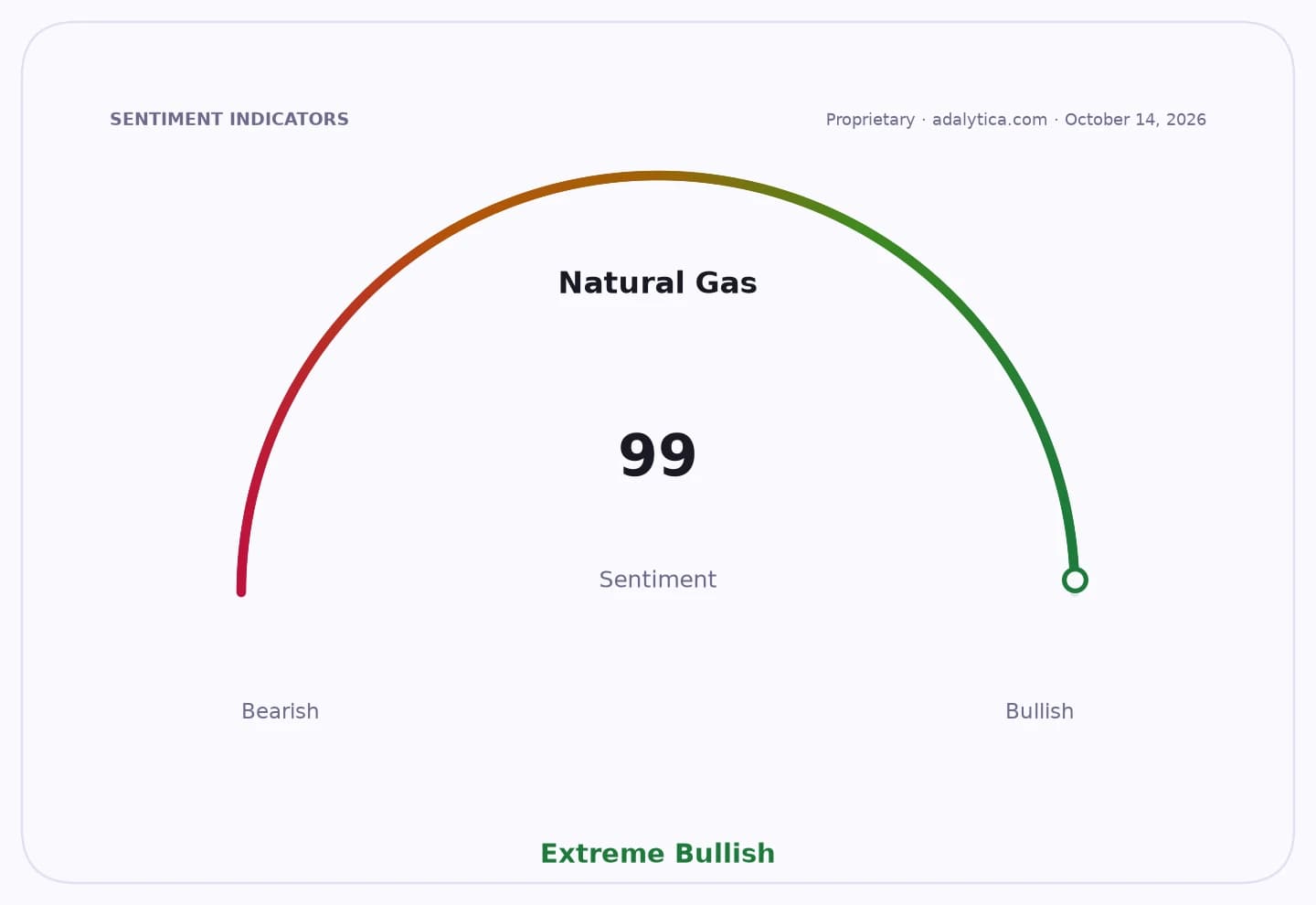
Sentiment IndicatorsⓘProprietary · adalytica.com · October 15, 2026
This is a snapshot — live sentiment, awareness and momentum for 130+ markets update continuously in the dashboard.Open AlphaPulse
For investors, the message is clear: the market may be overestimating how much near-term LNG supply Guyana can realistically add. Gas projects in frontier basins are only as good as the spare molecules behind them, and Exxon’s daily claim on roughly 2 billion cubic feet of gas for operational needs underlines who really controls the pace of development. Until there is clearer gas availability, floating LNG infrastructure remains delayed, and capital that might have flowed into downstream projects is likely to stay on the sidelines.
That is why this matters beyond Guyana. ExxonMobil, Chevron and CNOOC have built Stabroek into a world-class oil province, but the same commercial logic that is supercharging crude production is now constraining gas exports. Exxon is seeking approval for new non-associated gas discoveries at Longtail and Haimara, yet those volumes are still future optionality, not bankable supply. In other words, Guyana’s LNG story has not disappeared — but it has been demoted.
The investment implication is that the winners are further upstream than many LNG bulls want to admit. Integrated majors with control over acreage and infrastructure keep the upside, while hopeful LNG developers, local power planners and downstream industrial users are left waiting for the next gas tranche. The broader LNG market, already tight and geopolitically sensitive, still needs new supply, but Guyana may contribute less and later than the market narrative has priced in.
For ExxonMobil shareholders, the trade-off is favorable in the near term: reinjection preserves high oil output and supports the company’s most profitable barrel. For LNG investors and Guyana’s industrialization thesis, however, the setback is real. The next catalyst will be whether Exxon wins approval for additional gas discoveries — because only then can Guyana turn from an oil province with gas ambitions into a true multi-stream energy hub.
| Entity | Gains | Losses |
|---|---|---|
| ExxonMobil | ▲Higher oil recovery | ▼Near-term LNG optionality |
| Guyana oil sector | ▲Stronger crude output | ▼Faster gas monetization |
| Fulcrum LNG | ▲Potential future supply clarity | ▼Project scale and timing |
| Downstream developers in Guyana | ▲Long-term gas hopes | ▼Near-term feedstock certainty |