JD Vance has been forced into damage control after calling H-1B workers “bonded labour,” a sign that immigration rhetoric is colliding with one of the most economically sensitive links between the U.S. and India: the flow of skilled technology labor.
H-1B Debate Hits Infosys, Wipro and Cognizant
That matters because the H-1B program sits at the center of the global IT outsourcing model, and any perception that Washington is moving against it can hit both corporate hiring plans and investor confidence in Indian technology exporters. Vance’s clarification that he was criticizing the system, not immigrants themselves, is an attempt to lower the temperature after strong pushback from India and from U.S. observers who saw the comment as an attack on legal skilled workers.
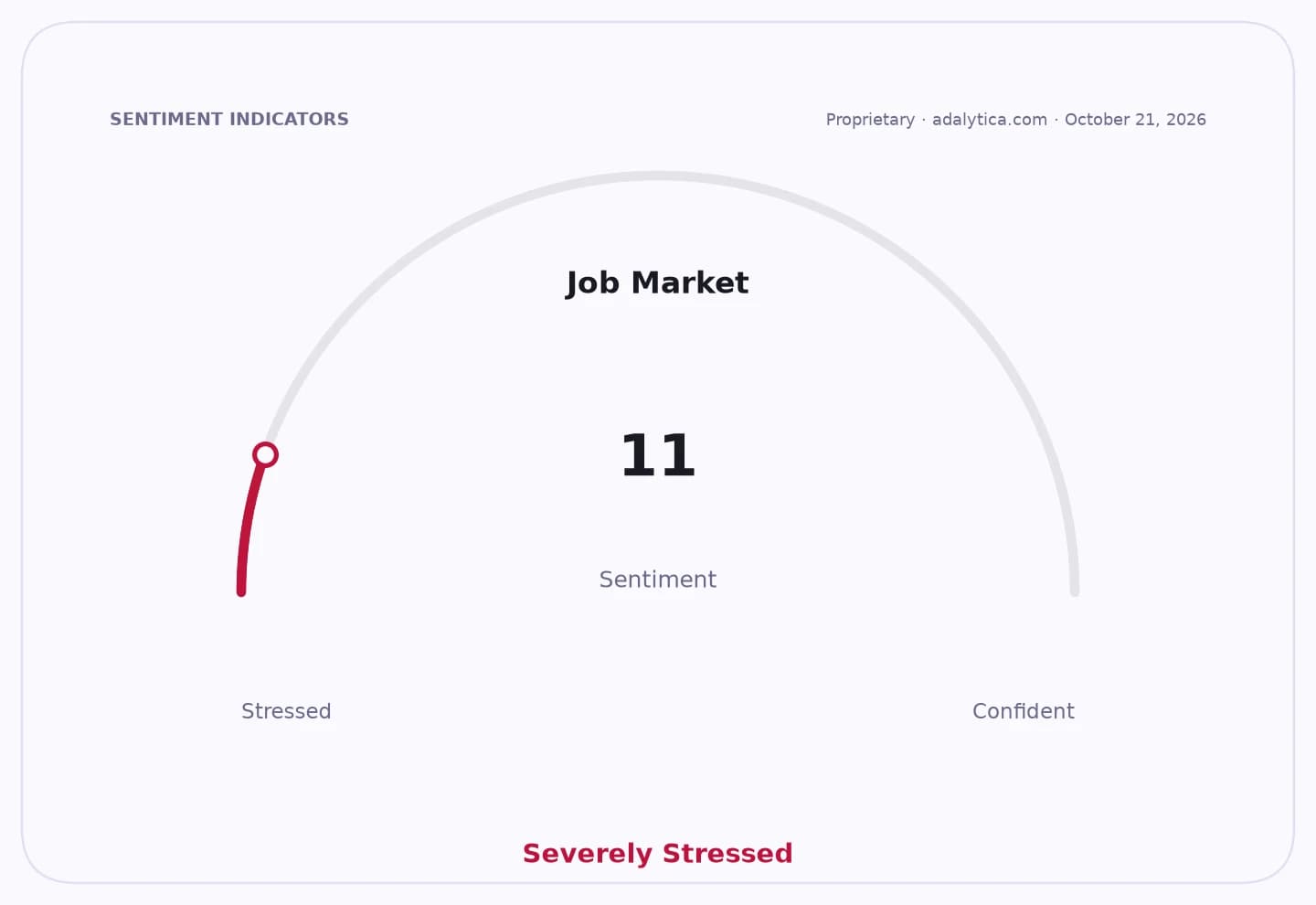
Sentiment IndicatorsⓘProprietary · adalytica.com · October 22, 2026
This is a snapshot — live sentiment, awareness and momentum for 130+ markets update continuously in the dashboard.Open AlphaPulse
His original argument was economic as much as political. Vance said the visa regime gives employers too much leverage because a worker’s right to remain in the U.S. is tied to the job, making it harder to challenge management. He framed the issue as one of “social cohesion,” arguing that rapid immigration can alter communities and leave Americans feeling displaced. But by invoking a trillion-dollar company replacing U.S. staff with visa holders, he also tapped a populist message that resonates with both labor advocates and protectionist voters.
For investors, the immediate issue is not just rhetoric. It is policy risk. Indian IT services firms, including Infosys and Wipro, depend on cross-border staffing, client-site deployments and a steady pipeline of U.S. work that can be disrupted by tighter visa scrutiny. Cognizant, which has a large U.S. exposure and a long history of immigration-related staffing sensitivity, is also vulnerable if hiring gets harder or more expensive. Even a modest tightening of the H-1B process can push more work offshore, lift compliance costs and compress margins.
The market has already shown that visa and labor issues can move these stocks. Infosys has been volatile and remains well below its earlier highs, while Wipro and Cognizant have also faced pressure amid slower growth and margin uncertainty. In a sector where valuation is driven as much by delivery leverage as by revenue growth, anything that threatens access to talent can quickly become a earnings story.
The bigger narrative is that H-1B has become a proxy fight over globalization itself. U.S. policymakers want to protect domestic workers; Indian technology firms need mobility and access; clients want lower costs and flexible delivery; and investors want predictability. When those interests collide, the result is usually more regulation, more paperwork and more political noise — exactly the kind of environment that rewards the strongest, most diversified players and punishes those most dependent on easy labor arbitrage.
The trade from here is straightforward: watch for any move that makes visa sponsorship harder, because that would favor offshore delivery models, automation and larger firms with better compliance capacity. If Washington tightens the screws, the winners are likely to be the capital-light automation and AI infrastructure names that reduce dependence on onsite labor, while the losers are the labor-intensive outsourcing vendors and their U.S. clients facing higher operating friction.
| Entity | Gains | Losses |
|---|---|---|
| U.S. populist immigration critics | ▲Political traction | ▼Diplomatic backlash |
| Indian IT exporters | ▲Clarification tempers panic | ▼H-1B uncertainty |
| Cognizant, Infosys, Wipro | ▲Offshore delivery advantage | ▼Visa-dependent staffing |
| AI automation and infrastructure firms | ▲More demand for labor-saving tech | ▼None from tighter visas |