Hospitals are intensifying calls for a simpler healthcare system just as investors are recalibrating the sector around reimbursement pressure, rising administrative costs and uneven demand.
HCA, Tenet and UHS Rise on Hospital Bureaucracy Push
The push matters because bureaucracy is not a side issue for hospital operators — it is one of the main reasons margins remain fragile even when patient volumes are steady. Prior authorizations, claims disputes, billing complexity and payer rules all add cost, delay cash collection and make earnings more sensitive to policy changes than to clinical demand. For the industry, reducing administrative friction would effectively act like an operating margin tailwind without requiring higher prices or more beds.
That is why the theme matters for investors in hospital and managed-care stocks alike. HCA Healthcare, Tenet Healthcare and Universal Health Services have all been trading with a degree of resilience relative to the broader selloff in parts of healthcare services, but the sector remains highly exposed to labor costs, government reimbursement and regulatory churn. HCA shares recently rose to $436.48 from $362.93 in mid-July, recovering from a sharp spring drawdown, while Tenet closed at $256.44 and UHS at $181.39, both below recent peaks after volatile trading. The move suggests investors are looking past the near-term noise and toward companies that can preserve pricing power and cash generation if the system becomes less administratively burdensome.
The economic logic is straightforward. Hospitals spend heavily on billing staff, compliance systems and revenue-cycle management because the U.S. payment system is fragmented across Medicare, Medicaid, commercial insurers and state rules. SEC filings from HCA and Tenet both point to payment delays, shifting reimbursement and changing coverage rules as material risks. Any policy or industry shift that trims paperwork, standardizes claims or speeds reimbursement would lower working capital needs and free up cash for capital spending, debt reduction or buybacks. It would also reduce one of the hidden taxes on care delivery: time spent on administration instead of treatment.
There is also a competitive angle. Large operators with scale and sophisticated revenue-cycle systems are better placed to absorb bureaucracy than smaller facilities, which means simplification could help the sector’s weaker players more than the strongest ones. But the bull case is not uniform. If hospitals succeed in getting more efficient through automation and lighter regulation, margins could improve. The bear case is that many of the same reforms may be slow, politically contested or offset by payer pushback, leaving hospitals with the same administrative burden and little relief on reimbursement.
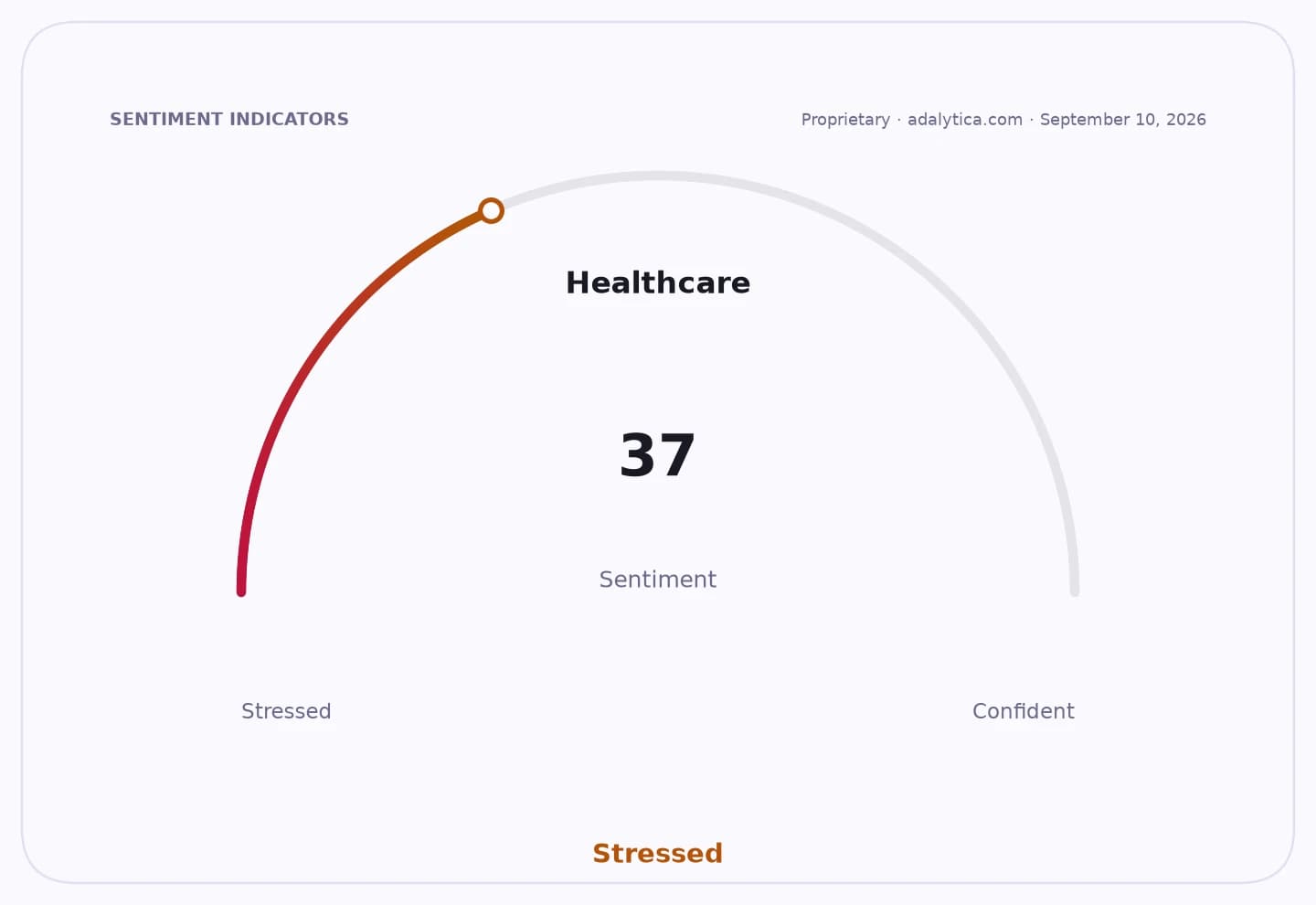
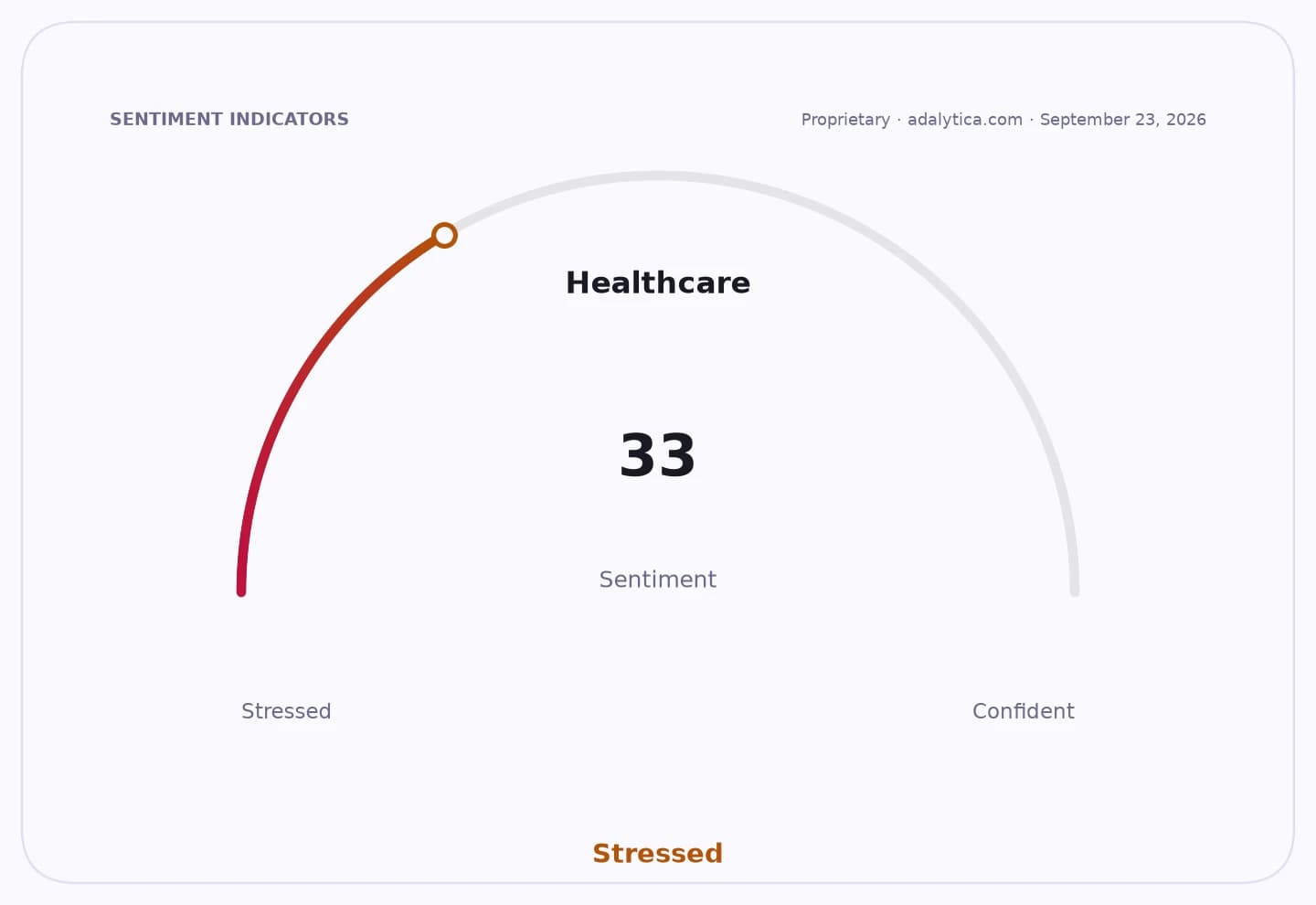
Adalytica’s Healthcare Spending Sentiment gauge remains neutral at 33, underscoring that the market is not yet pricing a broad policy breakthrough. Still, the recent rebound in hospital shares shows investors are willing to pay for companies that can defend earnings in a system that remains structurally complex. The next catalyst will be whether policymakers, insurers and hospital groups can translate calls for less bureaucracy into actual changes in authorization, claims and payment rules.
| Entity | Gains | Losses |
|---|---|---|
| Hospitals | ▲Lower admin costs | ▼Less leverage on reform delays |
| Patients | ▲Faster approvals, less friction | ▼Fewer protection layers if rules are cut too far |
| Hospital operators | ▲Better margins, stronger cash flow | ▼More competition from efficient peers |
| Payers | ▲Potentially lower processing costs | ▼Less control over utilization management |