A wave of floods and landslides across the Himalayas is forcing India and China to confront a rare shared interest: disaster response may be one of the few areas where cooperation is both politically possible and economically urgent.
Himalayan floods push India, China toward data sharing
The catalyst is Nepal, where recent flash floods and a landslide on the Budhigandaki river destroyed roughly 30 homes, six bridges and hydropower infrastructure, with at least five people missing. That came less than six weeks after severe flooding on the Bhotekoshi and Trishuli rivers hit 33,000 people, damaged or destroyed 7,500 homes and left reconstruction costs estimated at $4.77 billion. For a region where rivers cross borders and failures upstream quickly become downstream emergencies, the economics are obvious: delayed warnings and fragmented hydrological data translate directly into larger losses, higher reconstruction bills and more pressure on already stretched public finances.
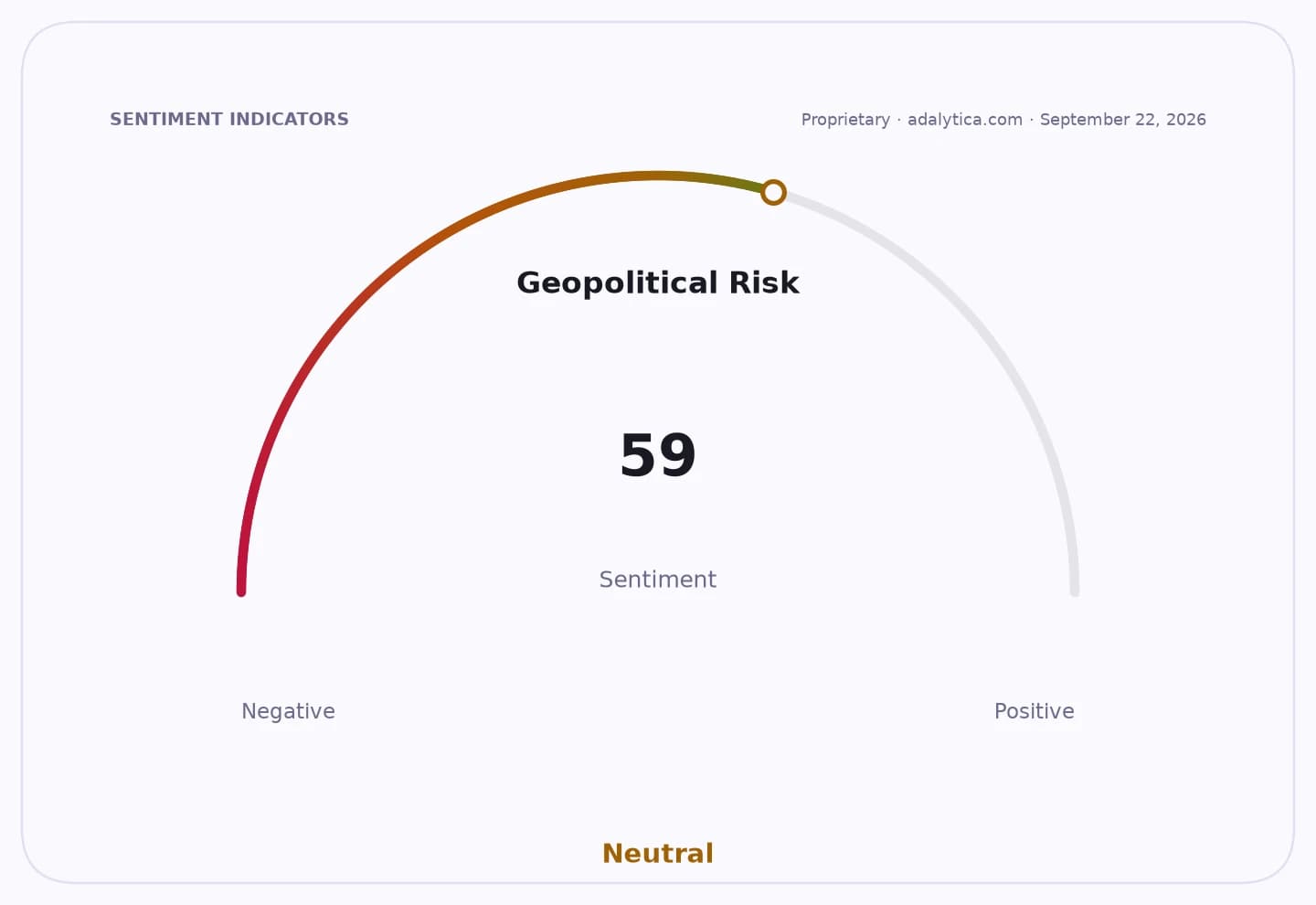
Sentiment IndicatorsⓘProprietary · adalytica.com · October 18, 2026
This is a snapshot — live sentiment, awareness and momentum for 130+ markets update continuously in the dashboard.Open AlphaPulse
That is why Nepal’s proposal for a trilateral climate-resilience mechanism with India and China matters. It is not a diplomatic breakthrough in the usual sense; it is a practical attempt to build a shared system for satellite data, glacier-lake monitoring, early warnings and coordinated emergency response. If it works, it could cut disaster losses across the Himalayan basin, reduce the need for repeated aid mobilization and create a framework that survives beyond the latest crisis. If it fails, the region stays trapped in the familiar cycle of disaster, delay and rebuilding.
For investors, the story is less about headlines than about the next capex cycle. The Himalayas are not just a geopolitical fault line; they are a hydroelectric, water-security and infrastructure risk zone. Repeated floods and landslides raise the value of companies tied to early-warning systems, remote sensing, resilient transport, power-grid hardening and climate-adaptation infrastructure. They also increase the likelihood that Nepal, India and even China will be pushed toward more spending on monitoring networks, basin management and disaster-finance tools such as catastrophe bonds and multilateral-backed protection.
India and China remain the hard part. Beijing controls the upper reaches of the Yarlung Tsangpo, which becomes the Brahmaputra in India, and New Delhi has long been uneasy about Chinese hydropower development, data transparency and seismic risk. That is exactly why a narrow, technical approach is the most investable path forward. A broad political thaw is unlikely soon, but a limited humanitarian data-sharing regime is plausible because both sides face the same upside: fewer deaths, less infrastructure damage and lower political backlash when rivers surge.
The market is underestimating how often climate shocks can become a bridge between strategic rivals. The near-term trade is not in peace rhetoric. It is in the infrastructure, monitoring and disaster-resilience names that benefit when governments move from reactive relief to permanent preparedness. My view: the Himalayan crisis is creating a slow but durable bid for resilience spending, and the first countries to cooperate on it will set the template others follow.
| Entity | Gains | Losses |
|---|---|---|
| Nepal | ▲Faster warnings, more financing | ▼Higher disaster losses |
| India | ▲Better upstream visibility | ▼Exposure to Brahmaputra risk |
| China | ▲Confidence-building channel | ▼Secrecy over hydrology |
| Resilience/infrastructure firms | ▲More public spending | ▼Reactive relief model |