Higher borrowing costs are keeping the U.S. housing market frozen, and that is now showing up in the core operating metrics of Home Depot and Lowe’s.
Home Depot and Lowe’s Face Weak Housing Turnover

The average 30-year fixed mortgage rate has climbed to 7.11% from 6.09% in mid-February, a jump of more than one percentage point in about nine months that lifts monthly payments by hundreds of dollars on a $500,000 home. That is helping keep existing-home sales near a 16-year low and housing turnover subdued, cutting into the number of moves, remodels and repair projects that tend to drive demand for the two biggest home-improvement chains.
Sentiment Indicators
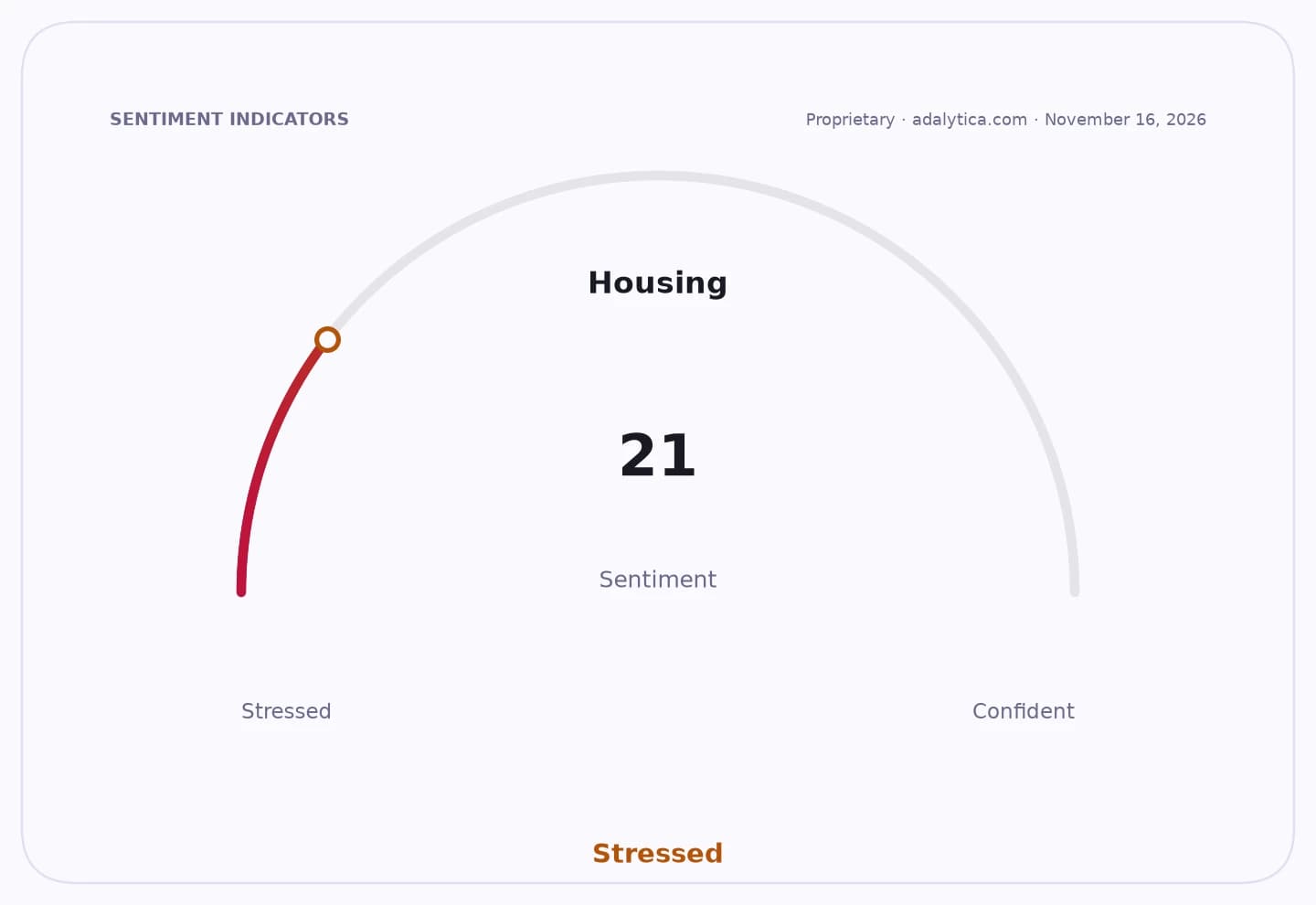
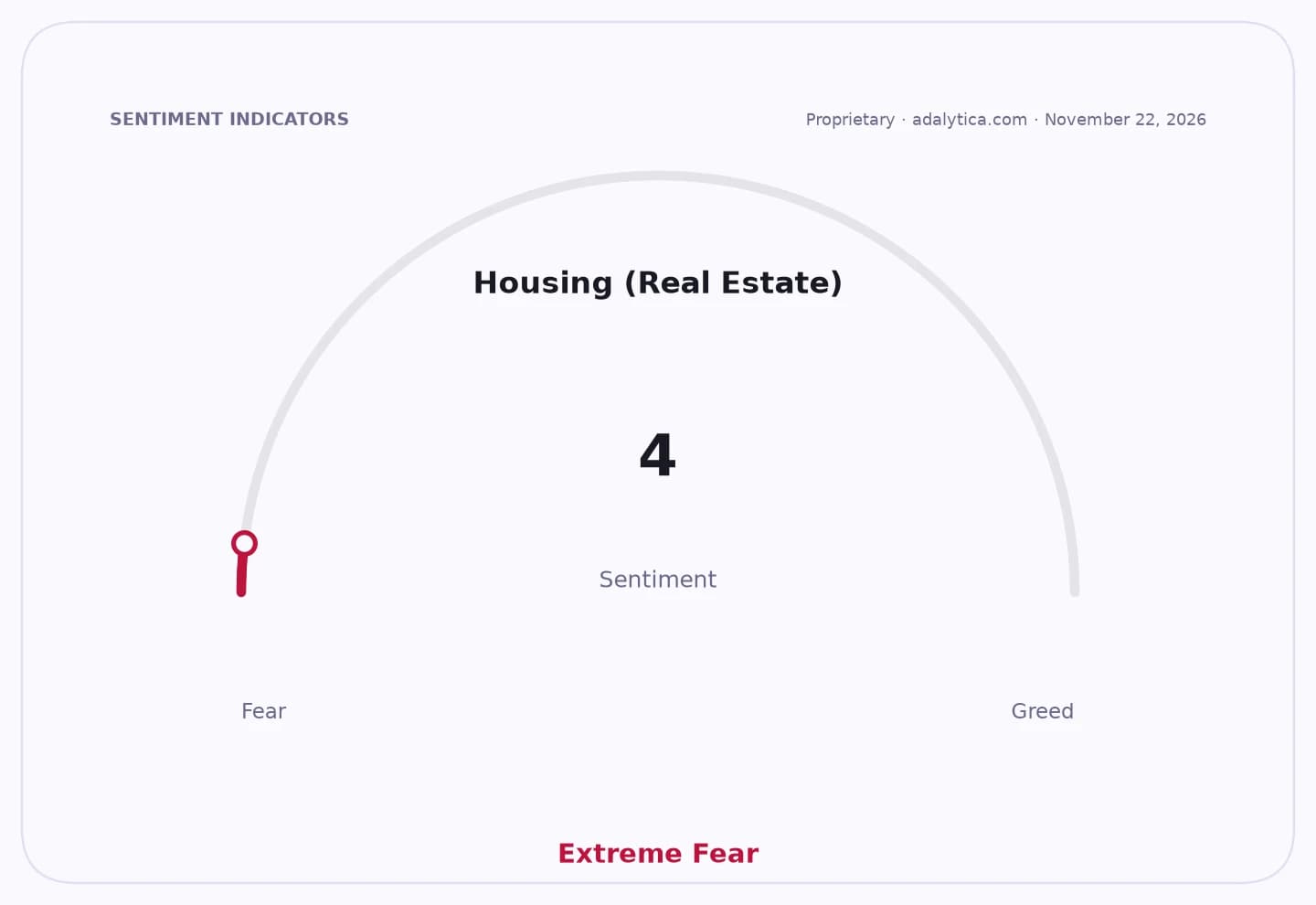
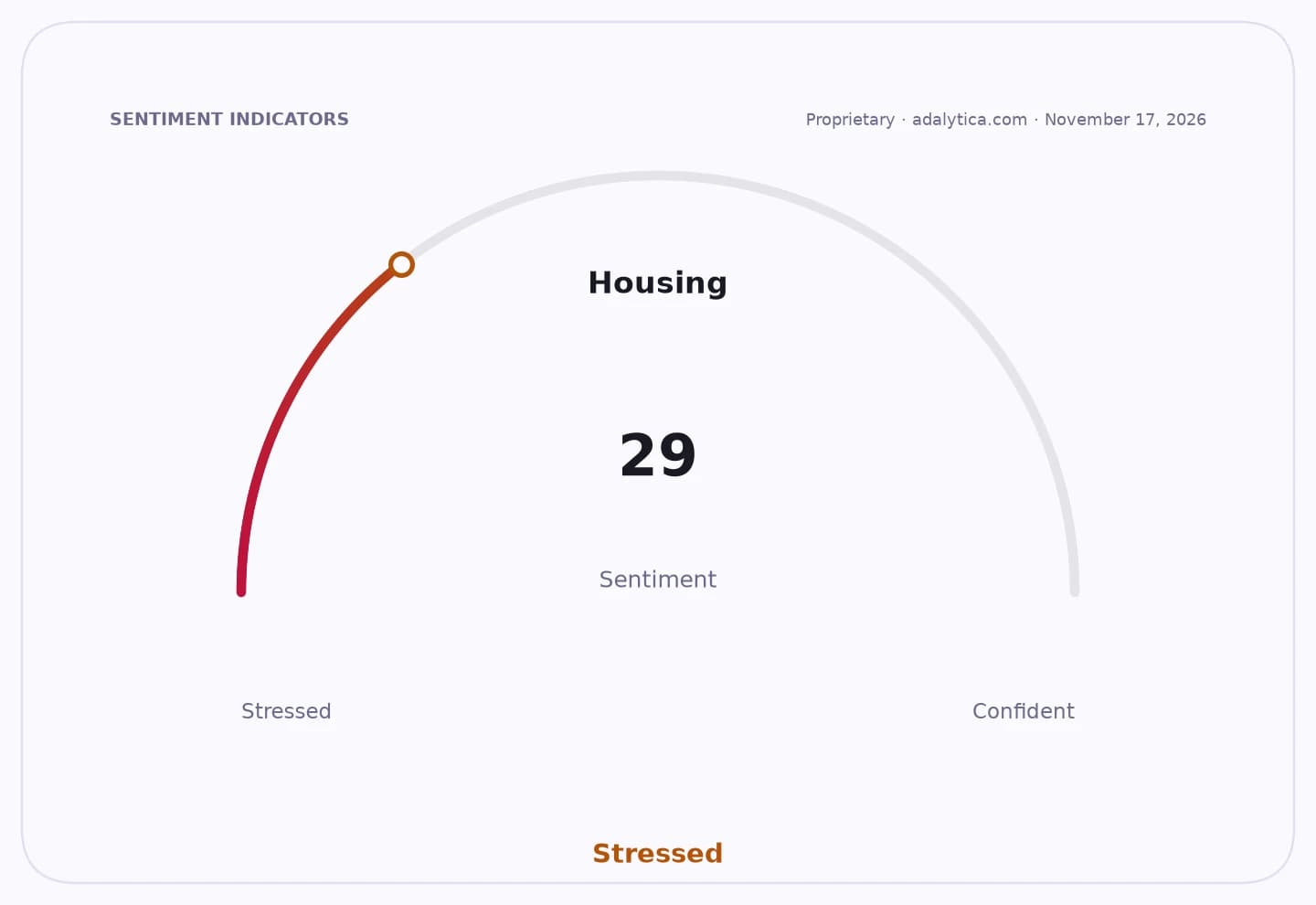
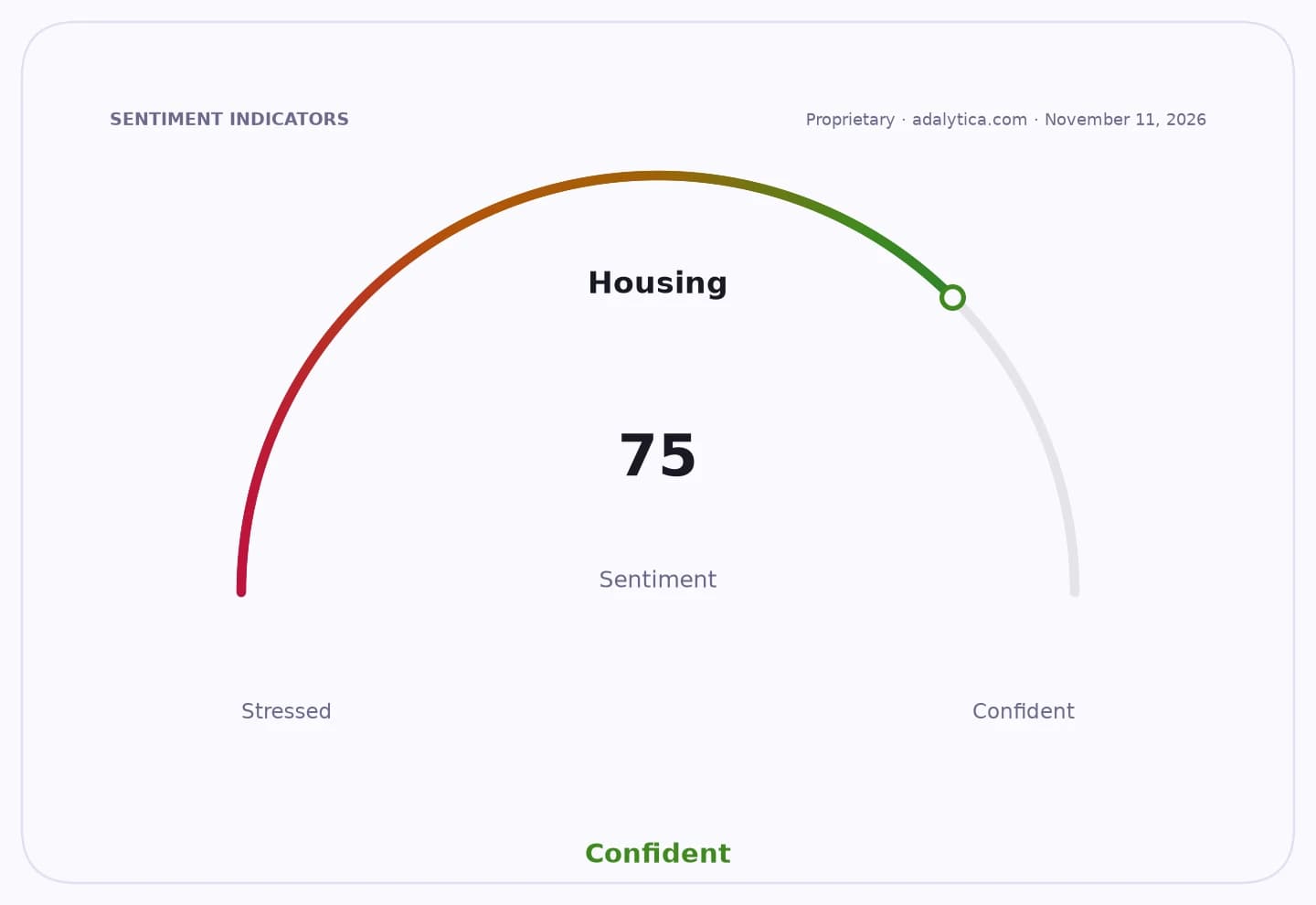
Housing
The pressure is visible in the latest quarter. Home Depot reported a 0.5% decline in comparable transactions in its fiscal third quarter, while Lowe’s said comparable transactions fell 1.7%. Same-store sales still rose at both companies because shoppers bought more expensive items, particularly appliances and other big-ticket products, but transaction declines are a more important signal for investors because they point to softer foot traffic and fewer projects getting started.
That matters economically because home-improvement retailers are highly exposed to housing churn. When turnover slows, fewer households buy paint, flooring, lumber and fixtures immediately after moving, and more discretionary renovation work gets postponed. The current environment also leaves less room for a volume-led recovery, even if the labor market remains stable, because higher mortgage rates are suppressing mobility rather than just affordability at the margin.
Housing — 30-day sentimentadalytica.com
Explore this data interactively — full history, time series and cross-market comparisons.

The macro backdrop is not improving quickly enough to offset that weakness. Traders expect the Federal Reserve to keep rates restrictive after the December meeting, and the persistence of inflation is limiting the odds of a near-term easing cycle. For Home Depot and Lowe’s, that means a housing rebound likely depends more on lower financing costs than on company-specific execution.
Still, the companies are not standing still. Both are leaning harder into professional contractors, fulfillment and loyalty programs, while their e-commerce businesses continue to grow at double-digit rates. Home Depot said online comparable sales rose 13% in the quarter, and Lowe’s said they increased 17%, showing that scale and omnichannel investment are helping cushion the slowdown. Accessible home equity remains a powerful latent source of demand at about $13 trillion, suggesting renovation spending can recover once rate pressure eases.
Investors, however, have already spent years waiting. Over the past three years, Home Depot and Lowe’s have delivered total returns of 19% and 16%, respectively, well behind the S&P 500’s 69%. The bear case is that earnings growth stays capped as long as transaction volumes remain weak. The bull case is that both companies can keep taking share, serving professionals better and eventually benefit from pent-up demand when the housing market thaws.
For now, the main investment issue is not whether Home Depot and Lowe’s are high-quality businesses — they are — but how long shareholders have to wait for mortgage rates and housing turnover to normalize enough to lift sales growth back above inflation.
| Entity | Gains | Losses |
|---|---|---|
| Homeowners with existing low-rate mortgages | ▲Lower housing costs locked in | ▼Less flexibility to move |
| Home Depot and Lowe’s professionals business | ▲More share in resilient demand | ▼DIY and transaction volumes |
| Housing sellers and movers | ▲Potential future rebound if rates fall | ▼Current market liquidity |
| Equity investors in HD and LOW | ▲Defensive quality and dividends | ▼Slower earnings growth |