Millions of Americans are discovering that owning a home outright does not mean housing is cheap, and that reality is reshaping the economics of retirement, insurance and the broader housing market.
Homeowners Face Rising Non-Mortgage Housing Costs
The most important development is not the absence of a mortgage payment, but the persistence of every other cost that comes with homeownership. Census Bureau data show about 5.5 million mortgage-free homeowners still spend at least 30% of household income on housing, with 2.7 million spending half or more. In other words, the mortgage may be gone, but the housing burden often is not.
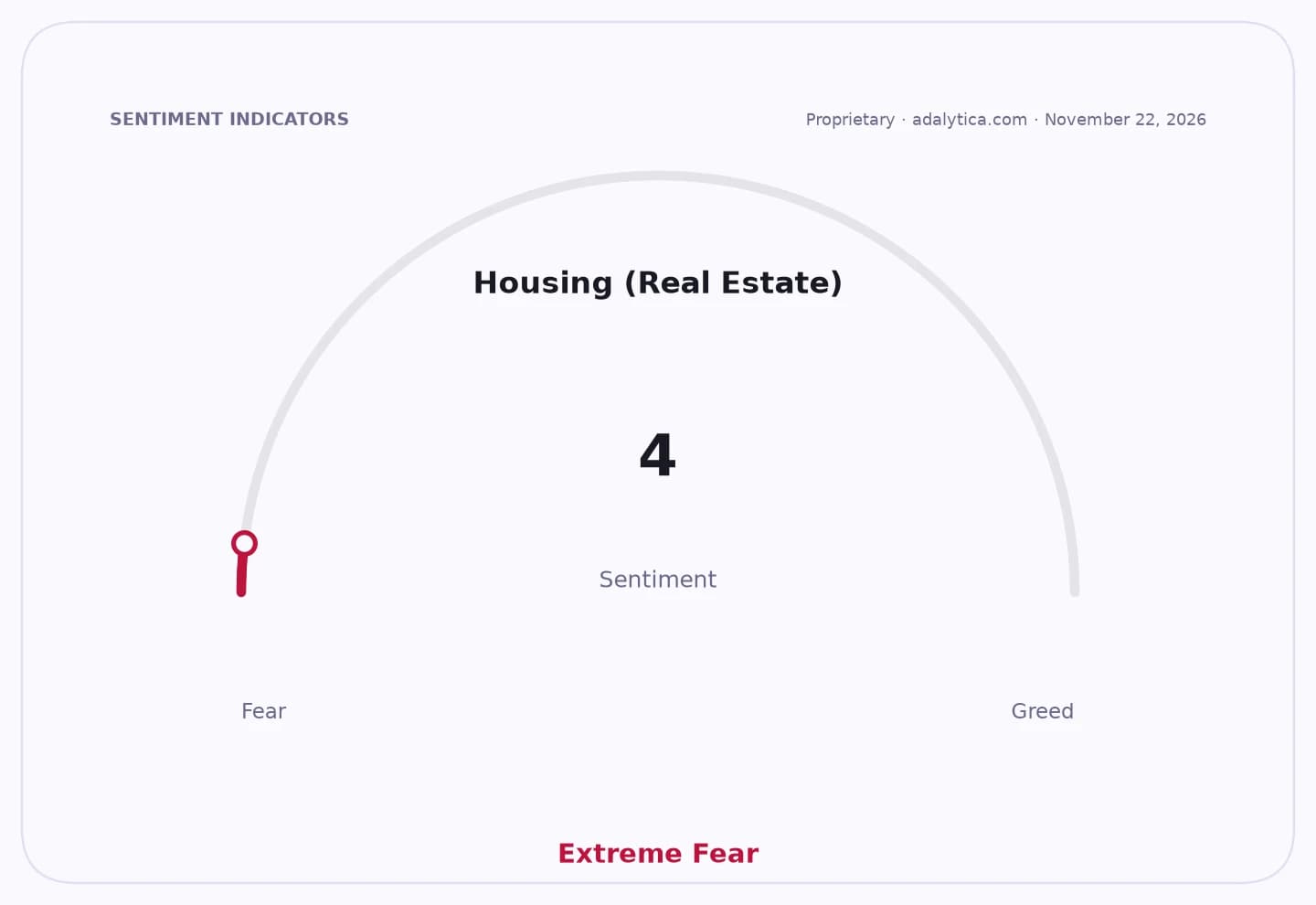
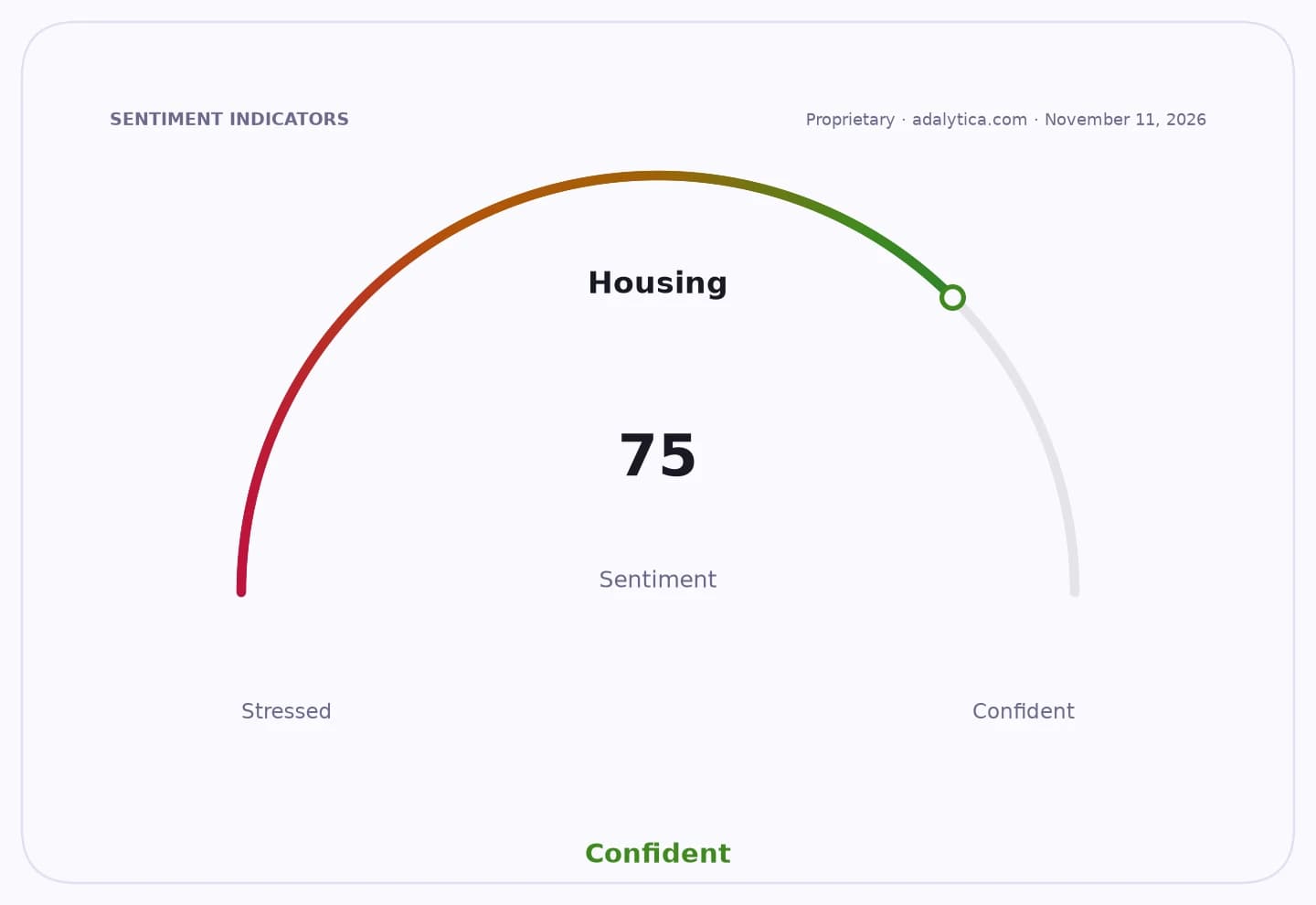
Sentiment Indicators
That matters because it exposes a structural affordability problem that goes well beyond interest rates. For retirees and fixed-income households, rising property taxes, insurance premiums, utilities and maintenance can turn a paid-off home into a financial strain. Insurify says U.S. homeowners now spend an average of $21,486 a year on non-mortgage housing costs, including $7,374 for maintenance, $5,649 for utilities, $4,427 for property taxes and $3,012 for homeowners insurance. In 22 states those costs exceed $20,000 annually, and in five states — including California and Hawaii — they top $30,000, helped by expensive housing stock and the rising cost of climate-driven risks such as fires and floods.
For investors, this is a clear signal that the housing trade is no longer just about home prices and mortgage rates. It is also about the compounding expense base around the asset. That creates winners and losers across insurers, homebuilders, utilities, tax-appeal services and owners of smaller, lower-cost housing. It also helps explain why affordability remains so strained even in a market where some buyers are sidelined by financing costs: the total cost of shelter keeps rising after the loan is gone.
The pressure shows up in the market data too. Home-price measures remain elevated versus pre-pandemic norms, while housing supply has struggled to keep pace. At the same time, the Homebuilders ETF XHB and the broader home construction complex have been volatile, reflecting a market caught between high rates, weak affordability and still-firm underlying housing costs. Real estate investment trusts tied to residential property, measured by XLRE, have also been buffeted as investors weigh whether higher operating costs can be passed through to renters and owners.
The deeper investment implication is that the next phase of the housing cycle may favor businesses that help households manage the recurring cost of shelter rather than simply those that sell new homes. That includes property and casualty insurers with pricing power, maintenance and renovation providers, tax-assessment appeal services, and housing operators positioned to offer lower all-in monthly costs. It also supports the case for smaller homes and downsizing as a secular trend, particularly among aging owners who have equity but limited cash flow.
There are tactical offsets. Homeowners can appeal property taxes, pursue exemptions and shop for insurance discounts, but those savings are incremental, not transformative. The bigger reality is that housing affordability is becoming a total-cost story, not a mortgage-rate story. Until taxes, insurance and upkeep stabilize, millions of Americans will remain asset-rich and cash-poor.
For investors, the takeaway is straightforward: the best opportunities are likely in the picks-and-shovels of housing affordability, not in the fantasy that a paid-off mortgage ends the bill. The market underestimates how durable these non-mortgage costs are — and how much capital will flow toward companies that help households and landlords absorb them.
| Entity | Gains | Losses |
|---|---|---|
| Homeowners with paid-off mortgages | ▲Equity flexibility | ▼Cash flow pressure |
| Property insurers | ▲Higher premiums | ▼Policyholders facing cost shocks |
| Tax-appeal and exemption services | ▲More demand | ▼Overassessed homeowners |
| Smaller-home and downsizing market | ▲More interest | ▼Large, high-cost homes |