Honduras’ economic authorities have cut a planned egg price increase to L8 from L20, a move aimed at easing pressure on household budgets as food inflation continues to squeeze consumers.
Honduras cuts planned egg price increase to L8
The reduction matters because eggs are a staple protein in a country where food costs carry outsized weight in family spending. By intervening to keep the price of a carton of medium eggs at L95 in BANASUPRO outlets, the Secretariat of Economic Development is effectively trying to contain a pass-through from higher feed, transport and logistics costs before it feeds broader inflation expectations.
Sentiment Indicators
Officials said the original increase was pared back after talks between the ministry and BANASUPRO, the state-run retail chain. The agreement gives the government a visible, short-term tool to soften a price shock in one of the most politically sensitive items in the basket of basic goods.
The policy response also underscores how exposed local food prices remain to imported inputs. The authorities pointed to more expensive corn and soy, key ingredients in poultry feed, as well as transport and distribution costs. That combination leaves domestic egg prices vulnerable even when final demand is steady, making the sector a frequent flashpoint for consumer protection efforts.
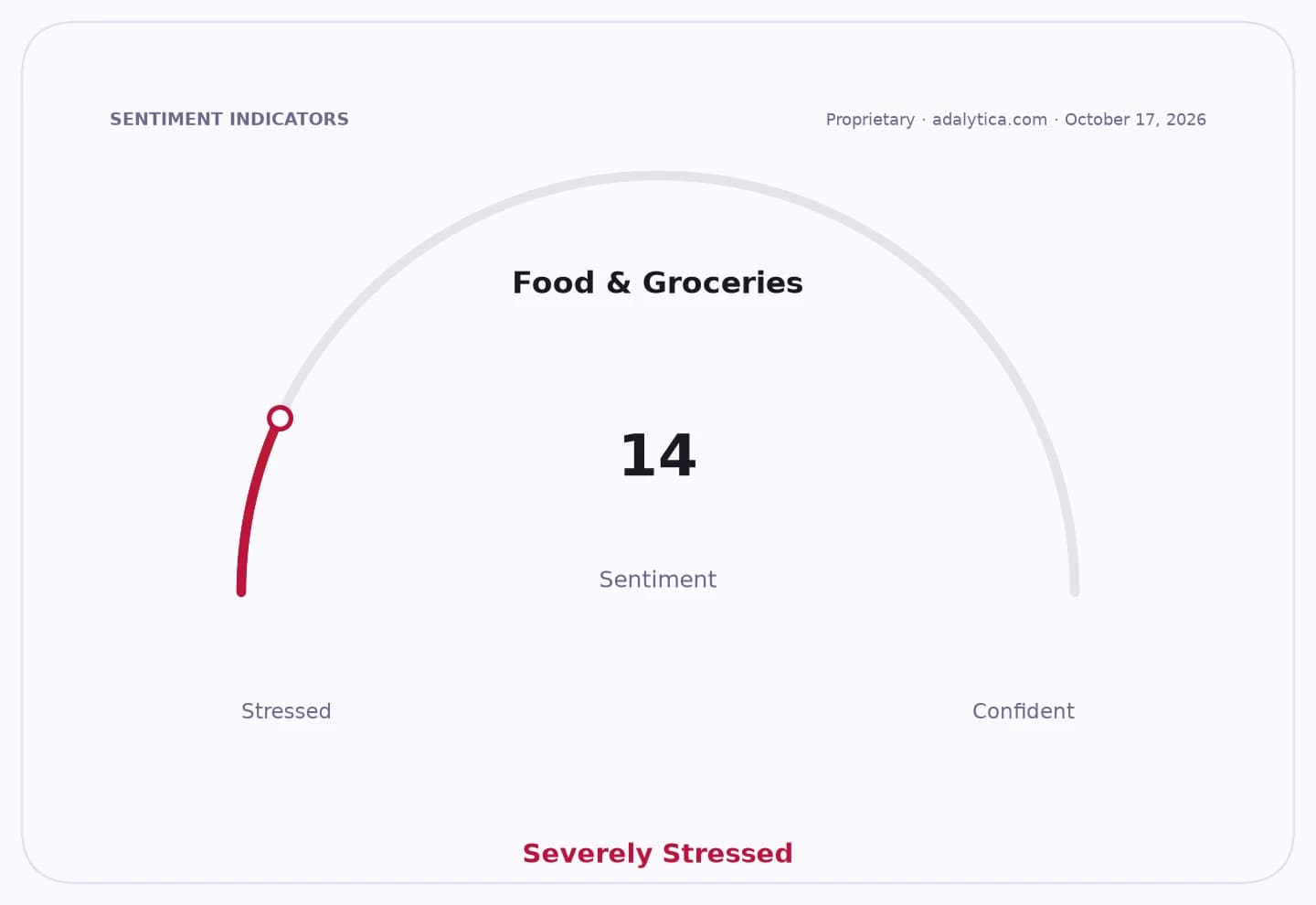
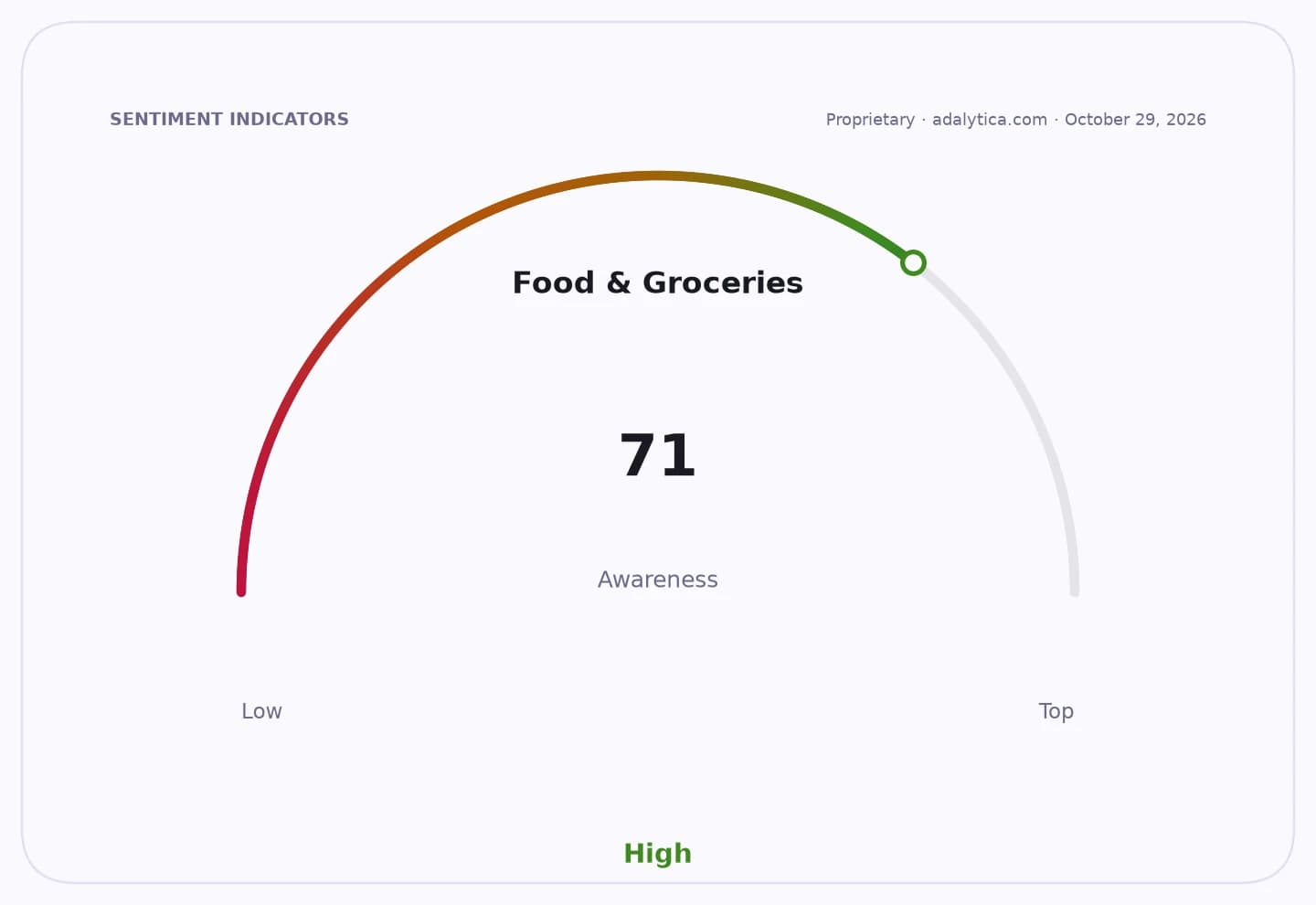
For investors, the story is less about a single food item than about the persistence of inflation pressure in essential goods. The latest U.S. inflation gauges included in the data show broad price levels still elevated, and the Adalytica Food and Grocery Spending Sentiment index is deep in fear territory, suggesting consumers remain under strain. In that environment, governments across the region are more likely to lean on price management, monitoring and negotiated caps to protect purchasing power.
The move may help near-term consumer sentiment, but it does not remove the underlying cost pressures in the poultry supply chain. If feed inputs or logistics remain tight, retailers and producers could still seek higher prices later, keeping eggs and other staples on the radar for further intervention.
For now, the key message is that Honduras is choosing to absorb part of the shock rather than let it fully reach consumers. That supports household spending power in the short run, but it also highlights how fragile basic-food pricing remains when import costs, transport expenses and local supply conditions turn against consumers.
| Entity | Gains | Losses |
|---|---|---|
| Honduran consumers | ▲Lower immediate egg bill | ▼Less relief if costs rise again |
| BANASUPRO | ▲Higher traffic on capped-price sales | ▼Margin pressure from the cap |
| Egg producers and distributors | ▲Partial price pass-through preserved | ▼Limited ability to raise prices |
| Households with tight budgets | ▲Better access to staple protein | ▼Ongoing exposure to food inflation |