Hong Kong’s benchmark shares opened marginally lower on Monday, but the move matters less for its size than for what is cushioning the market: investors are increasingly betting the Federal Reserve is done hiking, which supports liquidity-sensitive Asian assets.
Hong Kong Shares Open Lower as Fed Pause Bets Rise
The Hang Seng Index opened at 23,963.41, down 8.88 points, or 0.04%, extending Friday’s weakness but still signaling a relatively orderly pullback rather than a disorderly risk-off move. The index is trading well below its 50-day moving average and sits under its 200-day moving average, a reminder that the broader trend remains fragile even as the day-to-day declines have been contained.
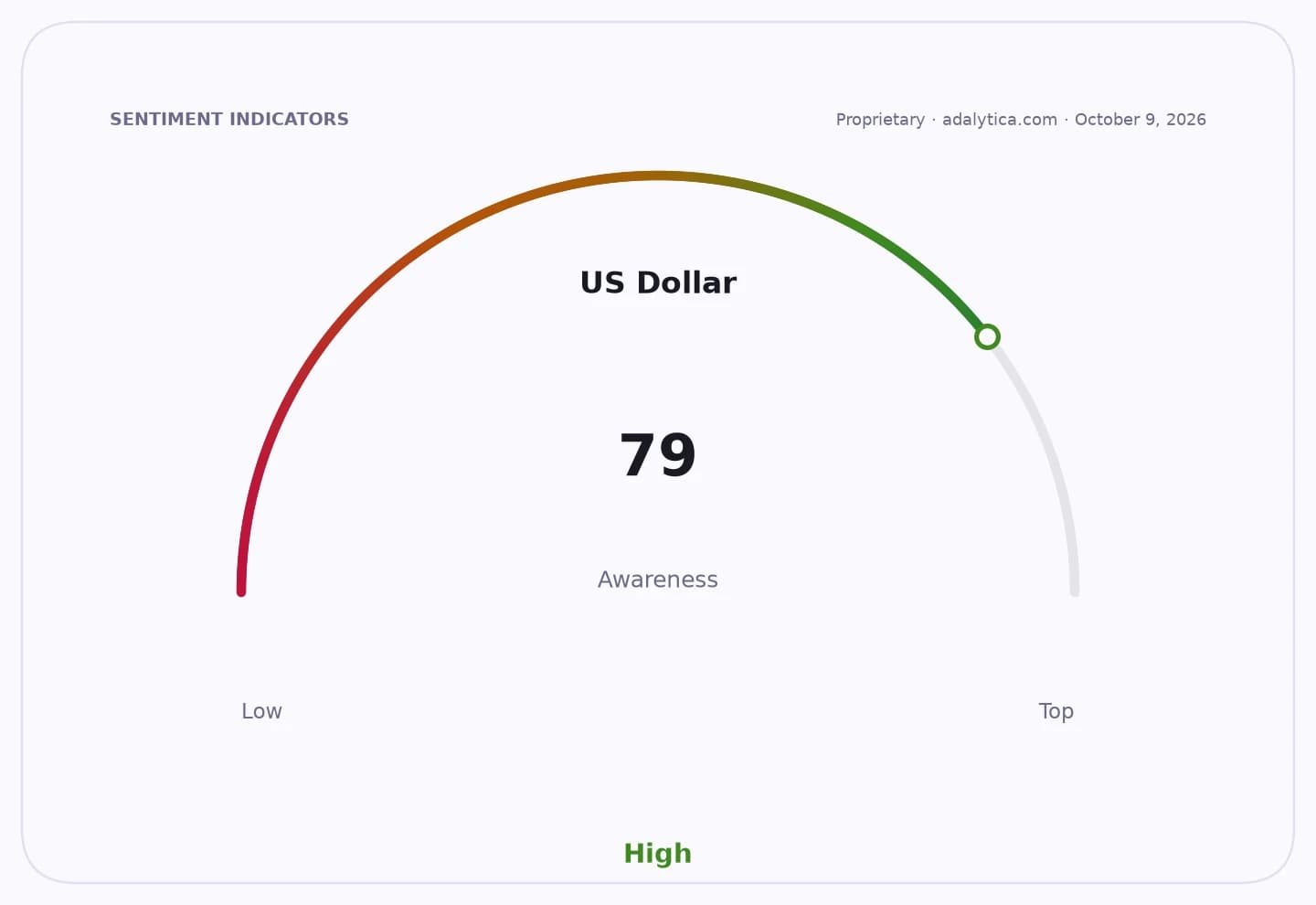
Sentiment IndicatorsⓘProprietary · adalytica.com · October 5, 2026
This is a snapshot — live sentiment, awareness and momentum for 130+ markets update continuously in the dashboard.Open AlphaPulse
What is driving the mood is the softer-than-expected U.S. labor data released on Friday. Nonfarm payrolls rose by only 29,000 in September, far below the 89,000 forecast, reinforcing expectations that the Fed will hold rates steady this month. For Hong Kong, where monetary conditions track U.S. policy through the currency peg, that matters directly: any pause in Fed tightening helps cap U.S. dollar funding pressure and improves the backdrop for mainland and Hong Kong equities.
That makes the current weakness in Hong Kong look more like a market testing support than a verdict on the region’s fundamentals. The Hang Seng’s relative calm at the open also suggests investors are balancing two opposing forces: the drag from a still-soft China growth picture and the support from hopes that global rates have peaked. Technical readings back that caution, with the index’s relative strength index around 30.5, a level that points to an oversold market but not yet a confirmed rebound.
The ETF proxy for Hong Kong, 2800.HK, was also little changed, closing at 24.6, while China-tracking 2828.HK slipped to 82.3. That tells you the weakness is broad but measured, with no sign yet of panic selling. For investors, the important question is not whether Hong Kong opened a few points lower, but whether the combination of easing U.S. rate pressure and deeply discounted valuations can bring back foreign flows.
Our view is that this is where the asymmetric opportunity sits. The market is still pricing Hong Kong like a trapped regional backwater, but it remains one of the cleanest ways to express any improvement in China risk appetite, Fed policy stability, or capital recycling into Asia. If the Fed pauses and Beijing keeps leaning toward stabilization, the next leg higher in Hang Seng-linked assets could be driven by re-rating rather than earnings growth alone.
For now, traders should treat Monday’s weak open as part of a larger consolidation after Friday’s slide. But the bigger setup is unchanged: the first sustained break in U.S. rate pressure could become the catalyst that finally gives Hong Kong stocks room to recover from oversold levels.
| Entity | Gains | Losses |
|---|---|---|
| Hong Kong equities | ▲Easier liquidity backdrop | ▼Slower China growth fears |
| Fed pause bets | ▲Rate-sensitive Asian assets | ▼Dollar bulls |
| 2800.HK / 2828.HK | ▲Index-tracking inflows | ▼Momentum sellers |
| Borrowers and rate-sensitive sectors | ▲Lower funding stress | ▼Banks chasing higher yields |