Hong Kong is moving to put standard 400-ounce gold bars onto blockchain rails, a bid to cut settlement times, lower transaction costs and strengthen the city’s role as a regional gold and digital-asset hub.
Hong Kong Plans Tokenized 400-Ounce Gold Bars

The plan, announced at Hong Kong FinTech Week, would create digital tokens backed by the large bullion bars commonly used in institutional gold trading. By turning ownership claims into transferable digital records, the system could let banks trade gold exposure without repeatedly moving physical metal, a process that is slow, expensive and difficult to scale across institutions.
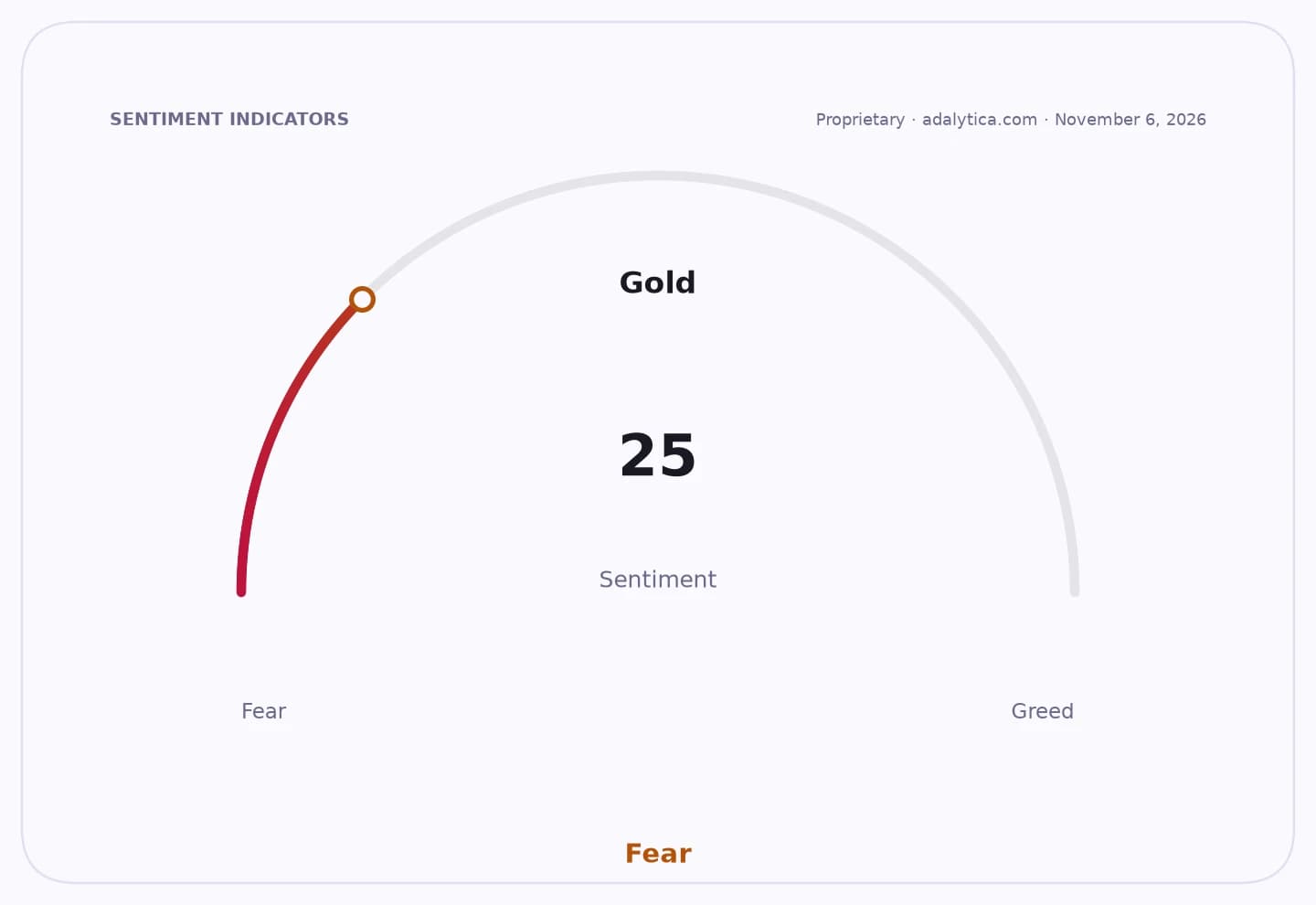
Sentiment Indicators
That matters because gold trading still depends on legacy settlement infrastructure even as demand for faster, more transparent post-trade processing rises. Hong Kong is trying to position itself where two markets are converging: precious metals and tokenized finance. The move also fits into Project Ensemble, the Hong Kong Monetary Authority’s broader effort to build blockchain-based settlement systems and digital money infrastructure.
The latest initiative is not theoretical. China CITIC Bank International and the Hong Kong Gold Exchange said they completed a pilot using tokenized bank deposits to settle gold trades in five minutes or less, versus conventional arrangements that can take days. The institutions plan to commercialize the service in 2027, suggesting the market is moving from experimentation toward usable infrastructure.
For investors, the significance is less about gold bars themselves than about who controls the plumbing. If Hong Kong can standardize tokenized bullion settlement, it could attract more institutional flow, deepen the city’s relevance in cross-border finance and create a template for other real-world assets to be digitized. That would support banks, exchanges and service providers that can plug into the system, while pressuring slower competitors and traditional settlement intermediaries.
The timing also comes as gold markets remain highly sensitive to shifts in liquidity and investor positioning. Spot and futures prices have been volatile in recent weeks, and the larger tokenization push comes against a backdrop of strong interest in hard assets and digital market infrastructure. Hong Kong’s strategy is to combine both themes: use blockchain to make an old asset class easier to trade, then market the city as the place where that future gets built.
The bull case is that tokenized bullion improves efficiency, broadens access for institutions and reinforces Hong Kong’s status as a financial hub. The bear case is that adoption will be gradual, standards will need to be coordinated across banks, and the economics only work if market participants trust the tokenized claims as much as the metal they represent.
Either way, the direction is clear: Hong Kong is trying to turn gold from a slow-moving physical asset into a digitally settled financial product, and the next catalyst will be whether the pilot systems move into full commercial trading.
| Entity | Gains | Losses |
|---|---|---|
| Hong Kong / HKMA | ▲Financial hub status | ▼Legacy settlement model |
| Banks / gold exchanges | ▲Faster settlement, lower costs | ▼Manual custody workflows |
| Institutional gold traders | ▲Easier access, faster execution | ▼Friction in physical transfer |
| Traditional intermediaries | ▲— | ▼Role in post-trade process |