Wealthy investors from the US, Europe and the Middle East are moving more of their physical gold into Singapore, turning the city-state into a fast-growing safe-storage hub as geopolitical तनाव, heavy public debts and political uncertainty reshape how rich families and institutions think about asset protection.
Singapore draws more foreign gold storage demand
That matters because the shift is not just about where bullion sits physically. It reflects a broader reappraisal of counterparty, jurisdictional and confiscation risks in a world where financial sanctions, capital controls and domestic political shocks can quickly change the value of holding assets at home. For investors, the appeal is diversification: gold kept outside their own region, in a politically stable, trade-friendly center with strong logistics and vault infrastructure.
Sentiment Indicators
Bloomberg-cited data from J. Rotbart & Co. show the amount of private gold stored in Singapore has risen roughly 16-fold since 2014 to more than 800 metric tons last year. The biggest share of that growth has come from European capital, while the firm says web inquiries from Western clients have tripled in the past year. Indigo Precious Metals also reported about a 25% increase in storage demand from European and American investors.
The buildout is feeding on itself. Silver Bullion’s six-story high-security vault can hold about 10% of annual global gold supply, and the company says client holdings have tripled since early 2020 to 8.6 tons in September, with about 90% owned by foreign investors. Singapore’s gold imports were up 44% year on year in August to 171 tons, underscoring the scale of the flow even if it remains modest relative to the global bullion market.
For Singapore, the influx supports a policy goal: becoming a major precious-metals trading and storage center in Asia and competing more directly with Hong Kong. The more bullion that arrives, the more the city-state can deepen related services in logistics, custody, trading and financing, strengthening its role in the regional financial system.
For investors, the bull case is straightforward. Holding gold in Singapore reduces domestic political exposure while preserving access to a highly liquid store of value. The bear case is that the trend, while notable, is still small in the context of the global gold market and may prove vulnerable if geopolitical tensions ease or if storage costs and operational complexity outweigh the benefits of offshore custody.
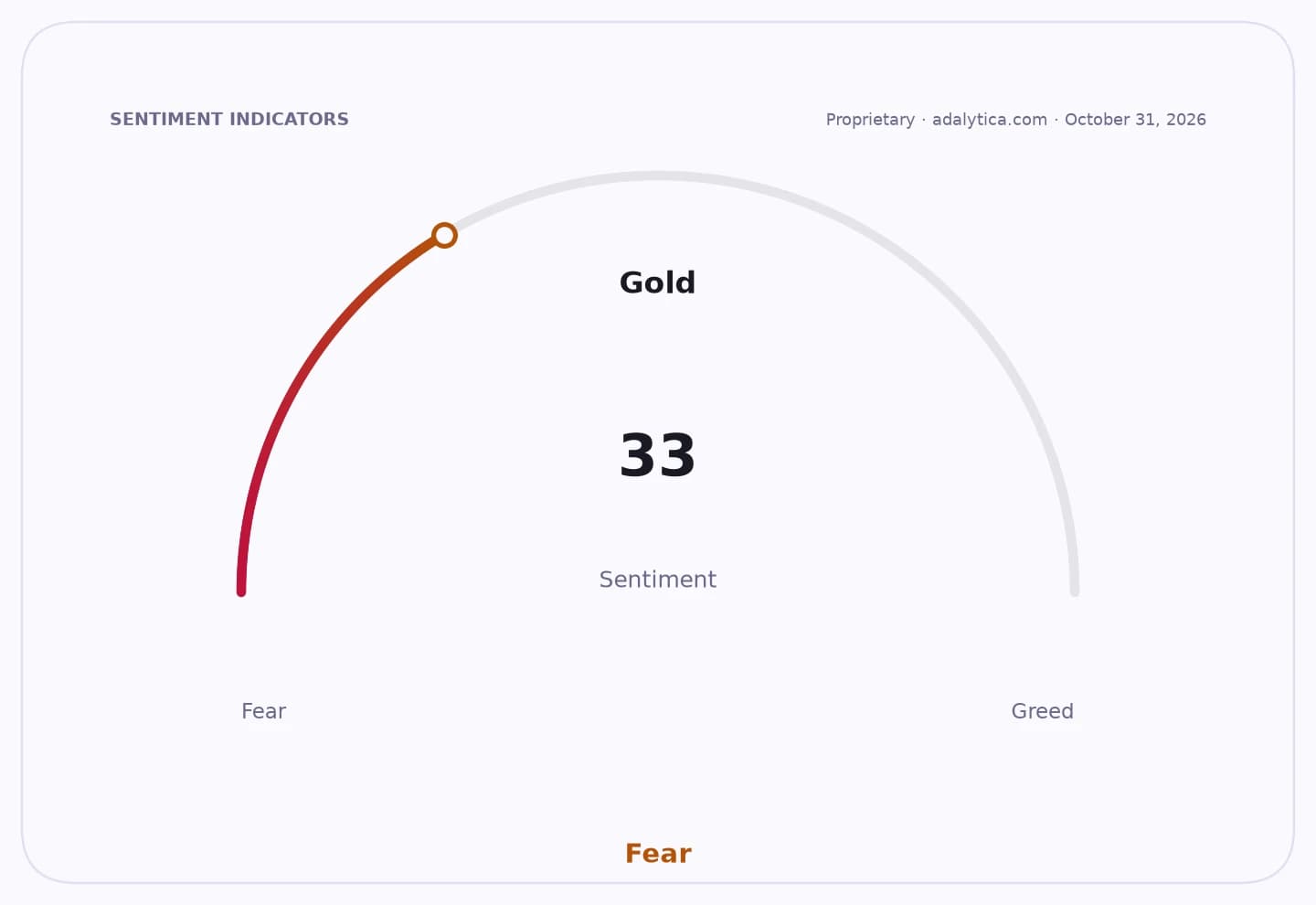
The latest move into Singapore also fits a broader gold narrative. Conventional technical indicators on gold-related ETFs such as GLD and IAU show the metal has been volatile, while Adalytica’s Gold Fear & Greed Index has dropped into extreme fear, suggesting investor caution remains high even after recent rebounds in prices. That is consistent with a market where demand for physical storage is being driven less by momentum and more by insurance.
The key question now is whether the Singapore flow becomes a durable structural shift or simply another chapter in a cyclical flight to safety. If tensions remain elevated and debt burdens keep rising, the city-state is likely to keep attracting bullion. If risk appetite returns, the pace may slow — but the logic behind offshore storage is unlikely to disappear.
| Entity | Gains | Losses |
|---|---|---|
| Singapore vault operators | ▲Higher storage demand | ▼Capacity pressure |
| Foreign gold owners | ▲Jurisdictional diversification | ▼Higher custody costs |
| Hong Kong financial rivals | ▲None | ▼Lost precious-metals share |
| Domestic storage centers in US/Europe/Middle East | ▲None | ▼Outflow of bullion |