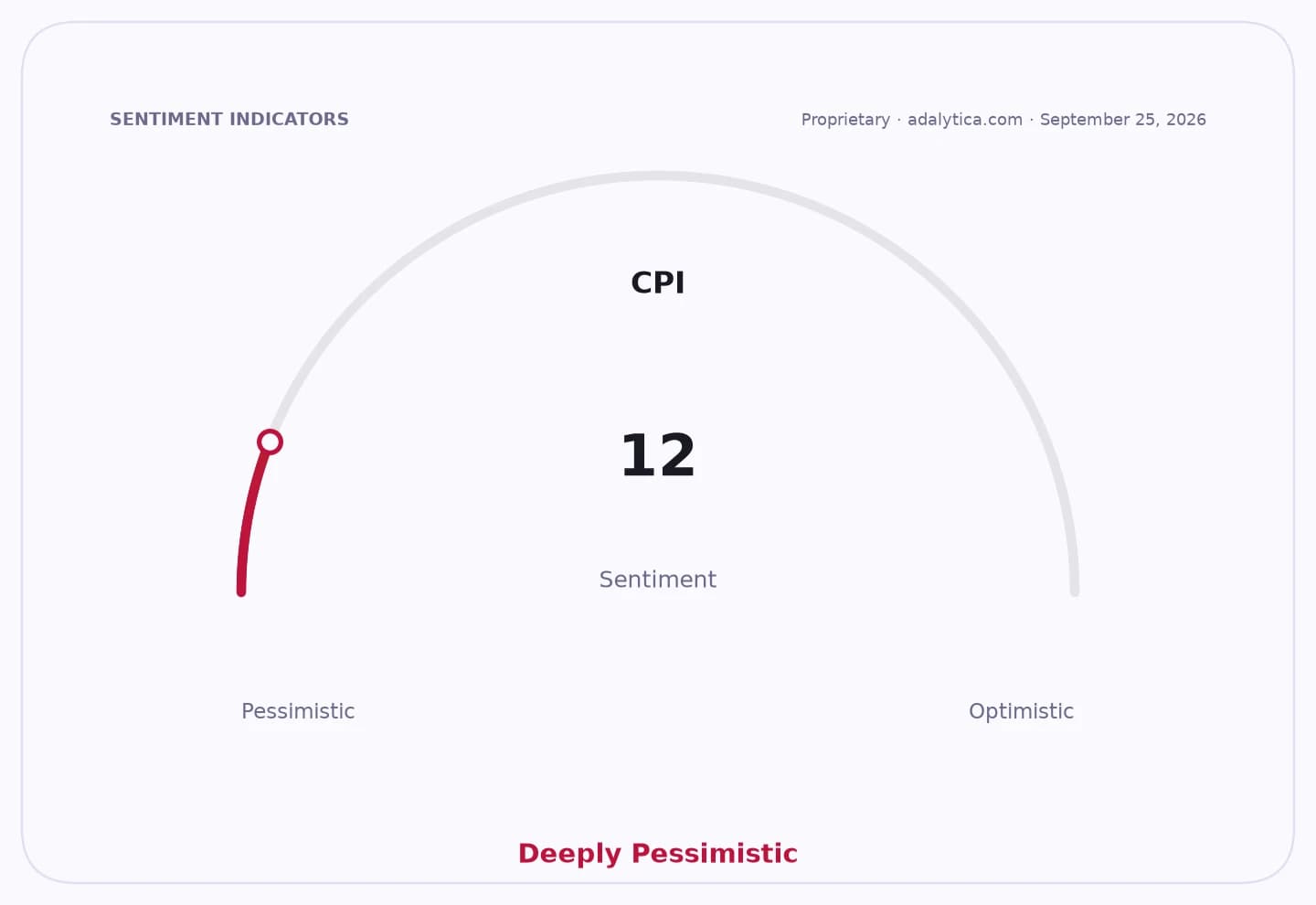
Household debt is proving stubbornly resilient even as unemployment stays near cycle lows, a reminder that many families are financing everyday life at a cost that keeps climbing.
Household Debt Stays High as Credit Stress Builds
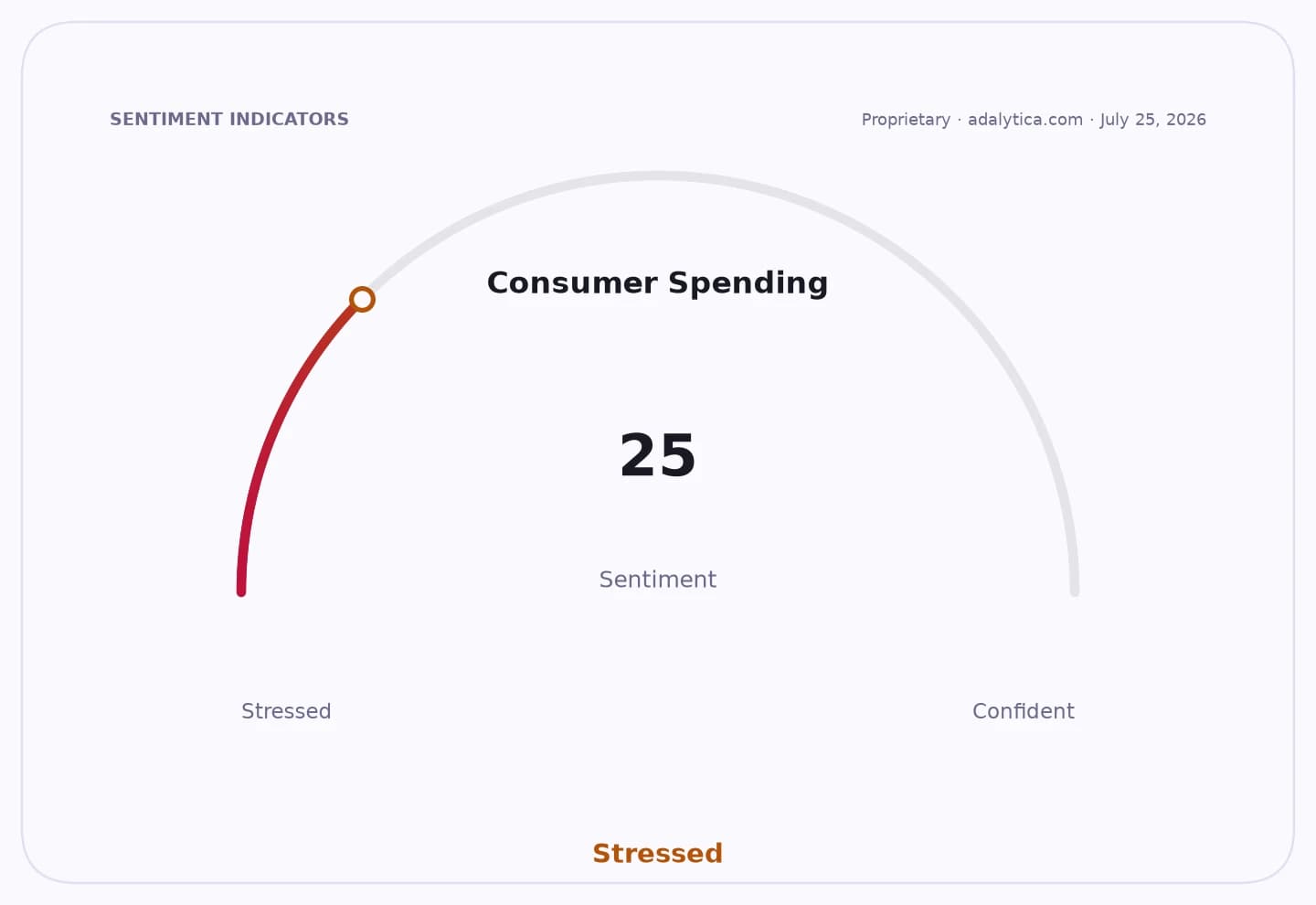
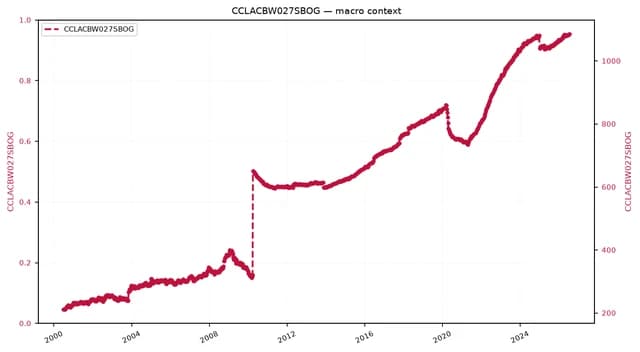
That matters because debt service, not just debt balances, is what eventually squeezes spending. The latest data point in the household debt series is still hovering a little above 1,080, more than double where it stood in the early 2000s, while the U.S. jobless rate sits around 4.2% and is projected to remain near 4.2% next month. In normal times, that combination would suggest consumers can keep up. But the pressure is showing up in credit behavior, with sentiment around credit card usage at a neutral 54 while consumer spending sentiment has slumped to 25, or “fear,” according to Adalytica’s proprietary gauges.
Sentiment IndicatorsⓘProprietary · adalytica.com · July 25, 2026
This is a snapshot — live sentiment, awareness and momentum for 130+ markets update continuously in the dashboard.Open AlphaPulse
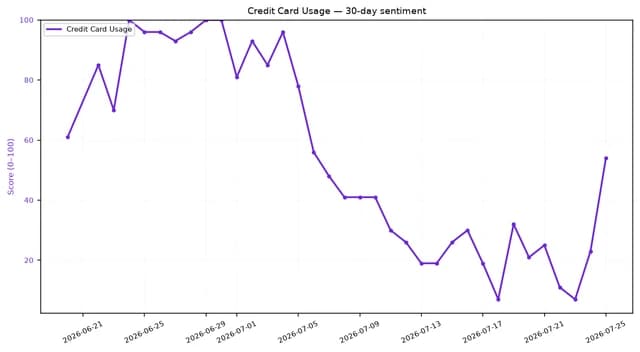
For investors, that is the key tension: households are not collapsing, but they are increasingly stretched. When borrowing costs remain high and wage gains do not outpace those costs, families lean on revolving credit longer, miss more payments and cut back on discretionary purchases. That is why rising household debt becomes a macro story, not just a consumer finance headline. It can slow retail sales, dull growth, and raise the risk that lenders are forced to absorb more losses just as funding costs remain elevated.
The pressure is especially relevant for credit-card lenders and consumer-finance firms. Synchrony Financial and Capital One have both been flagging charge-off and delinquency trends in recent SEC filings, a sign that the industry is watching credit quality closely as borrowers juggle higher balances and higher interest costs. Their shares have also reflected the push and pull between strong lending volumes and credit concerns, with Capital One recently recovering from a sharp selloff and Synchrony still trading below earlier peaks. For long-term investors, that is a reminder that the best businesses in the space are not the ones with the fastest loan growth, but the ones that can keep underwriting discipline when consumers are under strain.
The broader global picture is just as uncomfortable. Households in places such as Argentina are already struggling to service loans, while some European borrowers face heavier burdens and higher interest rates. The common thread is simple: debt becomes dangerous when incomes do not keep up. Without stronger pay gains or easier borrowing conditions, defaults rise and policymakers are left with fewer good options.
For investors, the takeaway is not to panic but to stay selective. Consumer-credit stress rarely hits all at once, and strong banks can often weather it better than the market expects. Still, the trend is worth watching closely because household balance-sheet pressure tends to work slowly and then all at once. Over a multi-year horizon, lenders with disciplined underwriting, diversified income streams and strong capital should be the ones that compound best.
| Entity | Gains | Losses |
|---|---|---|
| Prudent lenders | ▲Better pricing discipline | ▼Lower loan growth |
| Overextended households | ▲Debt relief if rates fall | ▼Higher interest burden |
| Credit-card issuers | ▲Revolving balances support revenue | ▼Rising charge-offs |
| Consumer spending | ▲Stabilizes if incomes improve | ▼Slower discretionary demand |