Huawei used its Shanghai showcase to press a larger argument now shaping the AI boom: the next constraint on growth is no longer just chips, but power, cooling and grid stability.
Huawei AI Data Center Power and Cooling Plan

That matters because the economics of AI infrastructure are shifting fast. As model training and inference workloads become more volatile and energy-hungry, data centers are being judged less on raw compute capacity than on how many tokens they can produce per watt. Huawei’s pitch is that the winning architecture will be one that can absorb renewable power swings, protect grid quality and cut deployment time — all while lowering the cost per token.
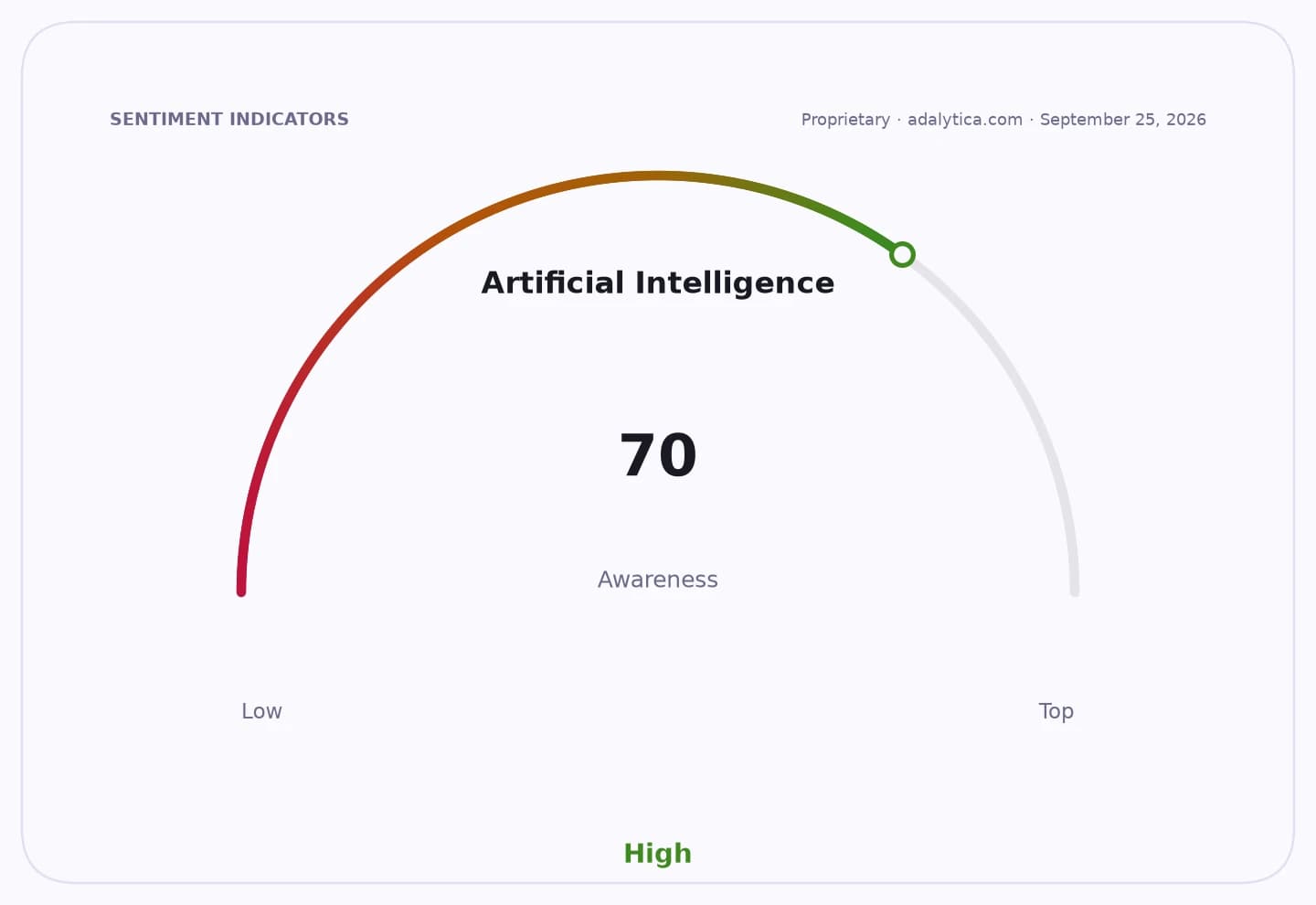
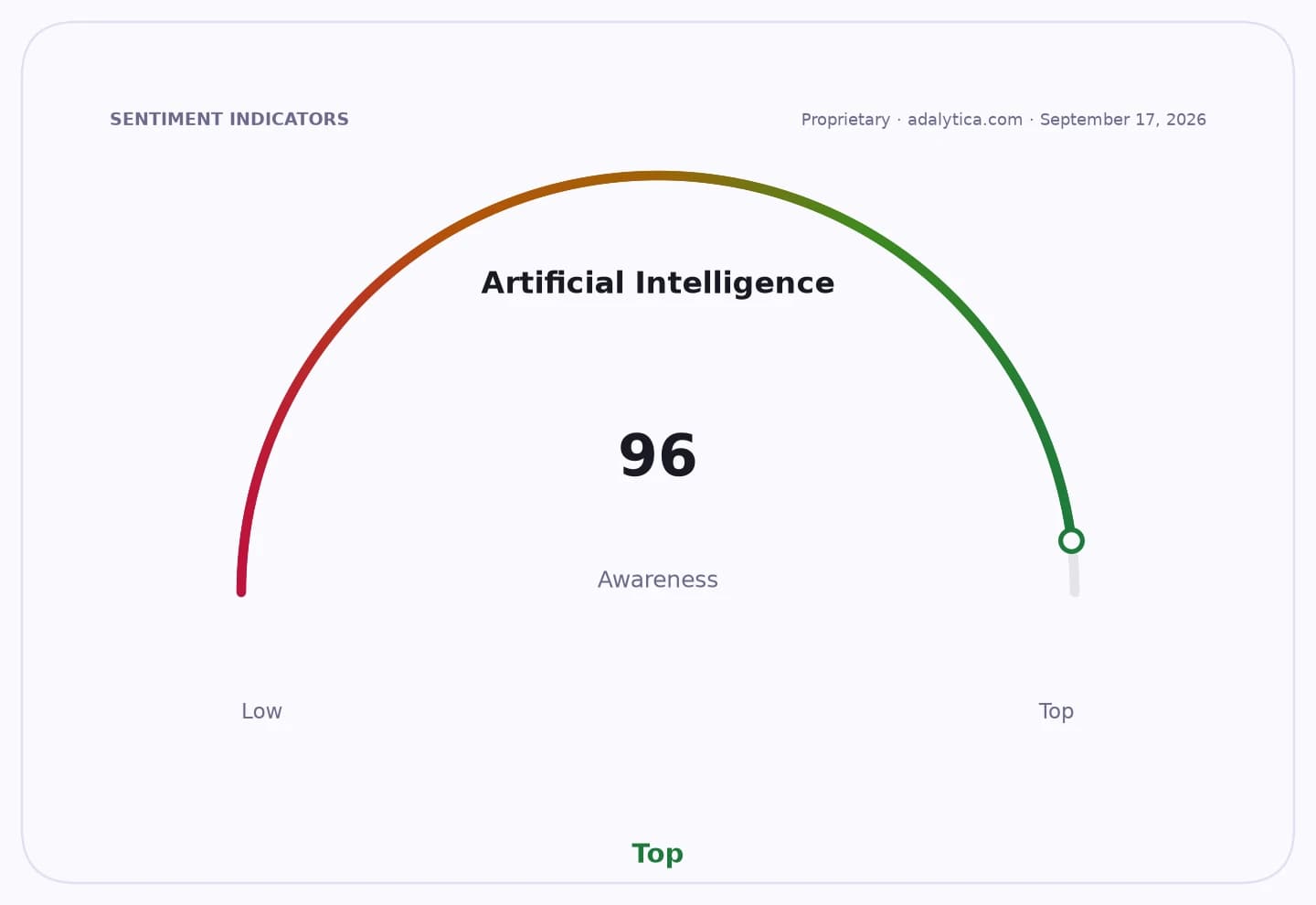
Sentiment IndicatorsⓘProprietary · adalytica.com · September 23, 2026
This is a snapshot — live sentiment, awareness and momentum for 130+ markets update continuously in the dashboard.Open AlphaPulse
At its HUAWEI CONNECT 2026 summit, the company unveiled a grid-interactive AIDC solution built around what it called “3+1” innovations: a new power architecture, liquid cooling, hybrid energy storage and modular delivery. Huawei said the system is designed to move AI data centers from rigid loads to active participants in the energy system, using grid-friendly UPS units, lithium batteries and grid-forming storage to smooth AI workload fluctuations.
The timing is commercially significant. Hyperscale AI buildouts are running into the same constraints across markets: land, power access, permitting, transmission capacity and cooling. Those bottlenecks are already stretching project timelines and raising capital intensity, a dynamic flagged in recent filings by Nvidia and Microsoft. For suppliers, the prize is enormous if they can solve the infrastructure stack; for operators, every basis point of efficiency matters because electricity and deployment speed now weigh directly on margins.
Huawei is also trying to position itself in the layer between semiconductors and utilities. Its argument is that AI infrastructure can no longer be designed as a disconnected computing asset, but as part of a broader power system that must remain stable even as workloads spike and renewable generation fluctuates. That thesis overlaps with what operators such as VNET Group and SenseTime described at the summit: data centers need tighter integration between compute, storage and energy, and the industry is moving from the older PUE metric to token-per-watt economics.
For investors, the immediate takeaway is that AI capex is broadening. The market has largely focused on GPUs, networking and cloud demand, but the next wave of spending is increasingly tied to electrical equipment, cooling systems, batteries, grid software and site engineering. That favors infrastructure vendors with end-to-end capabilities and gives established cloud and data center operators a chance to defend scale advantages if they can secure power faster than rivals.
It also raises a competitive question for the sector. If token efficiency becomes the key operating metric, companies that can combine compute, power and cooling into an integrated platform may enjoy better returns on invested capital than those relying on ad hoc data center expansion. The bull case is that this unlocks faster, more resilient AI capacity growth. The bear case is that the industry keeps adding complexity and cost faster than utilization can catch up.
Huawei’s message in Shanghai was that the AI race is becoming an energy race. The companies that can turn grid constraints into a managed system — rather than a bottleneck — are likely to win the next phase of infrastructure buildout.
| Entity | Gains | Losses |
|---|---|---|
| Huawei | ▲Higher relevance in AI infrastructure | ▼Narrower pure-chip narrative |
| Hyperscale operators | ▲Faster deployment options | ▼Higher capex complexity |
| Utilities / grids | ▲More flexible demand tools | ▼More strain without upgrades |
| GPU-only vendors | ▲Demand still strong | ▼Less control over full stack |