Hungary’s wage growth accelerated to 8.4%, outpacing Germany and reinforcing the country’s reliance on its largest trading partner even as stronger pay is set to support consumer spending and add to inflation pressure.
Hungary Wage Growth Rises to 8.4%
The increase matters because Hungary’s labor market cannot be read in isolation. For an export-heavy economy tied closely to German manufacturing, wage gains are partly a function of external demand, investment cycles and supply-chain positioning. When German industry is strong, Hungarian suppliers and factories feel it quickly; when it weakens, wage momentum can stall just as fast. That makes Hungary’s pay data an important barometer not only of domestic demand, but of the wider Central European industrial cycle.
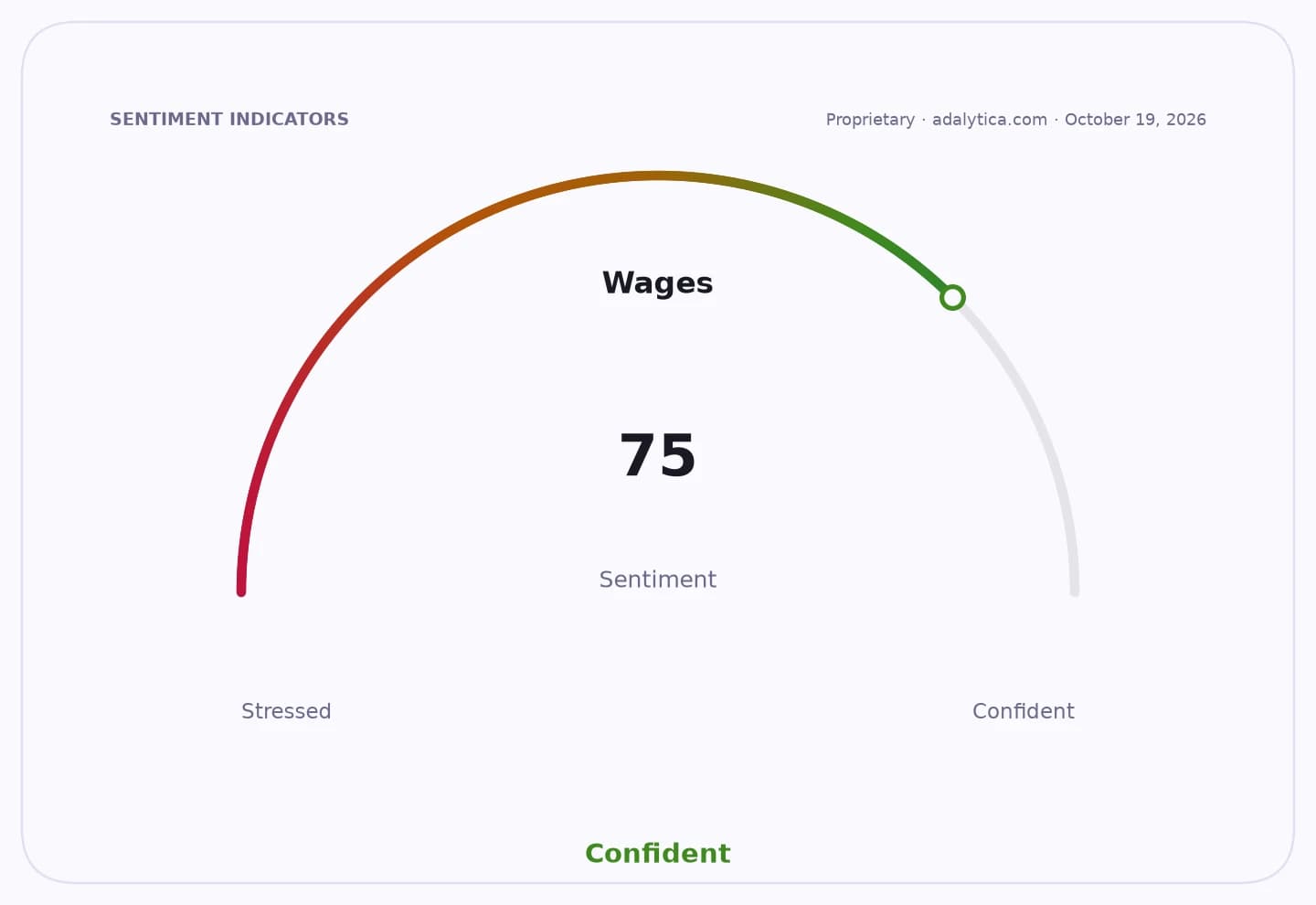
Sentiment IndicatorsⓘProprietary · adalytica.com · October 19, 2026
This is a snapshot — live sentiment, awareness and momentum for 130+ markets update continuously in the dashboard.Open AlphaPulse
For investors, the immediate implication is a tougher inflation-and-rates backdrop. Faster wage growth can lift real household incomes and retail activity, but it also raises unit labor costs, particularly if productivity does not keep pace. That combination risks keeping consumer-price pressure sticky and may limit room for monetary easing. In a region where currency stability and policy credibility matter for equity and bond valuations, sustained wage growth can sharpen scrutiny of the central bank’s reaction function.
The data also points to a divergence between households and exporters. Workers and domestic service businesses stand to benefit from stronger pay packets and better consumption, while manufacturers exposed to international pricing competition may face margin pressure unless they can pass through higher costs. German-linked suppliers are especially relevant: they gain from healthier order books and wage-driven labor retention, but they also bear the downside if pay gains outstrip productivity or if euro-area demand cools.
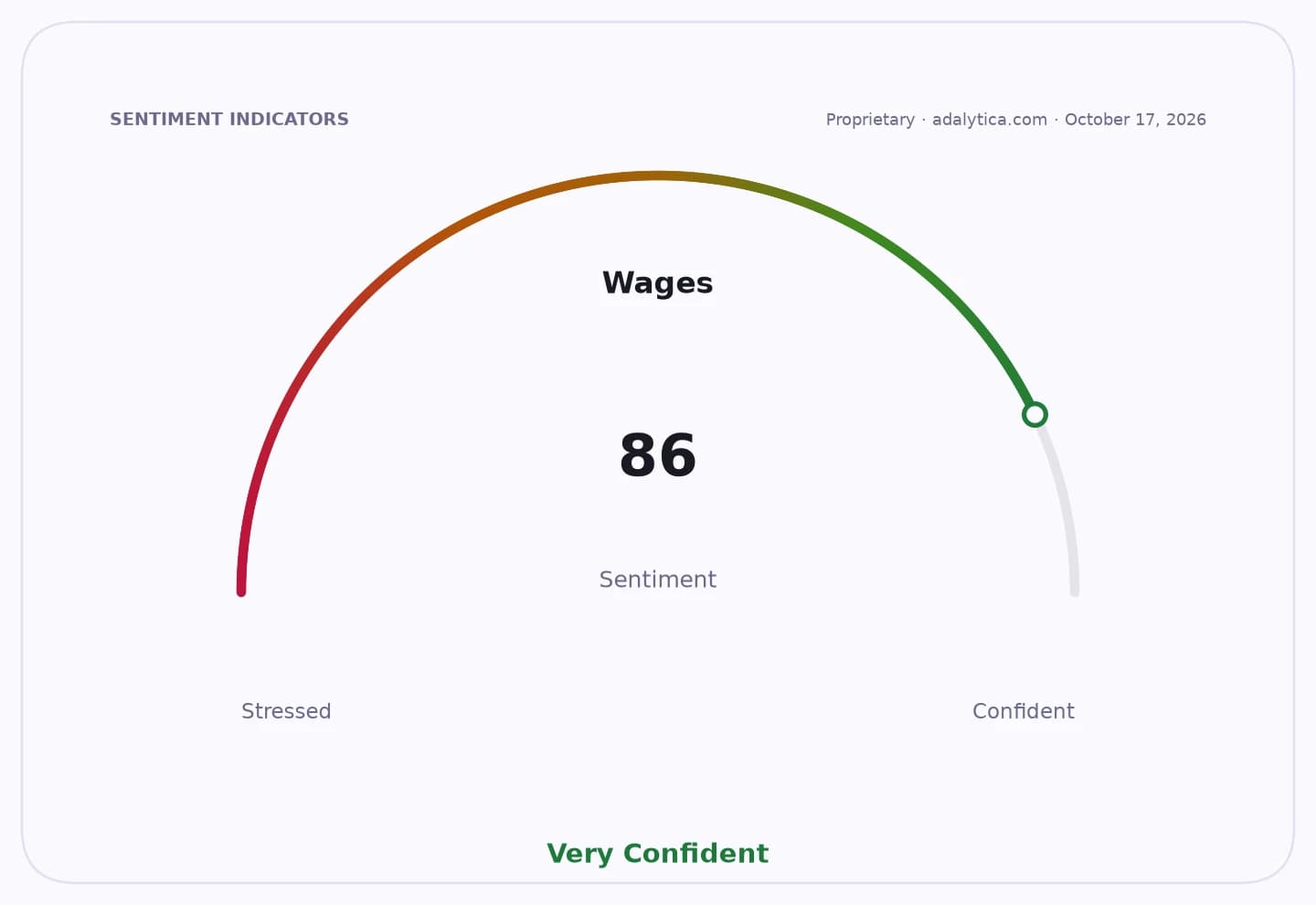
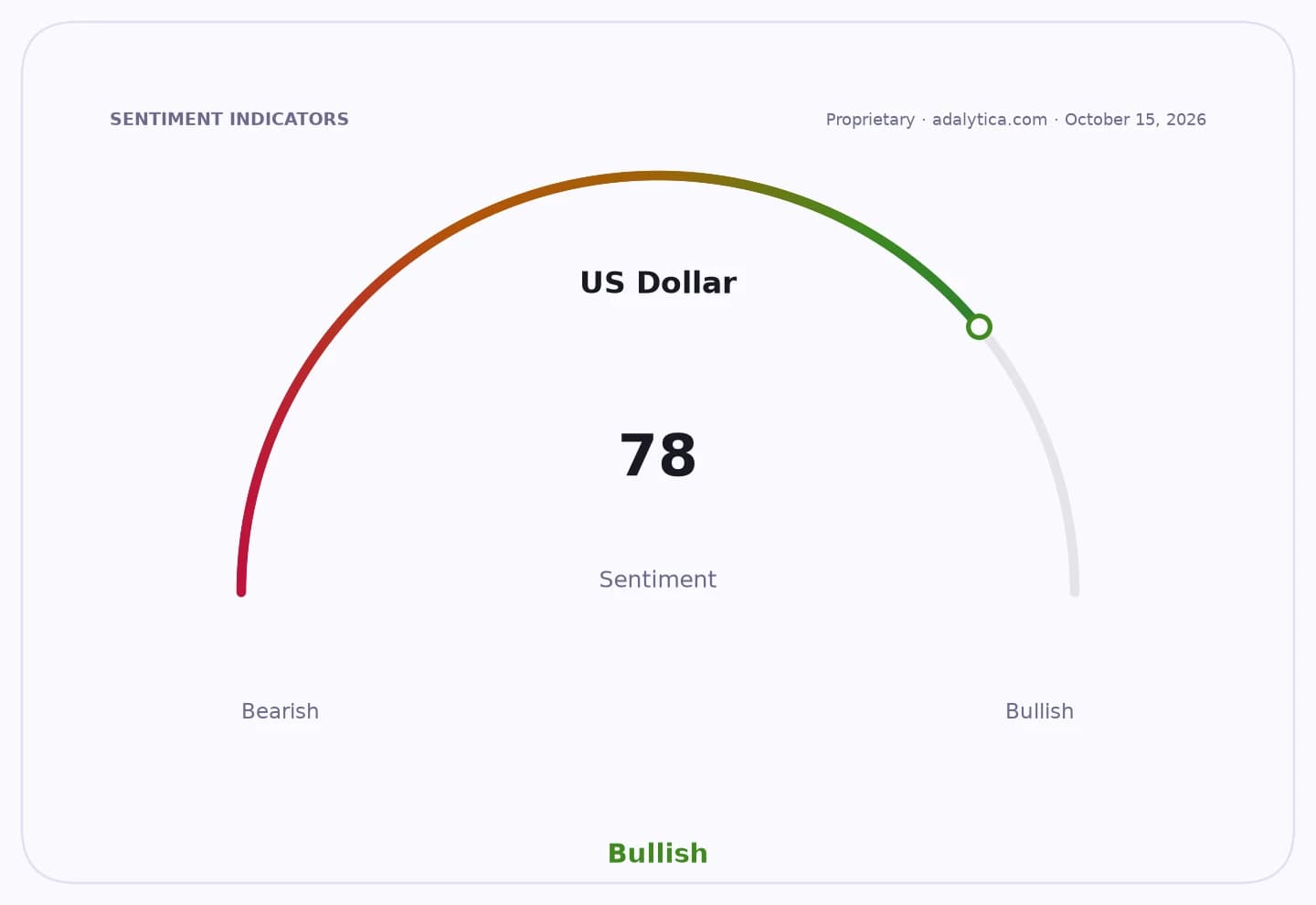
Broader market signals are mixed. Conventional technical indicators on EUR/USD show the euro near the lower end of its recent range, while Hungary’s equity exposure through European industrial names remains sensitive to German growth expectations. Adalytica’s wage-inflation sentiment gauges also show heightened attention to pay pressures, underscoring how quickly labor data can shift the market narrative from growth support to inflation risk.
The key question now is whether Hungary’s wage gains reflect a durable improvement in domestic fundamentals or a cyclical burst tied to Germany’s industrial pulse. If the former, household demand and growth should stay resilient; if the latter, the economy could face a familiar trade-off of stronger wages now and weaker competitiveness later.
| Entity | Gains | Losses |
|---|---|---|
| Hungarian workers | ▲Higher real incomes | ▼None immediately |
| Hungarian consumers | ▲Stronger spending power | ▼Higher inflation risk |
| Exporters tied to Germany | ▲Better demand from industrial cycle | ▼Higher labor costs |
| Hungarian central bank | ▲Less urgency on growth support | ▼More pressure to fight inflation |