The International Criminal Court said it will keep working “with independence and impartiality” despite US sanctions, underscoring a widening clash between Washington and the world’s permanent war crimes tribunal that could shape how aggressively the court pursues cases involving American personnel and allied governments.
ICC Says It Will Continue Despite US Sanctions
Geopolitical Risk
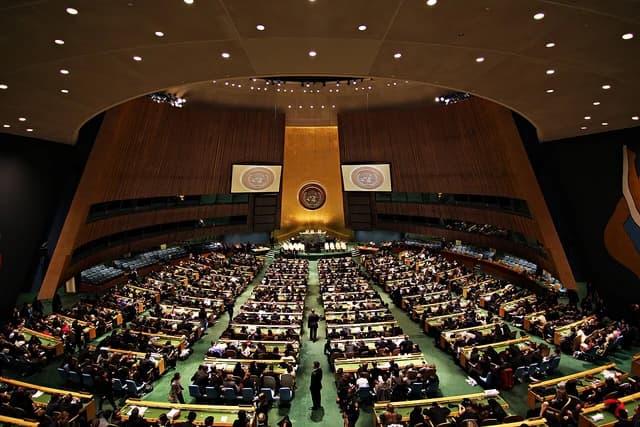
ICC President Tomoko Akane used a recorded message to the UN General Assembly to reject what she called US efforts to obstruct justice, after Washington barred her from entering the country and froze her US assets under sanctions announced in August and expanded in October to cover the court itself. The dispute matters because the ICC relies on cooperation from states to arrest suspects, gather evidence and move cases forward; sanctions on senior officials raise the cost of that work and can chill banks, vendors and governments that do business with the court.
Sentiment Indicators
For investors, the episode is less about a direct market trade than about institutional risk and geopolitical frictions that are increasingly shaping cross-border policy. The ICC’s confrontation with the Trump administration adds another layer to already strained relations between the US and international institutions, and it reinforces the possibility of further retaliatory measures or diplomatic spillovers if the court advances probes touching on American conduct or allies' military actions.
Akane’s intervention was notable not only because she could not travel to New York, but because Japan and the Netherlands co-sponsored the arrangement allowing her to speak by video. That detail shows the court still has backing from key member states even as it faces pressure from the US, which has argued that ICC investigations infringe on national sovereignty. The message was carefully framed: the court said it would operate only on the basis of law and evidence, seeking to preserve legitimacy while signaling it will not retreat under financial or travel restrictions.
The immediate economic impact is limited, but the broader implications are significant for diplomacy, compliance and the cost of doing business in politically sensitive environments. Sanctions on an international judicial body can complicate procurement, banking relationships and staffing, while also encouraging other governments to harden positions around sovereignty and jurisdiction. That raises the risk of more fragmented global governance just as investors are already navigating elevated geopolitical uncertainty.
For the ICC, the key question is whether the sanctions become a practical impediment or merely a political irritant. For Washington, the issue is whether pressure on the court deters future investigations or instead strengthens the perception that the ICC is being punished for independence. Either way, the standoff is likely to remain a live test of how far the US is willing to go to resist international legal scrutiny, and how much institutional backing the court can muster when its authority is challenged by a major power.
| Entity | Gains | Losses |
|---|---|---|
| ICC | ▲Institutional backing from members | ▼Operational flexibility |
| US administration | ▲Signals sovereignty stance | ▼Diplomatic credibility |
| Member states backing Akane | ▲Support rule-based order | ▼Strain with Washington |
| Investors in global policy risk | ▲Clearer view of tensions | ▼Higher geopolitical uncertainty |