The United States has sanctioned companies and individuals in India and Türkiye over alleged support for Iran, widening Washington’s effort to choke off Tehran’s oil, shipping and aviation networks as tensions in the region stay elevated.
US Sanctions India and Türkiye Firms Over Iran Ties
The Treasury Department said it targeted a “vast criminal network” tied to Chandigarh-based Suniel Kumar Sharma and his wife, Jaspreet Preeti Shahid, accusing them of helping Iran’s shadow fleet through maritime fraud. It also sanctioned two other Indian nationals, Ashwani Kumar Dhiman and Ishwinder Singh, plus nine linked entities.
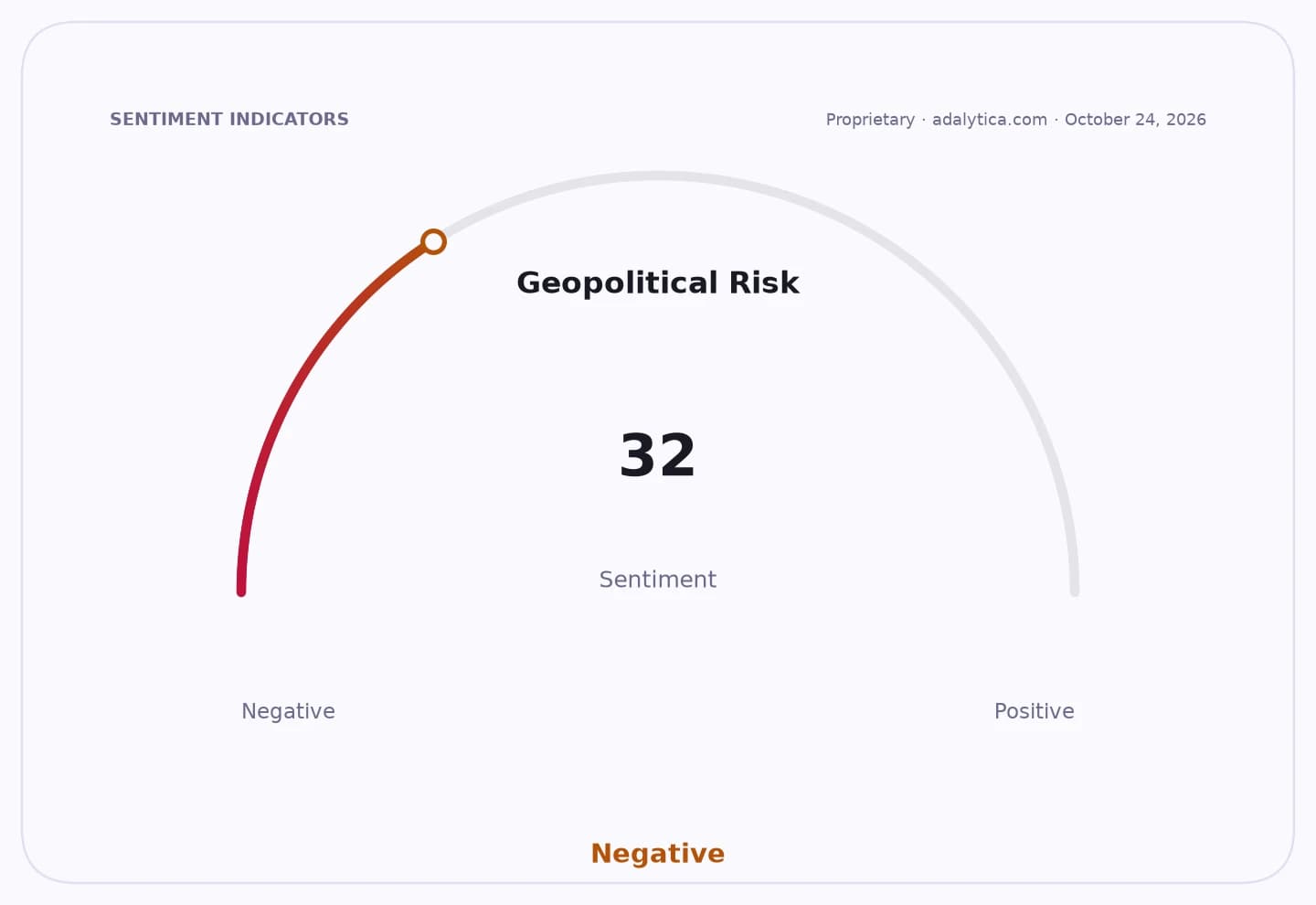
Sentiment Indicators
Washington said the scheme provided false flags and fake maritime certifications to vessels transporting Iranian petroleum, including ships operating for Iran’s military and its proxies. Such vessels can move outside international safety and insurance rules, raising the risk of major spill or collision costs in territorial waters.
The action also hit Türkiye-based Fugo Ground Services, which Treasury said provided ground handling and other services to sanctioned Iranian airlines flying to Türkiye. Treasury Secretary Scott Bessent said the US will sanction those “whether by land, sea or air,” underscoring a broader campaign against firms that help keep Iran’s trade channels open.
For investors, the move matters because it raises the risk of secondary sanctions and compliance scrutiny for logistics, aviation and shipping counterparties across the region, even when they are outside Iran. It also keeps a floor under geopolitical risk premiums in oil markets, where traders are already sensitive to any disruption to Iranian exports or broader West Asian supply routes.
The sanctions follow earlier US action against India-based firms over Iranian petroleum and petrochemical imports, showing Washington is expanding beyond direct Iranian entities to intermediaries and facilitators. That could pressure smaller maritime service providers, ground handlers and insurers with exposure to sanctioned cargoes or airlines.
With peace talks between Washington and Tehran stalled and the war in West Asia still unresolved, more sanctions are likely. The key market risk is that enforcement broadens further, pulling in additional regional firms and keeping crude oil volatile while compliance costs rise for trade into and out of the Middle East.
| Entity | Gains | Losses |
|---|---|---|
| US Treasury / Trump administration | ▲Leverage over Iran | ▼Diplomatic friction with regional firms |
| Iran and its proxies | ▲None | ▼Shipping, aviation and oil networks |
| Indian and Turkish firms named | ▲None | ▼US market access, banking and trade ties |
| Oil bulls / compliance firms | ▲Higher risk premium | ▼Lower trade certainty |