US small caps are back on investors’ radar because the iShares Core S&P Small-Cap ETF, or IJR, has pulled back enough to look more compelling after a hard year of swings. For long-term investors, that matters because small caps often offer the most leverage to a stronger economy, but only when prices reset to a more reasonable level.
IJR Pulls Back as Small Caps Remain Below 50-Day Line

IJR closed at 137.78 on Oct. 21, down from 149.87 in early August and well below its recent peak, even after rebounding from a spring washout. The ETF is still trading above its 200-day moving average of 135.99, but it remains under its 50-day moving average of 141.28, a sign that the recovery is still incomplete rather than fully confirmed.
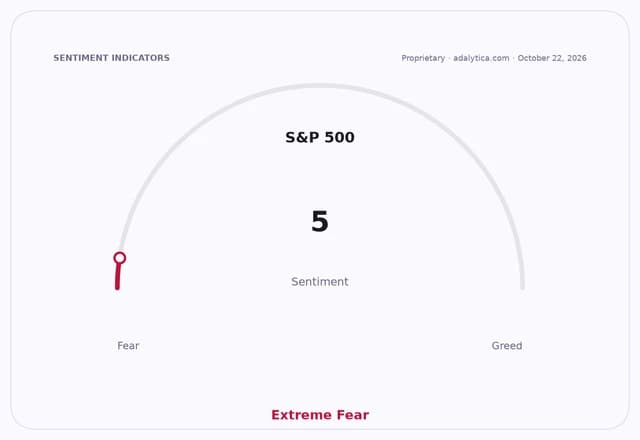
Sentiment IndicatorsⓘProprietary · adalytica.com · October 22, 2026
This is a snapshot — live sentiment, awareness and momentum for 130+ markets update continuously in the dashboard.Open AlphaPulse

That setup is exactly why small caps deserve attention now. When an asset class falls far enough to reset expectations, future returns can improve even if the business backdrop is merely decent rather than spectacular. Small companies are typically more sensitive to borrowing costs, hiring trends and domestic demand than large caps, so any stabilization in the economy can translate into outsized earnings momentum.
The valuation story is also changing. After a long stretch in which large-cap stocks dominated, small caps had been priced as if slower growth and tighter credit would last indefinitely. That tends to create opportunity for patient buyers, especially in broad, diversified vehicles like IJR rather than in single names that can carry much more balance-sheet risk.
The recent tape suggests investors are still cautious, not euphoric. IJR’s RSI sits around 53, which is neutral, and its MACD has improved from negative territory but has not yet produced a convincing breakout. In other words, the ETF is no longer washed out, but it is also not overextended. For buy-and-hold investors, that often looks more attractive than chasing a rally after it has already run.
Compared with other small-cap benchmarks, IJR’s message is similar: the group has bounced, but it is still fighting for leadership. The Russell 2000 ETF, IWM, trades at 276.48, below its 50-day moving average of 287.13 and still well under its recent highs. Vanguard Small-Cap ETF VB has also recovered, but like IJR it is trading beneath its 50-day line. That tells investors the broader small-cap trade is improving, yet not fully healed.
The macro backdrop matters more than the day-to-day price action. Small caps usually benefit when investors become more confident about growth, credit and labor demand. Adalytica’s S&P 500 trade signals currently show extreme fear in the broader market, which often creates the kind of skepticism that eventually helps cyclical corners of the market, including smaller companies, once conditions stabilize. If payroll growth stays supportive and the economy avoids a sharp downturn, small caps could continue to regain favor.
The risk, of course, is that a weaker economy or tighter financing conditions would hit smaller companies harder than their large-cap peers. That is why investors should think in years, not weeks. Small caps can be volatile, but that volatility is exactly what can create long-term entry points when valuations reset.
For investors building wealth over a multi-year horizon, IJR is worth watching as a cleaner way to gain exposure to that rebound without taking single-stock risk. If you believe the economy can stay resilient and valuations matter, this kind of pullback is the sort of setup long-term investors should keep on their watchlist.
| Entity | Gains | Losses |
|---|---|---|
| IJR buyers | ▲Lower entry point | ▼Near-term volatility |
| Small-cap stocks | ▲Re-rating potential | ▼Tight credit risk |
| Large-cap funds | ▲Relative safety | ▼Less upside if small caps rally |
| Small-cap shorts | ▲Drawdown gains | ▼Short squeeze risk |