India’s government is preparing an exit plan for Agniveers that could ease a major source of anxiety in the country’s controversial short-service military model: what happens after four years.
India Agniveer Exit Plan Aims for Post-Service Jobs
For investors and the broader economy, that matters because the Agnipath scheme was never just a defense policy. It is also a labor-market experiment affecting the employability of thousands of young people each year, the skills pipeline into civilian jobs and, ultimately, the government’s ability to keep the scheme politically and socially workable.
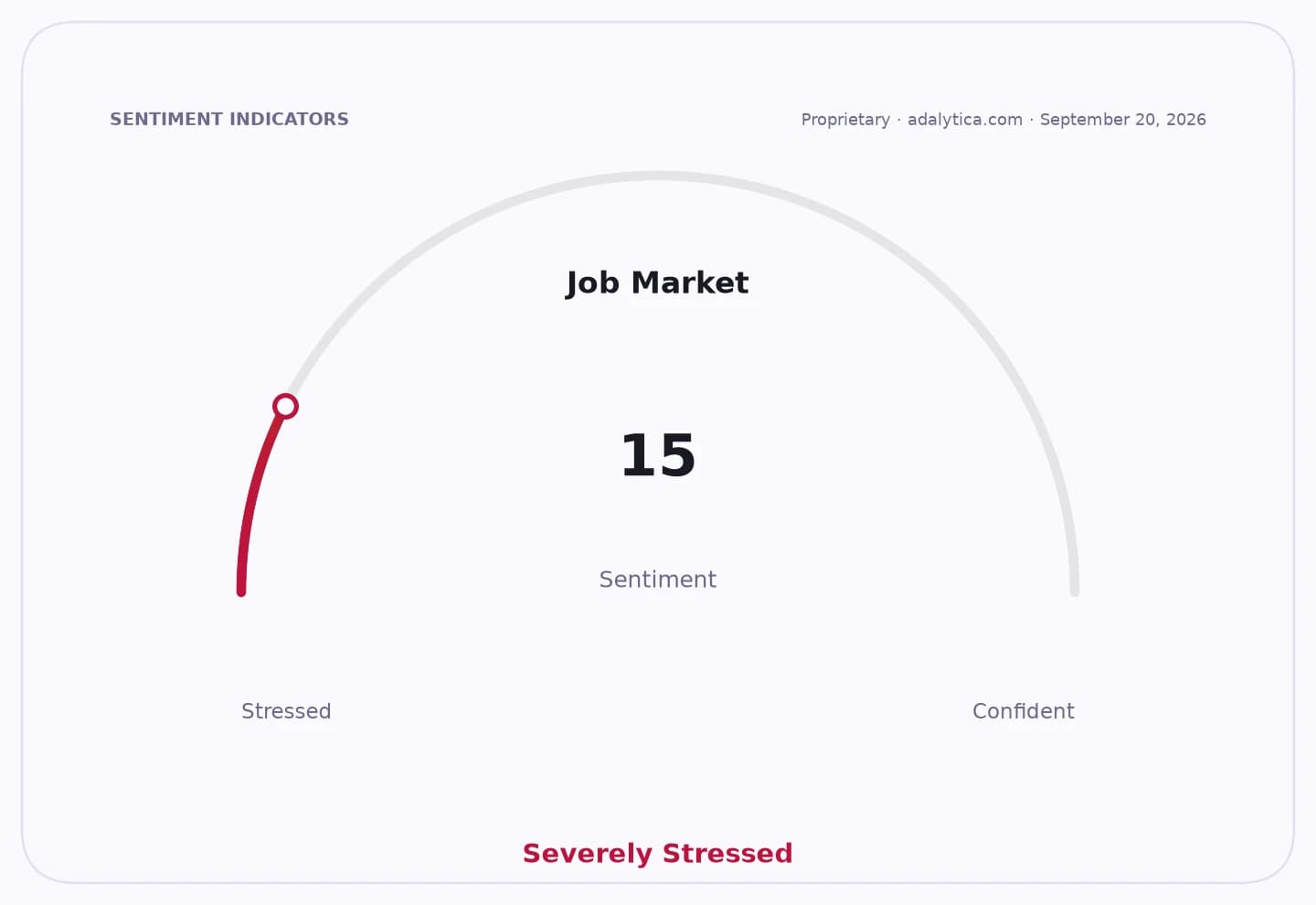
Sentiment IndicatorsⓘProprietary · adalytica.com · September 20, 2026
This is a snapshot — live sentiment, awareness and momentum for 130+ markets update continuously in the dashboard.Open AlphaPulse
The key issue is post-service placement. Under Agnipath, recruits serve for four years before most are released from the armed forces. The new plan is meant to ensure they do not spend that period worrying about unemployment once they exit the military. In practice, that could mean structured job links with public-sector employers, training support, or preference mechanisms that turn military experience into a hiring advantage.
That would make Agniveer service more attractive to recruits and their families, which is important because the program depends on a steady flow of young volunteers. A clearer career landing pad after four years could help reduce resistance to the scheme and improve retention at the entry level, even if the armed forces continue to rely on a short-term model.
It also has wider economic implications. A successful exit framework could help India convert military training into civilian productivity, improving employability in security, logistics, operations and discipline-heavy roles. That matters in a country with a young workforce and intense competition for stable jobs. If the government can show that service leads to credible second-career opportunities, the model becomes easier to defend politically and more useful as a workforce policy.
For investors, the direct read-through is modest but not trivial. A more stable Agniveer framework would reduce policy risk around defense recruitment and support continuity in India’s military modernization agenda. It could also benefit contractors and employers that work with the state if the exit plan channels former soldiers into training, security and infrastructure jobs. Over time, the bigger payoff is institutional: a policy that turns a potential employment problem into a pipeline for trained labor is easier for governments to sustain.
The challenge, of course, is execution. A promise of reemployment is only valuable if it is backed by actual hiring pathways, transparent rules and enough scale to matter. If the exit plan is broad on paper but narrow in practice, the anxiety it is meant to solve could simply reappear in another form.
Still, the direction is encouraging. India appears to be trying to make Agnipath not just a recruitment system, but a transition system. For long-term investors, that is the more durable story: policies that reduce friction in labor markets and improve the odds of post-service employment tend to support social stability, political continuity and, eventually, better economic growth.
| Entity | Gains | Losses |
|---|---|---|
| Agniveers | ▲Clearer post-service jobs | ▼Uncertainty after exit |
| Indian government | ▲Better policy stability | ▼Higher implementation burden |
| Employers/public sector | ▲Trained young workers | ▼More hiring competition |
| Defense critics | ▲Less to criticize if exits improve | ▼Fewer arguments against the scheme |