India’s passenger-vehicle market just delivered a reminder that the country’s auto boom is still being driven by real demand, not just showroom theatrics.
India Auto Sales Hit Record in September
September retail sales climbed 31.82% from a year earlier to 2.54 million vehicles across all segments, according to the Federation of Automobile Dealers Associations, the strongest September ever recorded. The most closely watched subplot was in passenger vehicles, where Mahindra & Mahindra edged past Tata Motors by just 89 units — 57,343 registrations versus 57,254 — underscoring how tight the battle for India’s fast-growing SUV market has become.
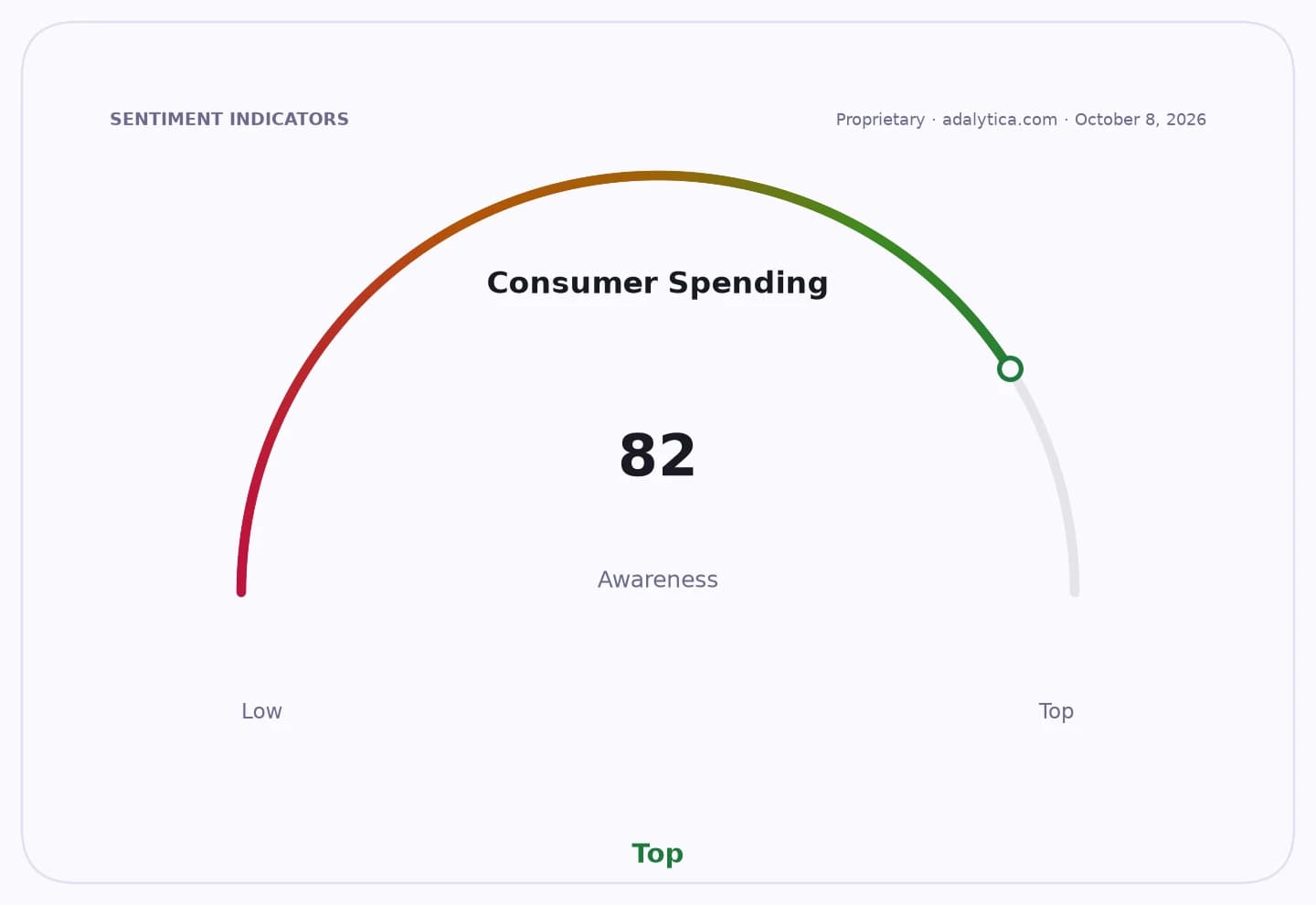
Sentiment IndicatorsⓘProprietary · adalytica.com · October 11, 2026
This is a snapshot — live sentiment, awareness and momentum for 130+ markets update continuously in the dashboard.Open AlphaPulse
That matters because India’s auto sector is one of the clearest proxies for consumer confidence, rural income trends and the strength of festive-season spending. A record month at the dealership level suggests buyers are still willing to commit to big-ticket purchases even after a run-up in prices and a longer replacement cycle. For long-term investors, that is exactly the kind of durable consumption trend worth paying attention to.
The headline number was helped by calendar effects, with the industry benefiting from a weak base tied to last year’s GST-related disruption. But the underlying message is hard to miss: SUVs continue to dominate, electric vehicles are taking a larger share, and customers are not waiting around. FADA said passenger-vehicle inventory stood at 43 to 45 days, a sign that dealers are carrying stock to meet demand into the festival season.
Maruti Suzuki remained the market leader by a wide margin with 169,132 registrations, but the real strategic story is the fight behind it. Mahindra’s outperformance over Tata reflects how strongly its SUV portfolio is resonating with buyers, and how quickly market share can shift when a company has the right products at the right price points. For investors, that is important because the auto business rewards companies that can convert product momentum into pricing power, operating leverage and, eventually, better free cash flow.
The broader mix is changing too. CNG and hybrid vehicles are gaining traction, while EVs accounted for 8.45% of the market. That shift matters well beyond one month’s sales tally. It points to a more diversified Indian auto market, where brands that can serve internal combustion, hybrid and electric demand all have a better shot at compounding over several years.
Mahindra’s stock has been under pressure recently, with its shares trading well below short- and medium-term moving averages and the RSI deep in oversold territory, a conventional technical reading that suggests the market has been skeptical. But investors should not confuse near-term volatility with a broken long-term story. If Mahindra can keep converting SUV demand into volume leadership, the market will eventually reward that consistency.
Tata, meanwhile, remains a formidable player with a broad EV presence and a strong brand, but September shows that leadership in India’s auto market is not static. It has to be earned month after month through product launches, supply discipline and execution.
For investors with a multi-year horizon, this is still a sector worth watching closely. India’s auto market is expanding, the festive season is only beginning, and the companies that win the SUV and EV race could be among the biggest compounding stories in the market.
| Entity | Gains | Losses |
|---|---|---|
| Mahindra & Mahindra | ▲SUV share gains | ▼Tata in the ranking |
| Tata Motors | ▲strong EV brand | ▼second place by 89 units |
| Maruti Suzuki | ▲market leadership | ▼pressure from rivals |
| Auto dealers | ▲record footfall and sales | ▼tighter inventory management |