Indian bonds are poised to extend their recent rally as softer crude prices and a decline in US Treasury yields improve the inflation and rate outlook, giving investors reason to keep buying duration even after a volatile run-up.
India bonds rise as oil and U.S. yields ease
US Treasury
The move matters because India’s debt market is highly sensitive to energy costs, with imported oil feeding directly into the trade deficit, current account balance and consumer prices. Lower inflation pressure gives the Reserve Bank of India more room to stay on hold, which tends to support government securities and high-grade corporate borrowing costs.
Sentiment Indicators
Benchmark global rates are also offering a tailwind. The US 10-year Treasury yield has eased to 4.893% from 4.98% late last week, while the 10-year/2-year curve sits at about 34 basis points, suggesting the recent jump in long-end yields is fading. That helps reduce pressure on emerging-market debt, including India, where foreign and domestic investors often track US rates closely.
Oil has been the bigger swing factor. US crude has climbed back to around $105.26 a barrel after a pullback, but it remains below the peaks that triggered the latest bond volatility. Indian debt traders have been whipsawed by moves in energy prices because every sustained rise in crude threatens to worsen fiscal arithmetic and inflation expectations.
DGS10 vs DCOILWTICO — macro contextadalytica.com
Explore this data interactively — full history, time series and cross-market comparisons.
The market response has already been visible in exchange-traded funds tied to Indian assets and US rates. The iShares MSCI India ETF, INDA, rose to $48.70 on Tuesday from $47.72 at the end of last week, while the iShares 20+ Year Treasury Bond ETF, TLT, held near $81.11 after a strong rebound, reflecting firmer demand for duration.
Bond technicals also point to a market that has stabilized after the selloff. TLT is back above its 50-day and 200-day moving averages, while INDA has recovered above both its 50-day trend line and its lower volatility band, suggesting investors are no longer aggressively de-risking Indian exposures.
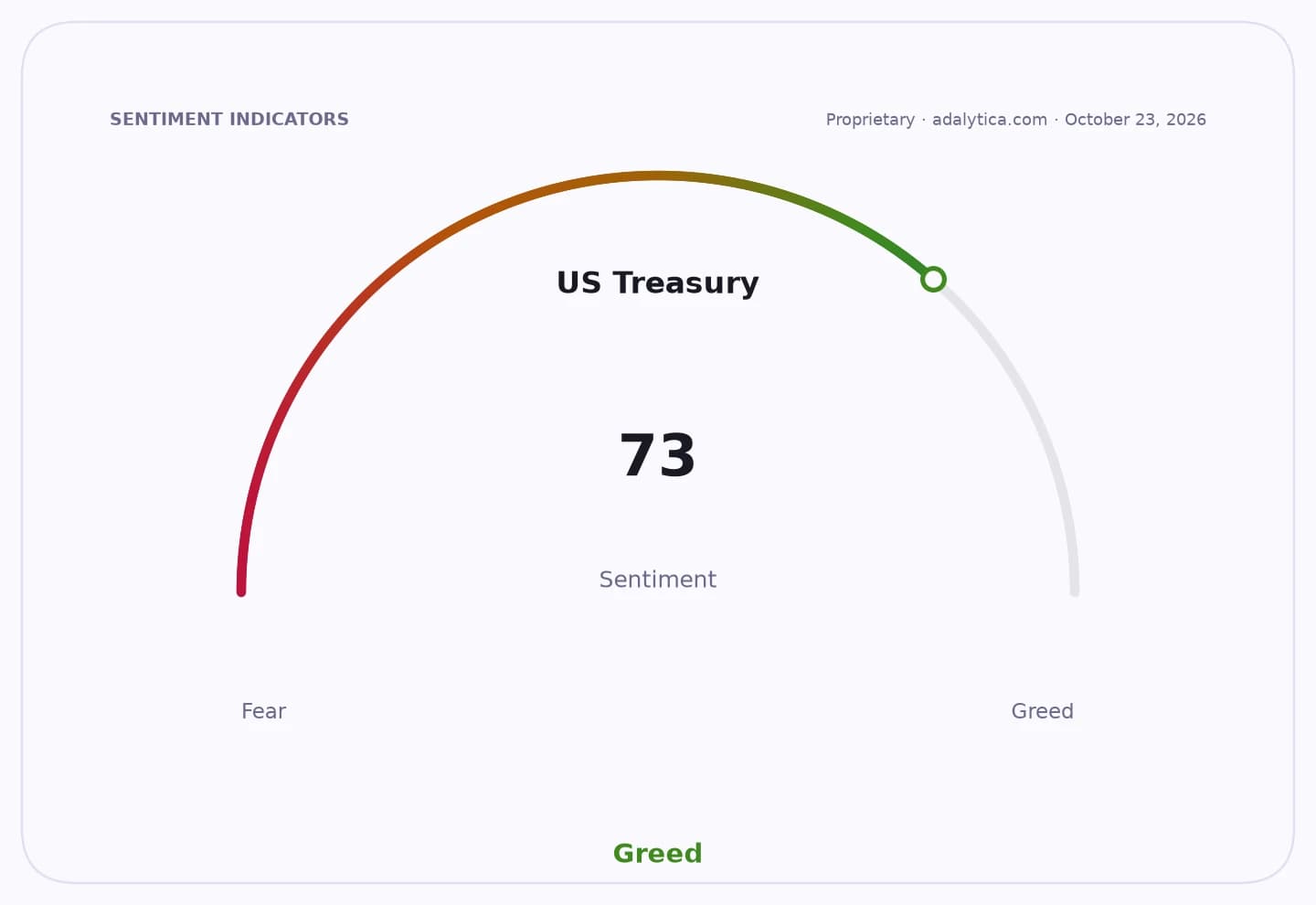
Adalytica’s US Treasury Bonds Trade Signals snapshot shows “Extreme Greed” on Treasuries, a sign of strong conviction in the bond bid, while the US Dollar Trade Signals gauge shows “Fear,” underscoring the broader shift out of the dollar and into fixed income. That mix is typically constructive for emerging-market debt, especially when crude is not spiraling higher.
For India, the immediate focus is whether oil stays contained and whether US yields keep drifting lower. If both hold, the rally in Indian government bonds could broaden to upcoming corporate issues and keep borrowing costs anchored into year-end.
| Entity | Gains | Losses |
|---|---|---|
| Indian government bonds | ▲Lower yields | ▼Fewer safe-haven sellers |
| Indian corporates | ▲Cheaper refinancing | ▼Wider funding pressure eases |
| Oil exporters | ▲Higher crude prices | ▼Softer pricing power if oil falls |
| Bond investors | ▲Price gains | ▼Yield-seeking cash buyers |