Weak demand at India’s Treasury bill auctions is pushing short-end government borrowing costs to their highest levels in more than a year, and that matters because it can keep the entire rupee yield curve under pressure even as liquidity remains broadly comfortable.
India T-bill yields rise on weak auction demand
The immediate signal is a clear warning for investors in Indian sovereign debt: the market is not absorbing supply as easily as it was, and that is lifting cut-off yields across maturities. The 91-day Treasury bill rose to 5.93% from 5.73%, the 182-day bill to 6.55% from 6.29% and the 364-day bill to 6.69% from 6.49%, all at levels ICICI Bank Research said were the highest in over a year and above estimates. The bid-to-cover ratio of 1.74 across the three tenors confirmed the softer appetite.
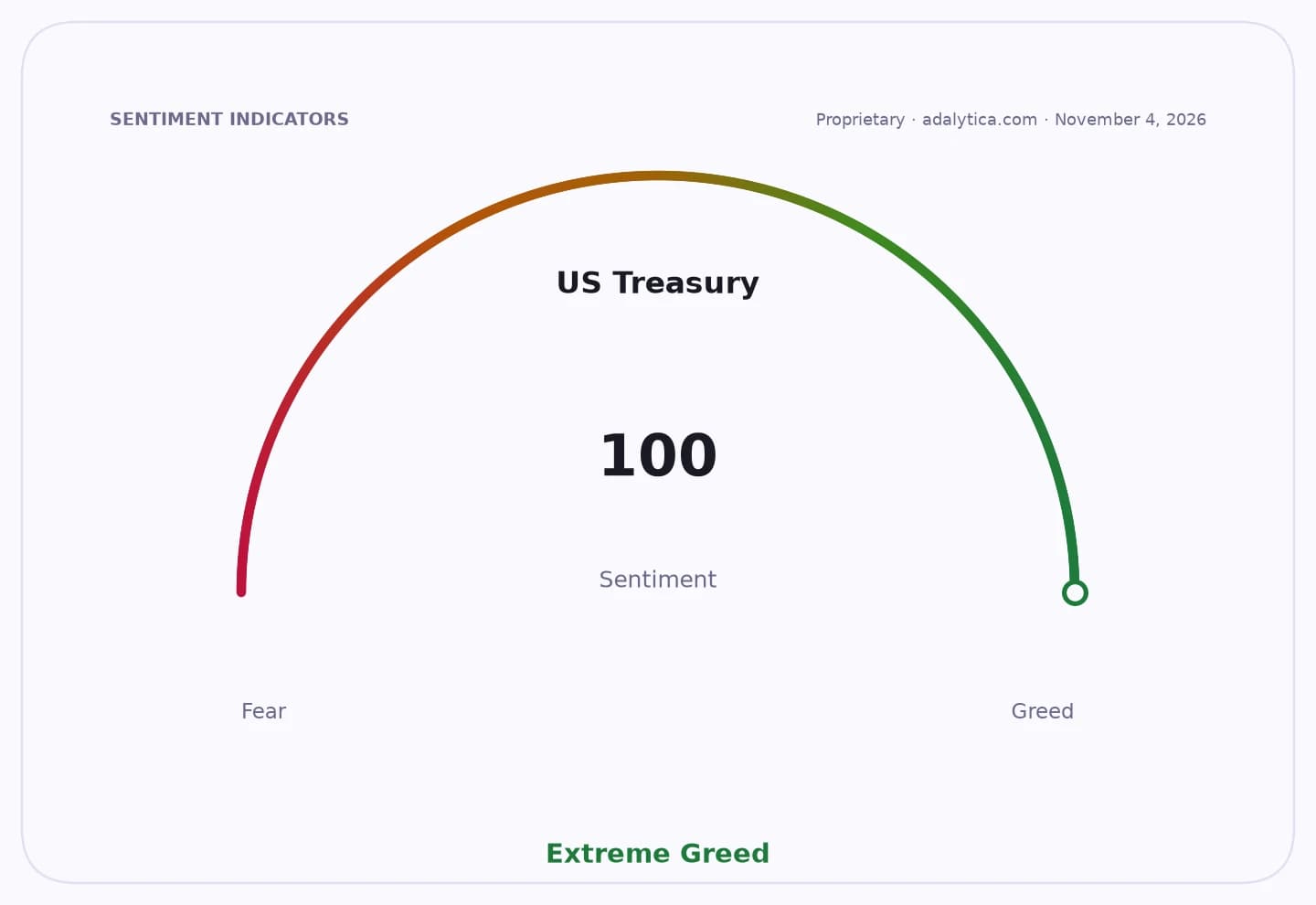
Sentiment Indicators
That matters economically because higher short-term government funding costs can filter through to banks, money-market rates and corporate borrowing, especially when demand is already fragile. A steeper yield curve — with short-end yields climbing while longer-end bonds ease only modestly — suggests the market is repricing near-term liquidity and supply risk rather than expecting a clean, broad-based rally in rates.
For investors, the key is that India’s bond market may stay volatile even if the system remains flush with liquidity. ICICI Bank said the system surplus widened to Rs 1.6 lakh crore, or 0.6% of net demand and time liabilities, by Oct. 30, helped by government spending and bond maturities, and it expects liquidity to stay comfortable. But comfort is not the same as strength: weak auction demand, tighter money-market conditions and heavier state borrowing can still keep spreads elevated.
The broader supply picture is not helping. The Centre raised Rs 33,000 crore in its auction, with demand varying sharply across maturities and the bid-to-cover ratio slipping to 2.4, below the long-term average of 2.8. Twelve states are set to borrow Rs 29,900 crore this week, above the calendar amount of Rs 26,200 crore, a setup that could leave state development loan spreads wide and pressure longer-duration investors who need cleaner carry.
ICICI Bank’s 7.30%-7.45% near-term range for the 10-year benchmark underscores the market’s reluctance to price in an aggressive decline in yields. That makes duration a less obvious bet here than short-end, high-quality carry, especially for investors who can wait for clearer signs that supply absorption is improving and global rate volatility is easing.
The market underestimates how quickly weak auction demand can turn a stable rates backdrop into a tradable repricing. Until demand recovers, India’s government bond market looks set to reward patience, shorter duration and selective entry points rather than broad exposure to long bonds.
| Entity | Gains | Losses |
|---|---|---|
| Short-duration bond holders | ▲Higher carry | ▼None if held to maturity |
| Long-duration bond investors | ▲Selective buying opportunities | ▼Mark-to-market pressure |
| Indian government/state borrowers | ▲Funding access | ▼Higher borrowing costs |
| Banks and money-market lenders | ▲Better short-end yields | ▼Tighter pricing power |