India’s broadcast regulator is tightening control over live news coverage, warning television channels that they must not air anti-terror operations in real time and that AI-generated graphics or virtual presentations cannot compromise accuracy or sensitivity.
India broadcast regulator tightens live news rules
The advisory from the Ministry of Information and Broadcasting matters because it raises the compliance burden for private satellite channels at a time when live television, social media clips and AI tools are increasingly shaping how fast-moving security events reach the public. For broadcasters, the message is that speed now carries greater legal and editorial risk.
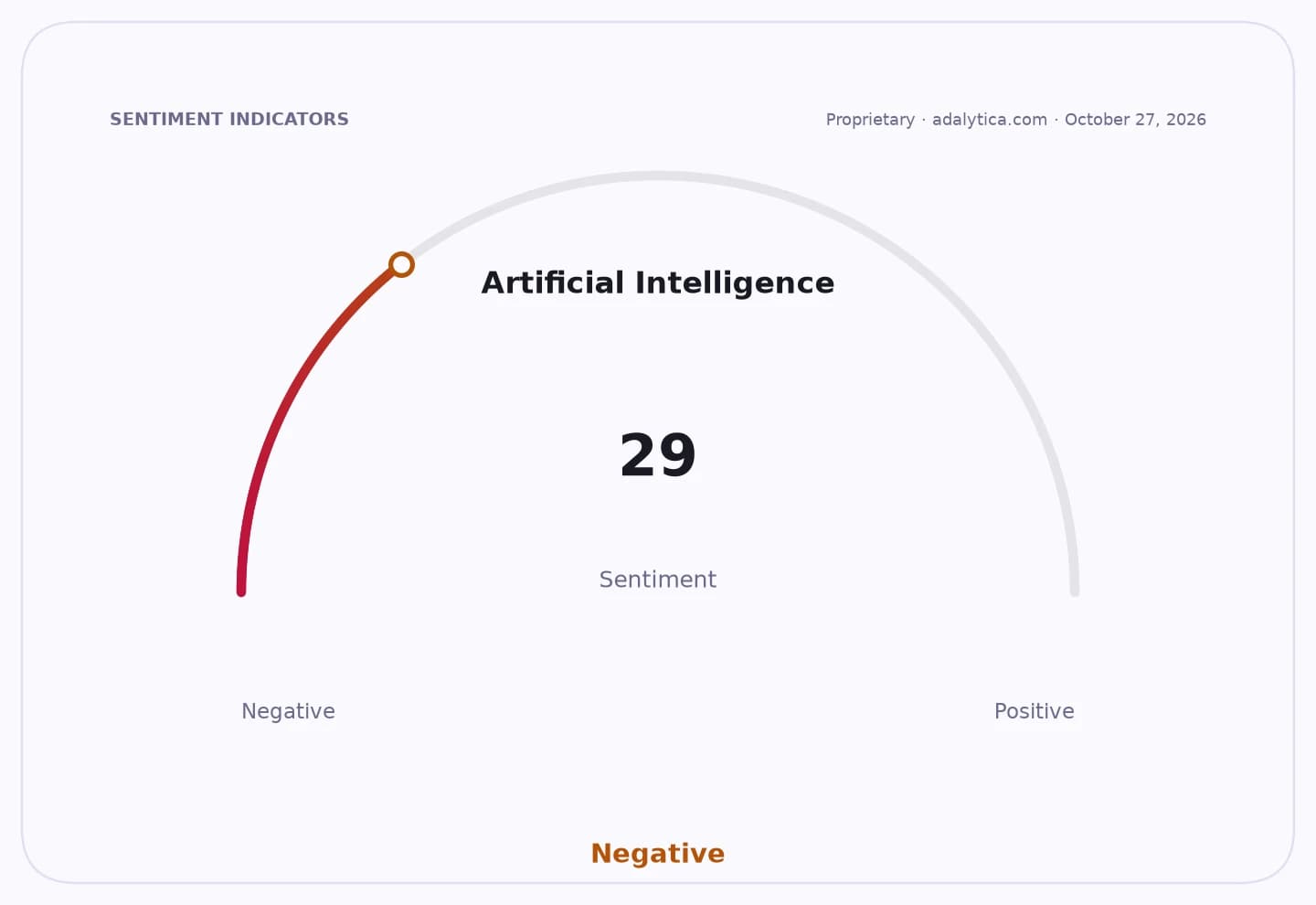
Sentiment IndicatorsⓘProprietary · adalytica.com · October 27, 2026
This is a snapshot — live sentiment, awareness and momentum for 130+ markets update continuously in the dashboard.Open AlphaPulse
The ministry said coverage of anti-terror operations by security forces is strictly prohibited until the operation ends, with only periodic briefings by authorized officers allowed in the meantime. It also told channels to time-stamp visuals to avoid creating the impression that an operation is being shown live, a step aimed at preventing the inadvertent exposure of tactical details.
The directive follows observations by an inter-departmental committee that recent telecasts — including repeated use of similar visuals across channels — did not conform to the spirit of the Programme Code under the Cable Television Networks Regulation Act, 1995. The ministry said violations will invite statutory action, underscoring that this is not just guidance but a compliance warning.
Beyond security coverage, the advisory broadens scrutiny of prime-time content. Broadcasters were told to exercise “due caution, responsibility, and editorial discretion” when airing violent or graphic footage, avoid sensational reporting that could glorify unlawful behavior, and use blurring or masking in cases involving crimes against women and children.
The ministry also warned against debates and panel discussions that promote communal or anti-national attitudes, telling channels to strengthen editorial control, pre-sensitize panelists and, if needed, mute, add disclaimers or cut the feed when inflammatory remarks are aired. It reiterated Supreme Court directions protecting the identity of sexual offense victims.
A notable addition is the guidance on artificial intelligence. The ministry said AI and generative AI tools may be used only in an assistive role and must not compromise the accuracy, authenticity or sensitivity of news content. That puts fresh pressure on broadcasters experimenting with automated graphics, virtual anchors and AI-assisted production workflows.
The notice also tells channels to use only authentic Survey of India maps and to base disaster and accident reporting on verified facts to avoid public panic. Broadcasters have been asked to improve editorial review systems and hold regular sensitization workshops for production and transmission staff.
For investors, the immediate implication is limited direct market impact, but the rules could affect content costs, newsroom processes and liability across India’s broadcast sector. News owners with large live-news operations may face higher compliance expenses, while rivals that lean more heavily on rapid-fire panel programming could see greater scrutiny.
News Corp’s News Corp, which owns Star India, and other international media groups with Indian exposure may watch for how aggressively regulators enforce the advisory. The bigger market read is that authorities are moving to reassert control over live news at the same time AI is being folded into newsroom production.
The latest guidance suggests India’s broadcast channels will have less room to improvise on breaking security stories and more pressure to prove editorial discipline. The next test is whether the ministry backs the warning with penalties after the first high-profile breach.
| Entity | Gains | Losses |
|---|---|---|
| Regulators / MIB | ▲tighter control over broadcasts | ▼less flexibility in enforcement if weakly applied |
| Security forces | ▲reduced operational exposure | ▼slower public dissemination of live updates |
| Broadcasters with strong compliance systems | ▲lower legal risk | ▼higher operating costs |
| Sensationalist news channels | ▲none | ▼more restrictions on live debates and security coverage |