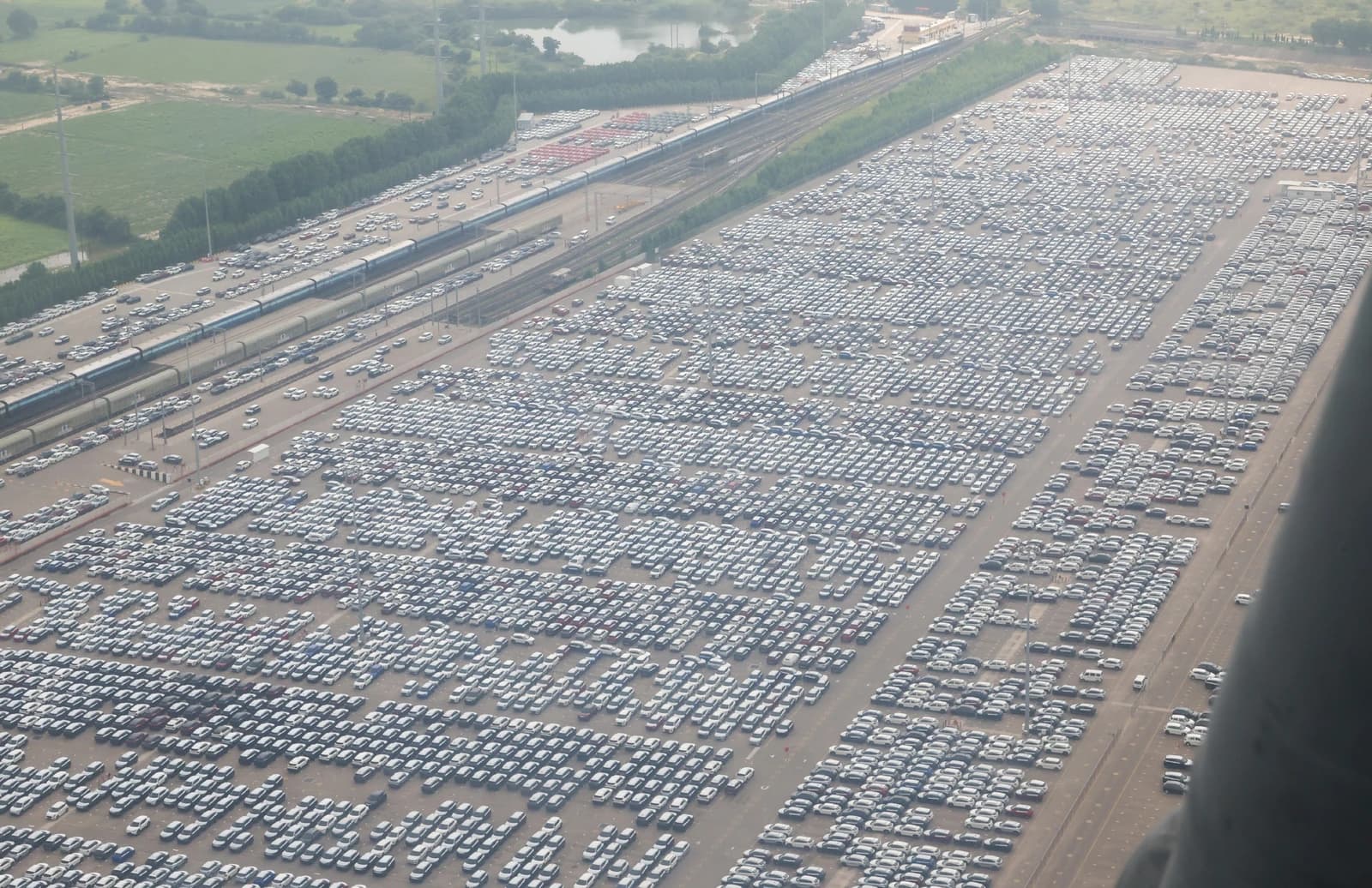
Commercial vehicle retail sales in India are edging toward the 1-lakh monthly mark, a sign that freight demand is broadening beyond the urban economy and giving automakers a sturdier base even as consumer spending stays uneven.
India commercial vehicle sales near 1 lakh monthly
The sector’s recovery matters because commercial vehicles are a leading proxy for goods movement, construction activity and capex intensity. When truck and bus sales firm up, it usually points to stronger demand from roads, housing, mining and logistics, all of which feed into industrial output and private investment.
Sentiment IndicatorsⓘProprietary · adalytica.com · August 18, 2026
This is a snapshot — live sentiment, awareness and momentum for 130+ markets update continuously in the dashboard.Open AlphaPulse
That backdrop is consistent with India’s industrial and investment data. The country’s industrial production index has been hovering just above the 103 level in recent readings, while infrastructure-linked and wholesale activity has continued to expand. Separate retail sales data show overall non-food spending climbing steadily, suggesting the commercial vehicle market is benefiting from both project-led freight movement and a gradual improvement in rural purchasing power.
For listed manufacturers such as Tata Motors, Ashok Leyland, Volvo Eicher and SML Isuzu, the trend is important because commercial vehicles tend to offer better operating leverage than passenger cars once utilization improves. Higher volumes can support pricing, capacity use and after-sales income, especially in heavy-duty and intermediate truck categories that are more sensitive to freight cycles and government capex.
Investors are watching whether the near-1 lakh threshold becomes a new floor rather than a one-off spike. That would strengthen the case for earnings upgrades in the truck cycle, particularly if infrastructure execution remains firm and rural demand holds through the festival season. A sustained pickup would also support suppliers in engines, axles, tyres and financing.
The market is not uniformly bullish, though. Fleet replacement remains uneven, financing costs are still a constraint for smaller operators and any pause in public works spending could quickly dull demand. But if retail registrations keep tracking close to the 1 lakh level, the sector would enter a more durable expansion phase after several years of stop-start recovery.
For investors, the key question is whether this is simply the latest monthly uptick or the start of a broader freight upcycle tied to India’s capital-spending push. If it is the latter, commercial vehicle makers and their suppliers could remain among the clearer beneficiaries of the domestic growth story.
| Entity | Gains | Losses |
|---|---|---|
| Commercial vehicle makers | ▲Higher retail volumes | ▼Cyclical underutilization risk |
| Suppliers and financiers | ▲Better demand visibility | ▼Credit stress if growth fades |
| Infrastructure-linked sectors | ▲Stronger freight movement | ▼Slower if capex slips |
| Smaller fleet operators | ▲Newer truck replacement options | ▼Higher borrowing costs |