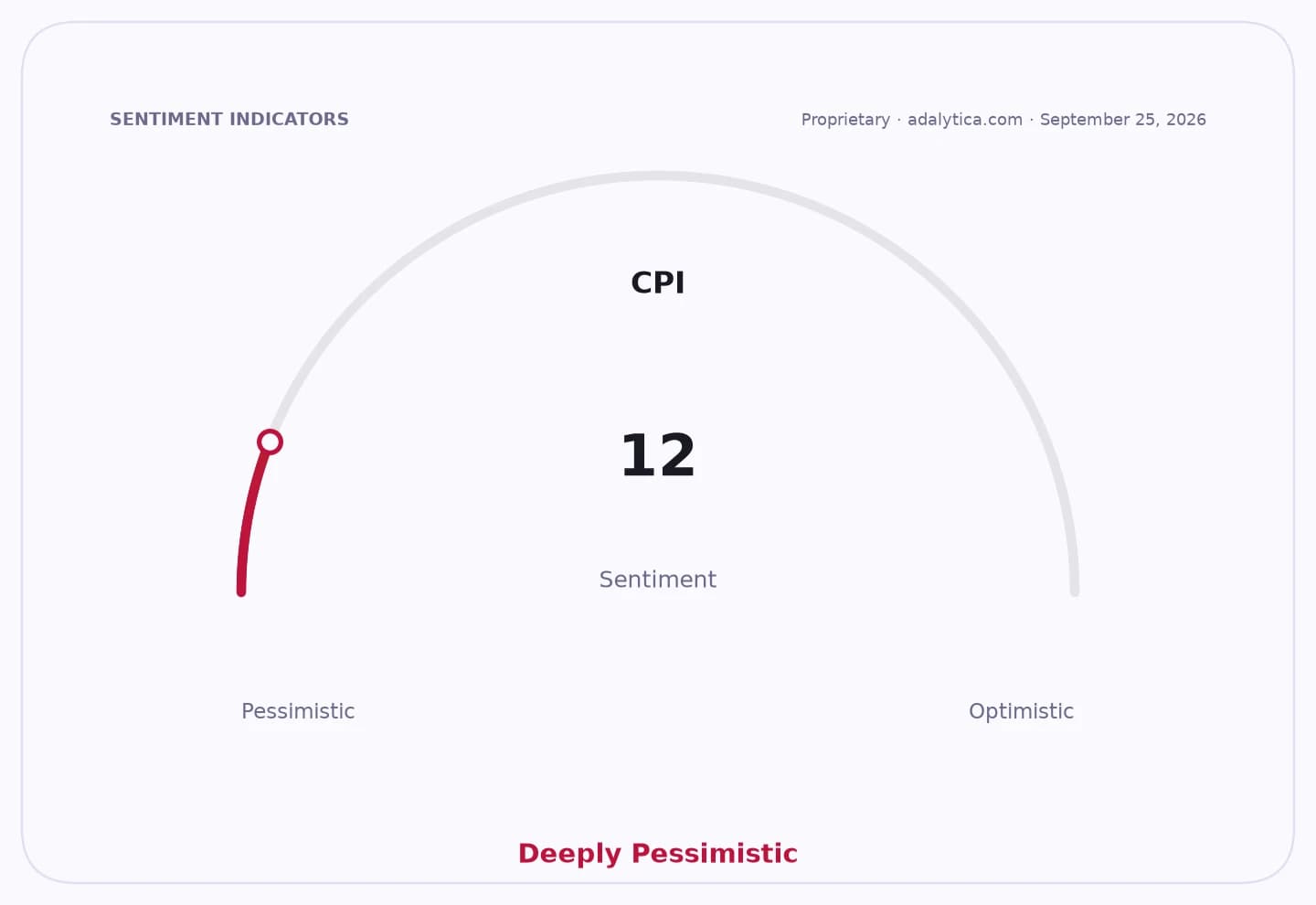
India’s household debt has climbed to 45.5% of GDP, and the mix of that borrowing is what should worry investors most: non-housing retail loans now make up 58.4% of the total. That tells us this is no longer just a story about mortgages and home ownership. It is a story about consumers leaning on unsecured and short-tenor credit to keep spending, and about banks and lenders building profits around that behavior.
India Debt Mix Raises Consumer Credit Risk
Why does that matter? Because household leverage can power growth for a while, but it also makes the economy more fragile if income growth slows or borrowing costs stay high. India has been one of the world’s fastest-growing large economies, with private consumption still doing much of the heavy lifting. The more that consumption is financed by debt rather than wages, the more vulnerable that growth becomes to any wobble in employment, rates or inflation.
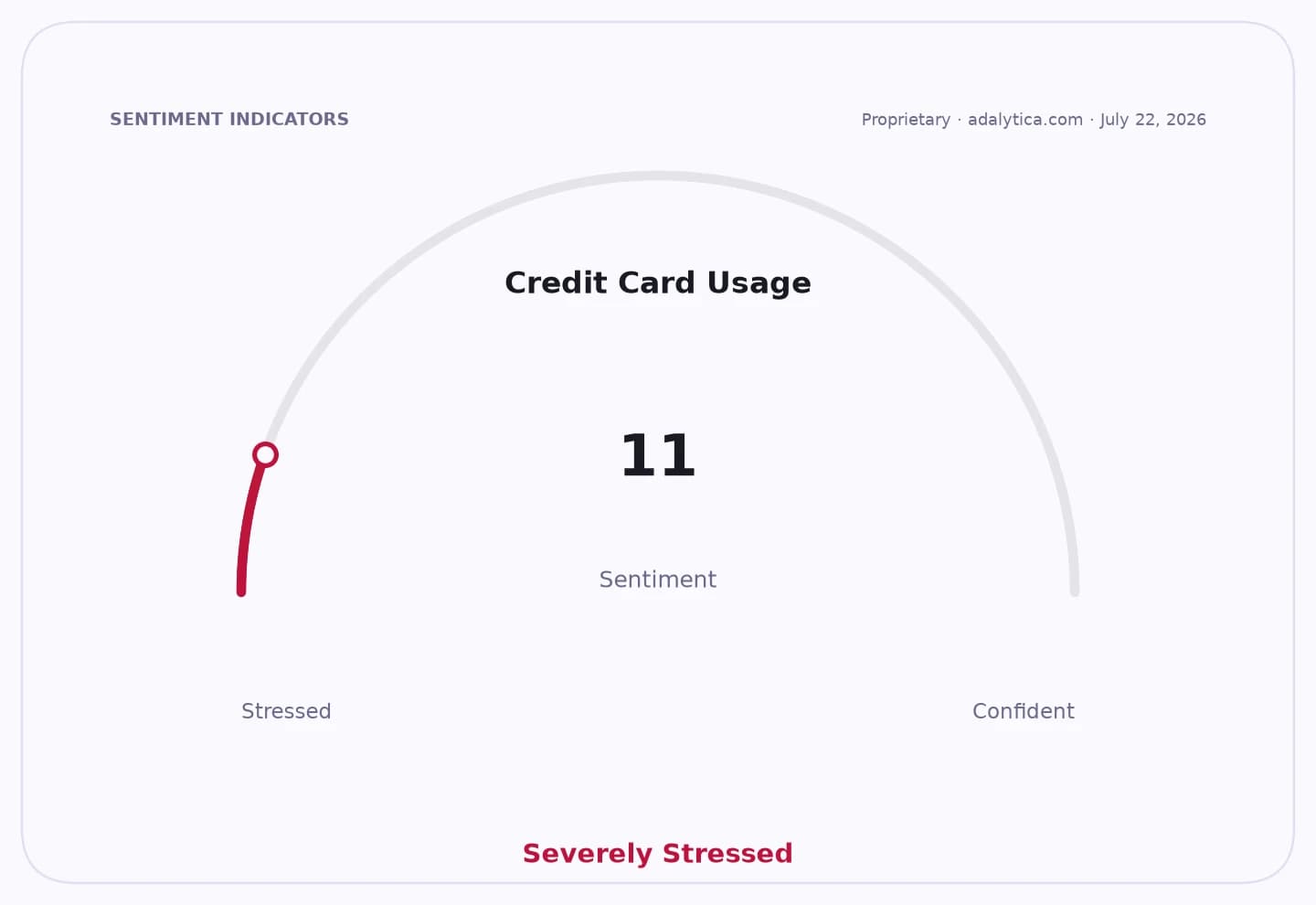
Sentiment IndicatorsⓘProprietary · adalytica.com · July 22, 2026
This is a snapshot — live sentiment, awareness and momentum for 130+ markets update continuously in the dashboard.Open AlphaPulse
The loan mix matters even more than the headline ratio. Housing debt tends to be longer-dated, collateralized and easier to manage through a cycle. Non-housing retail credit — think personal loans, credit cards and other consumer borrowing — is usually more sensitive to stress. When that category dominates, lenders can grow faster in the short run, but they also take on greater credit risk if borrowers start rolling over balances or missing payments.
That is the key investor takeaway from this data: India’s consumer story is still powerful, but it is increasingly debt-funded, and that should change how investors think about banks, card issuers and financial services firms exposed to retail lending. For names with large Indian consumer franchises, such as HDFC Bank and ICICI Bank, the opportunity is still attractive because loan growth can support earnings for years. But investors need to watch asset quality, underwriting discipline and funding costs as closely as they watch headline growth.
The latest market action reflects that tension. HDFC Bank and ICICI Bank have both outperformed at times as investors have leaned into India’s long-term credit expansion story, even as technical indicators have shown volatility. HDFC Bank’s shares have recently traded below longer-term trend levels, while ICICI Bank has held up better and still sits above its 200-day moving average. That divergence suggests the market is rewarding banks it sees as better placed to manage consumer-credit exposure while penalizing those under more pressure.
The macro backdrop is mixed, and that is exactly why this matters now. India’s economy is still growing strongly, but borrowing is rising into an environment where global rates are not near the ultra-low levels that once made debt benign. Even with the U.S. 10-year yield around the mid-4% range, funding conditions are hardly easy. At the same time, the latest consumer-spending and credit-card sentiment gauges from Adalytica point to a far more cautious household mood than earlier in the year, a reminder that sentiment can shift quickly even when nominal spending still looks resilient.
For long-term investors, the bigger picture remains constructive. A rising household credit base can deepen financial markets, broaden consumption and support earnings across banks, lenders, payments and consumer companies. But the winners will be the institutions that prove they can lend through a full cycle, not just during a credit boom. That means steady underwriting, diversified deposit funding and manageable delinquencies.
India’s household debt load is not yet a crisis story. It is a warning that the next phase of growth may be more dependent on credit quality than credit volume. Investors should treat that as a reason to stay invested in India’s financial expansion, but also to be selective, patient and focused on balance-sheet strength. In a market built on compounding, that is still where durable returns tend to come from.
| Entity | Gains | Losses |
|---|---|---|
| Banks with strong underwriting | ▲Loan growth, fee income | ▼Rising delinquencies |
| Consumers with easy credit access | ▲Near-term spending power | ▼Higher debt burden |
| Housing lenders | ▲More stable collateralized lending | ▼Less share of retail credit growth |
| Unsecured lenders | ▲Fast portfolio expansion | ▼Higher credit-cycle risk |