India is setting its defense industry on a far larger economic track, with Defense Minister Rajnath Singh targeting ₹3 lakh crore in annual production and ₹50,000 crore in exports by 2029 as New Delhi accelerates purchases of drones, air defense systems and other domestically built equipment.
India defense production target reaches ₹3 lakh crore
The goal matters because it points to a broader industrial shift: India wants military spending to do more than replenish the armed forces, it wants it to build a larger manufacturing base, cut import dependence and create an exportable defense supply chain. Singh said 82% of the latest procurement proposals are indigenous, underscoring how the government is pushing local suppliers deeper into programs once dominated by foreign vendors.
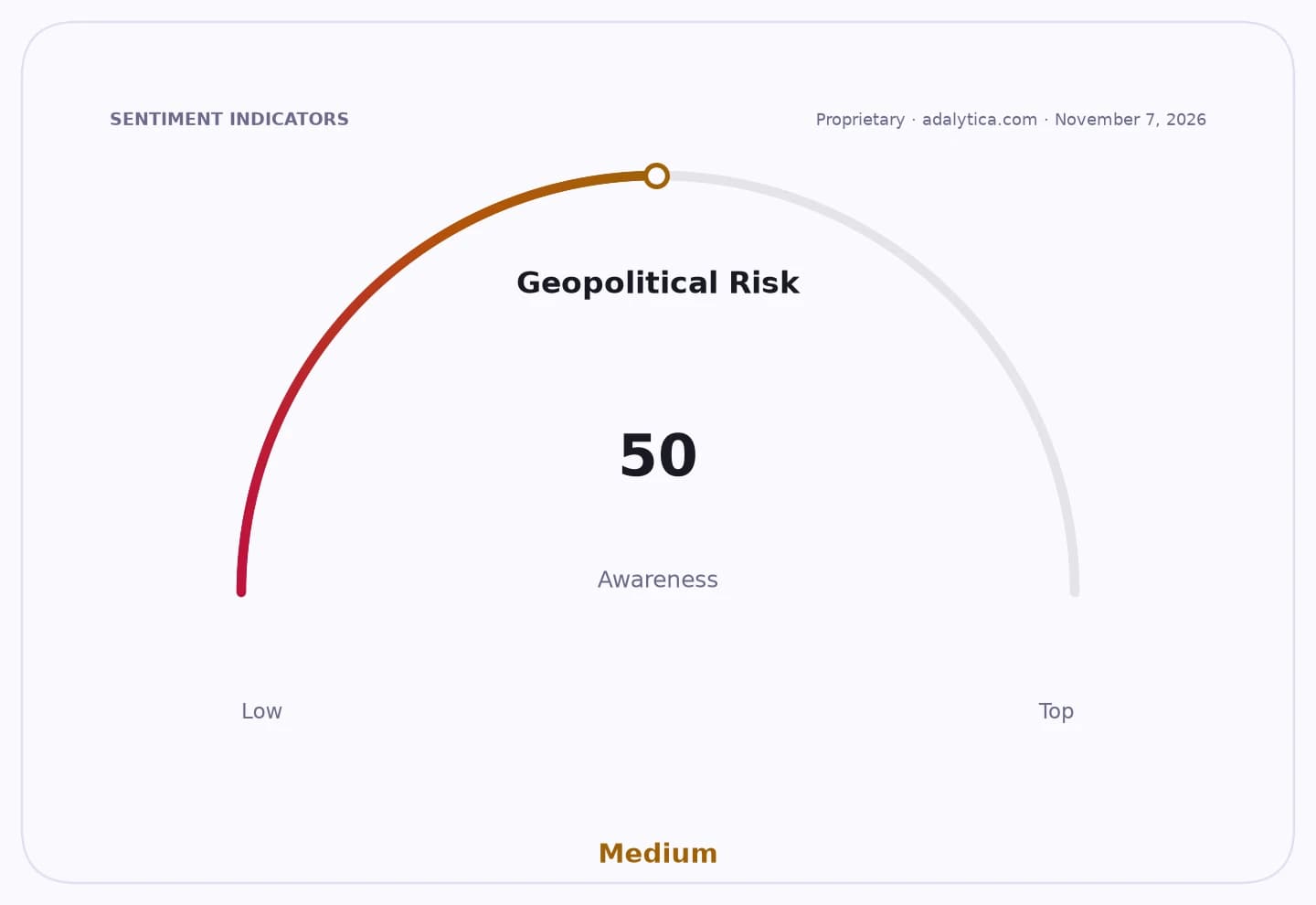
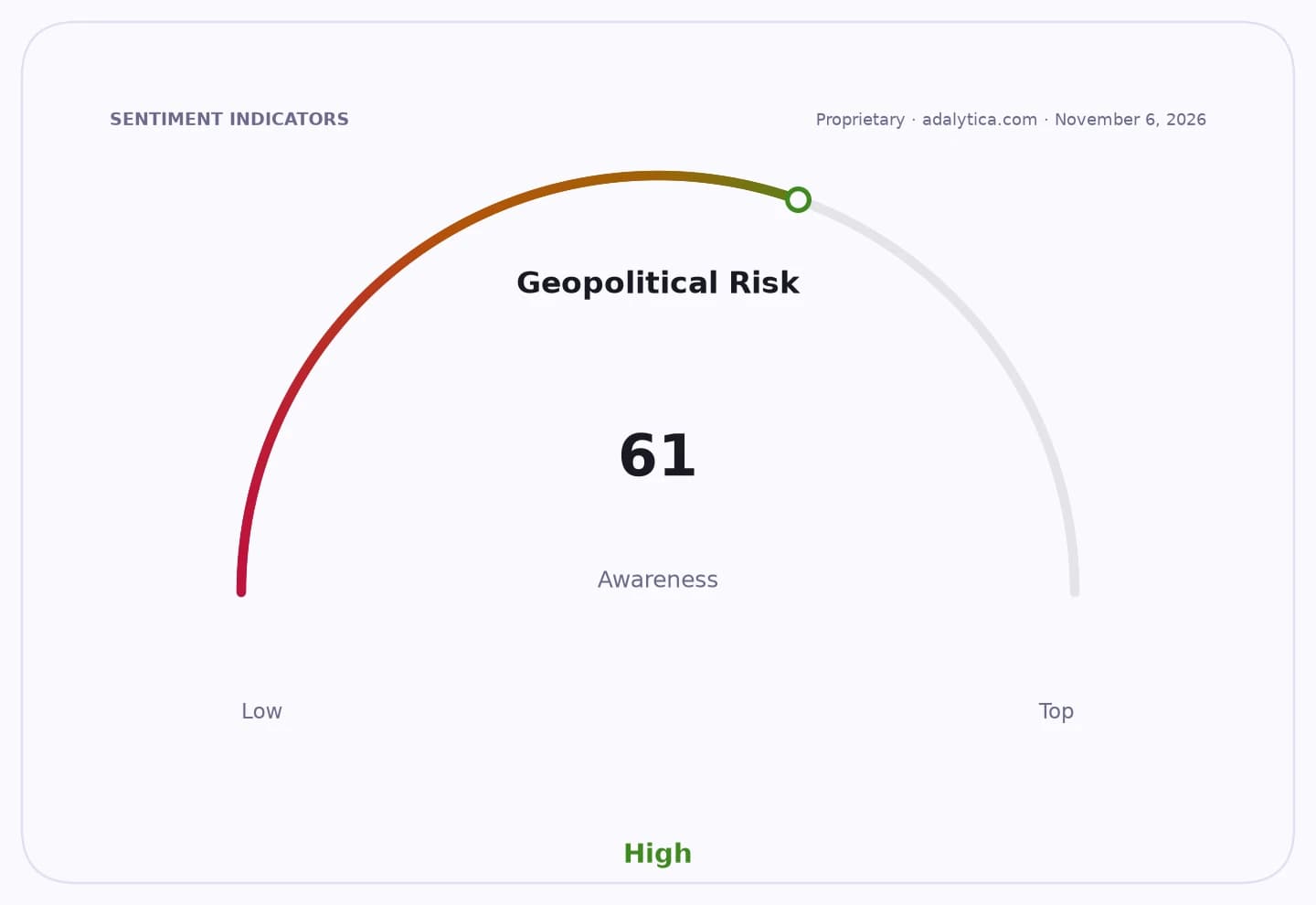
Sentiment Indicators
The timing is important for investors because the government has already approved defense proposals worth ₹2.12 lakh crore, signaling near-term order flow for Indian contractors across electronics, systems integration, weapons and drone platforms. That pipeline can support revenue visibility for listed defense names, while also widening opportunities for private firms that have been trying to move from subcontractors to prime contractors.
The target also fits with India’s larger security posture. New Delhi is expanding air defense and unmanned systems as it responds to a more complex regional threat environment, cyber risks and the need for a faster, tech-enabled military. That creates a structural tailwind for domestic defense capex, with the state using procurement policy to nurture local capacity rather than relying on imported systems.
For markets, the export ambition is the more consequential second leg. A ₹50,000 crore overseas sales target would help Indian defense manufacturers scale production, spread fixed costs and reduce dependence on one domestic buyer. If achieved, it could also strengthen India’s bid to become a regional defense supplier at a time when many countries are seeking alternative sources.
The next test is execution: converting approvals into orders, and orders into production that meets military standards and export demand. Investors will watch for contract awards, joint ventures, capacity additions and whether the government keeps tilting procurement toward Indian-made platforms.
| Entity | Gains | Losses |
|---|---|---|
| Indian defense manufacturers | ▲Bigger order books | ▼Execution pressure |
| Private defense suppliers | ▲More procurement access | ▼Higher delivery scrutiny |
| Foreign arms suppliers | ▲— | ▼Smaller share of Indian demand |
| India’s armed forces | ▲More local sourcing | ▼Transition risk in procurement |