India is using a new round of high-level diplomacy with Egypt to turn strategic geography into harder economic leverage, with Trade and Industry Minister Piyush Goyal set to meet senior leaders in Cairo as New Delhi presses its influence across West Asia, Africa and Europe.
India-Egypt ties center on trade and IMEC
Economic Growth Targets
The visit matters because Egypt is not just another bilateral stop. It sits astride the Suez Canal, the chokepoint through which a large share of global maritime trade passes, and it offers India a bridge into African, Arab and southern European markets at a time when supply chains remain vulnerable to disruption in the Red Sea and broader Middle East. For New Delhi, the economic case is increasingly tied to logistics, market access and resilience rather than symbolism alone.
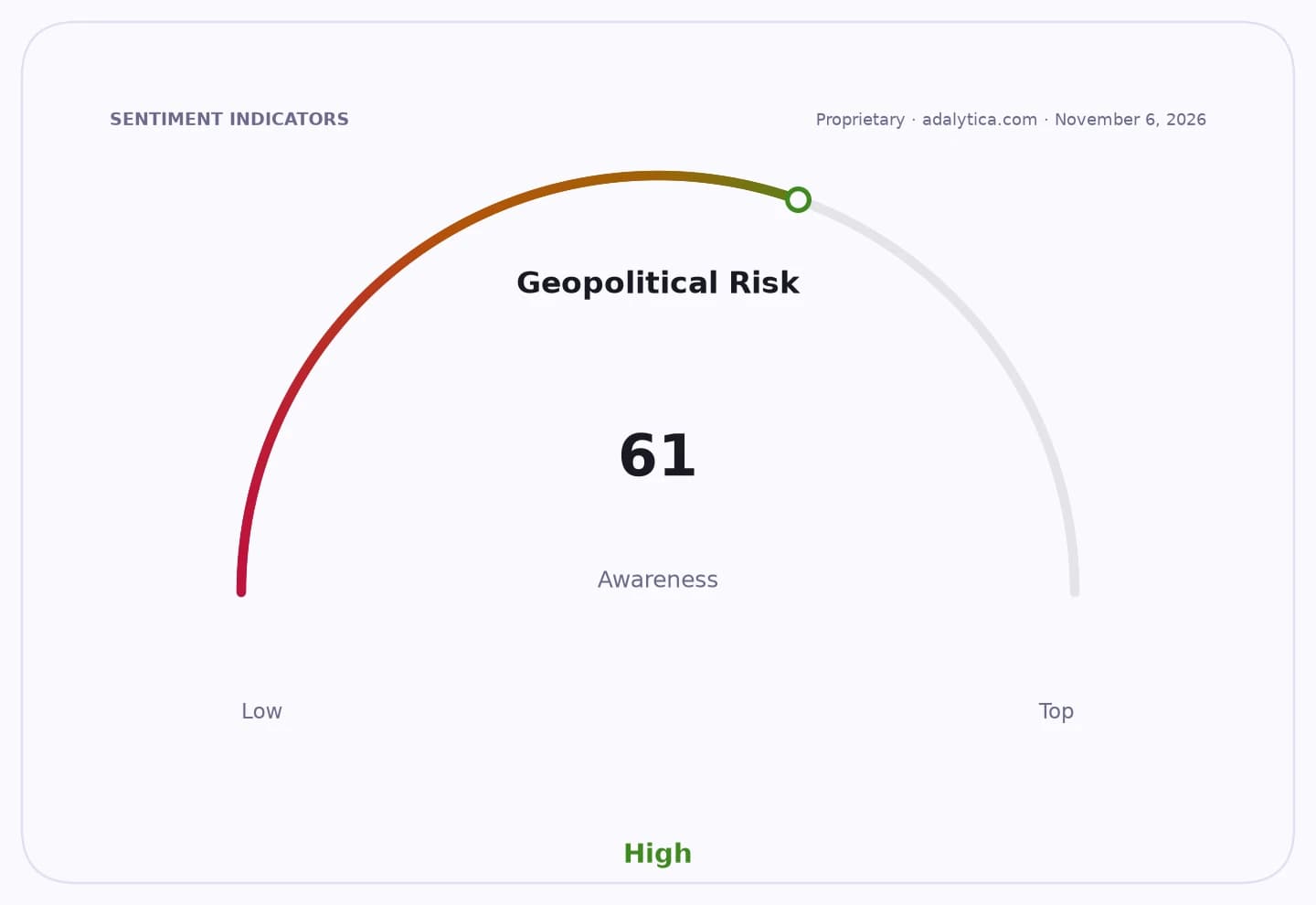
Sentiment Indicators
The immediate agenda includes talks with Egyptian ministers and possibly Prime Minister Mostafa Madbouly, alongside plans for an India-Egypt startup summit. That points to a more commercial phase in ties, where investment, technology transfer and entrepreneurship are being folded into the diplomatic track. Egypt has signaled interest in drawing on Indian capital and technical expertise, while India is looking for a larger operational footprint in a country that can function as a regional hub.
The numbers already show the relationship has scale. More than 700 Indian companies are registered in Egypt, around 70 are actively operating there, and their combined investment exceeds $5.5 billion. That gives New Delhi a business base to build on, rather than a relationship that must start from scratch. For Indian corporates, the opportunity is not only the Egyptian domestic market, but also access to trade routes and free trade agreements that can open doors into Africa, the Arab world and southern Europe.
The geopolitical layering is equally important. The trip is expected to be followed by a proposed visit to India by Egypt’s defense minister, with Foreign Minister S. Jaishankar also likely to travel to Cairo. Prime Minister Narendra Modi may visit Egypt next year, potentially marking 80 years of diplomatic relations. That sequence suggests a deliberate effort to elevate the partnership from transactional commerce to a more durable strategic alignment.
India’s interest in Egypt also fits into a wider corridor strategy. Cairo has shown interest in the India-Middle East-Europe Economic Corridor, or IMEC, which aims to link India to Europe through Gulf states and the Mediterranean. In parallel, India is trying to reduce reliance on vulnerable sea lanes such as Hormuz and Bab al-Mandeb by widening the number of routes and nodes available to exporters, importers and energy buyers.
For investors, the significance lies in the kind of growth India is trying to secure abroad. A deeper presence in Egypt could support Indian logistics, engineering, infrastructure, consumer and technology firms that are looking for offshore growth beyond the domestic cycle. It also reinforces India’s broader trade diplomacy, which is advancing across the UK, the EU, Ethiopia, the US and Canada, as New Delhi seeks to lock in market access while global trade remains fragmented.
The bull case is that Egypt becomes a gateway for Indian companies into adjacent regions and a practical platform for IMEC-related commerce. The bear case is that geopolitical volatility, financing constraints and the slow pace of trade infrastructure could limit the economic payoff. But the direction of travel is clear: India is trying to convert West Asia diplomacy into trade, investment and route security, with Egypt as a central node.
| Entity | Gains | Losses |
|---|---|---|
| India | ▲Wider market access | ▼Reliance on fragile sea lanes |
| Egypt | ▲Capital and technology inflows | ▼Limited leverage if projects stall |
| Indian companies | ▲Regional expansion opportunities | ▼Higher geopolitical execution risk |
| Competing trade routes | ▲Less strategic monopoly | ▼Some loss of traffic concentration |