India’s electric passenger vehicle market surged in September, with retail sales rising 94% from a year earlier to about 35,995 units, underscoring that EV adoption is moving from niche to a more meaningful slice of the auto market.
India EV Passenger Vehicle Sales Rose 94% in September
The jump matters because it points to a broader shift in consumer demand, a larger addressable market for automakers and suppliers, and a gradual pressure on incumbents built around petrol and diesel volumes. EVs accounted for 8.3% of total passenger vehicle registrations in the month, or roughly one in every 12 cars, the highest level yet for one of the industry’s fastest-growing segments.
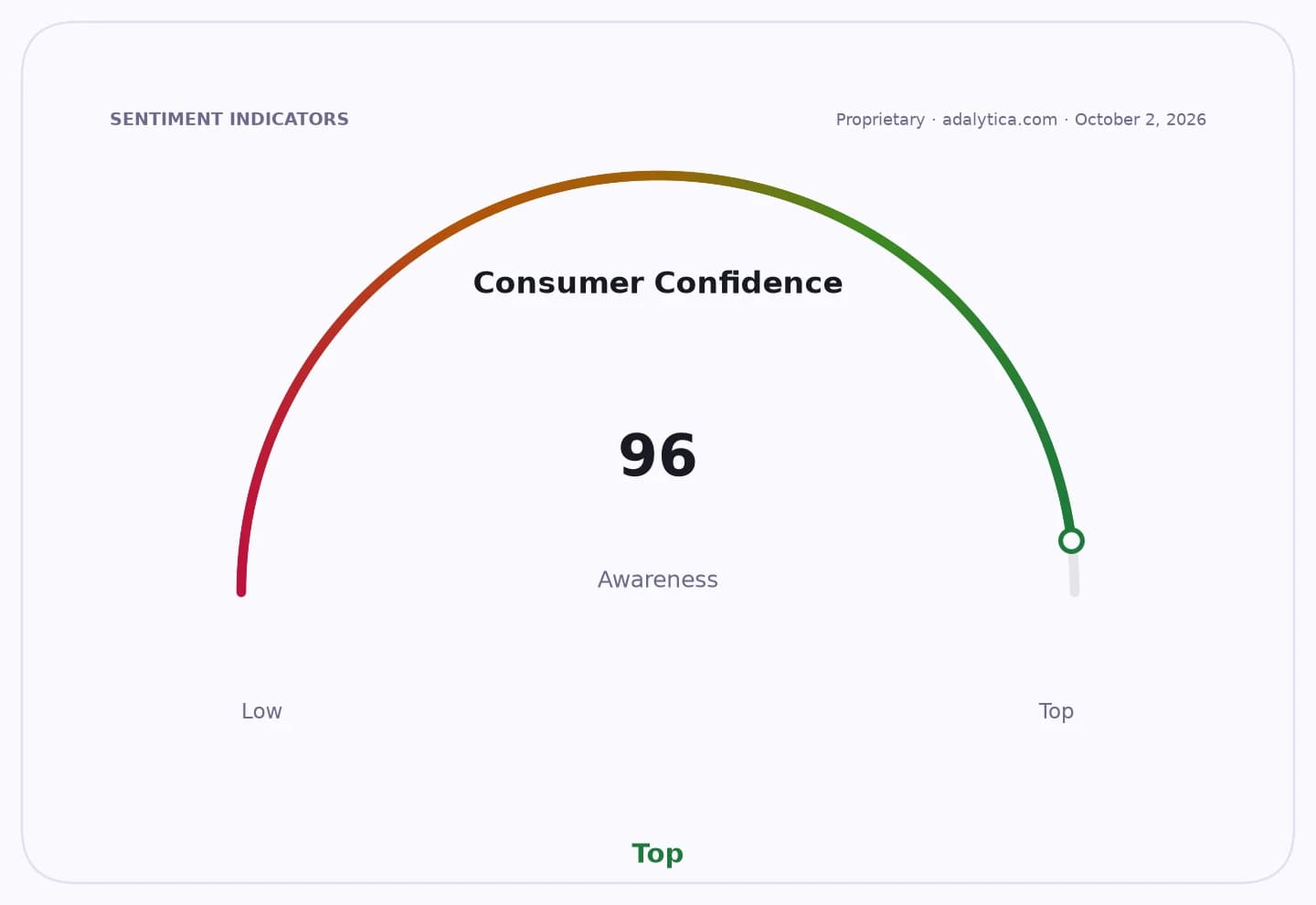
Sentiment IndicatorsⓘProprietary · adalytica.com · October 3, 2026
This is a snapshot — live sentiment, awareness and momentum for 130+ markets update continuously in the dashboard.Open AlphaPulse
The scale of the increase is important for manufacturers trying to justify spending on batteries, platforms and charging ecosystems. Tata Motors remained the dominant player with 14,769 EV sales and about 41% market share, more than doubling volumes from a year earlier. Mahindra & Mahindra sold 7,779 units, up 96%, while JSW MG Motor India sold 5,242. Newer entrants also added to the momentum, with VinFast reporting 2,963 sales, Kia 1,263 and Maruti Suzuki 1,103.
For investors, the message is that competition in India’s EV market is intensifying at the same time as demand is expanding. That can support revenue growth, but it also raises the risk of pricing pressure as more brands chase a still-small pool of buyers. The winners in the near term are companies with scale, brand recognition and distribution reach. Tata’s lead suggests it is capturing the first wave of mainstream demand, while Mahindra’s growth shows there is room for second-tier contenders to gain share if they can offer compelling product and pricing.
The six-month picture reinforces that this is not a one-month anomaly. EV passenger vehicle sales in India rose about 89% in the April-to-September period to roughly 1.91 lakh units from 1.02 lakh a year earlier. That kind of growth is fast enough to matter for automakers’ product plans, for battery suppliers, and for the broader auto value chain, including charging infrastructure and financing. It also suggests that rising fuel costs, a wider model lineup and improving consumer familiarity are broadening the market beyond early adopters.
Still, the EV segment remains relatively small versus petrol, diesel, CNG and hybrid vehicles, which means the sustainability of the rally will depend on whether automakers can keep expanding affordability, range and after-sales confidence. If the current pace holds, India’s EV market could become a bigger contributor to auto industry growth over the next few quarters; if incentives fade or prices remain high, the recent surge may prove more cyclical than structural.
| Entity | Gains | Losses |
|---|---|---|
| Tata Motors | ▲Market leadership | ▼Smaller EV rivals |
| Mahindra & Mahindra | ▲Fast volume growth | ▼Incumbents losing share |
| New EV entrants | ▲Access to a growing market | ▼Petrol/diesel-focused makers |
| Indian consumers | ▲More model choice | ▼Buyers facing high upfront prices |