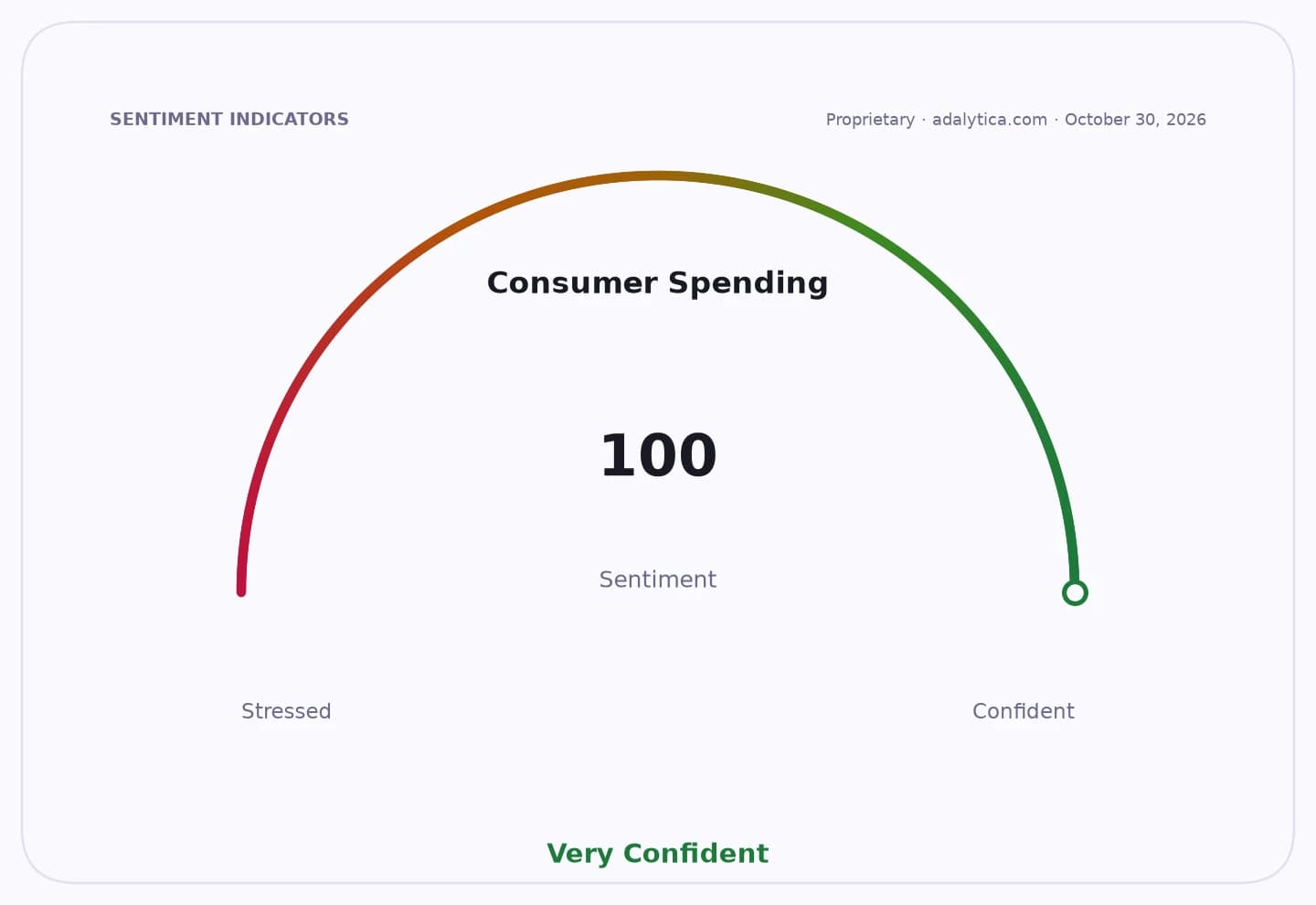
India’s festive shopping season is proving resilient in staples and premium essentials, but the broader consumer recovery remains patchy as inflation, higher borrowing costs and delayed festival timing curb spending on discretionary goods.
India festive spending stays strong in staples
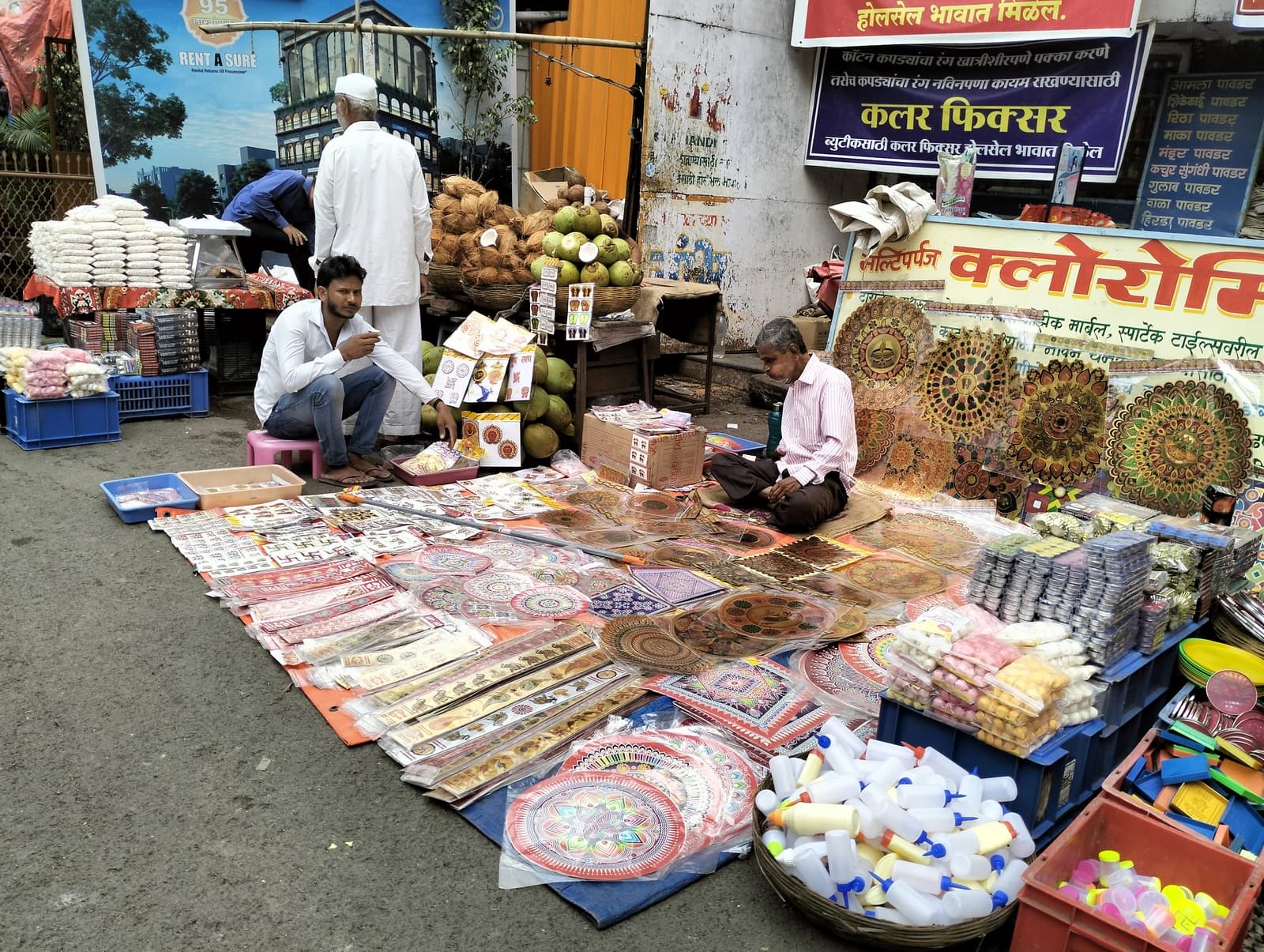
That split matters because Diwali is the single most important demand window for India’s consumer firms, and this year’s evidence suggests households are still trading carefully rather than spending broadly. Food and grocery sales rose 12% year on year in July and August, according to Deloitte’s Consumer Signals report, while apparel accelerated to 10% in August and durables and electronics grew 7%. By contrast, jewellery sales growth slowed to just over 4% in September from more than 8% in August, with the Retailers Association of India saying the shift in festival dates from the second quarter to the third quarter distorted comparisons.
Sentiment Indicators

The underlying message for the economy is that inflation is not crushing demand uniformly; it is reshaping it. Consumers are still buying festive staples, packaged foods and entry-level premium products, but they are more selective on larger-ticket purchases and categories that depend on financing. Brent crude above $110 a barrel remains a headwind for India, which imports nearly 90% of its crude needs, and higher oil and commodity costs are feeding through to prices for consumer goods makers. That raises the risk of further price increases, which could hit demand just as the festive quarter should be providing a lift.
For investors, the split is important because it favours companies with pricing power and exposure to resilient mass-market consumption, while punishing businesses tied to discretionary big-ticket purchases or aspirational urban spending. Hindustan Unilever said festive demand remained strong for both everyday essentials and premium products despite inflation, reinforcing the case that staples companies can pass through price rises without losing much volume. Rival groups are responding by launching premium festive products at accessible price points, such as Cadbury’s chocolate mithais and PepsiCo’s protein-based laddoos and chikki bites priced at ₹10 a pack, suggesting the industry is trying to defend volume through smaller packs and innovation.
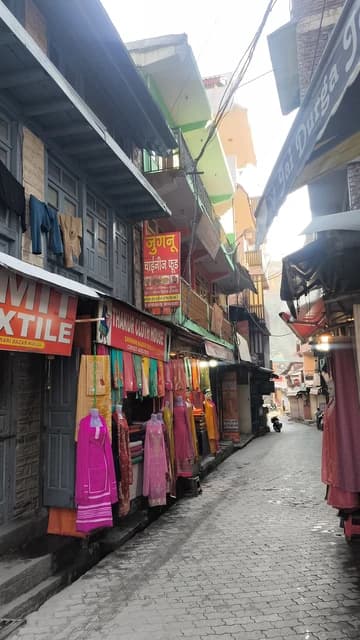
The more fragile part of the market is urban discretionary demand. Deloitte’s Anand Ramanathan said rural and mass consumption is “firing like they have never before,” while affluent urban households are becoming more cautious because of geopolitical uncertainty and services-sector weakness. That lines up with reports of weaker laptop sales as higher memory-chip costs pushed up retail prices and prompted consumers to defer purchases. Higher interest rates add another drag, particularly on auto and housing-related spending where equated monthly instalments matter.
Still, the story is not one of broad-based collapse. In consumer durables, some categories are still holding up despite price increases. Crompton Greaves Consumer Electricals said price rises have largely been passed through and that it is seeing positive volume growth across categories, while Blue Star reported 42% growth in room air-conditioner sales in the September quarter. That suggests households are still willing to spend where utility and replacement demand are strong, even if they are more cautious on pure discretionary buys.
The next test is whether October spending can make up for the slow start caused by the later Diwali calendar. Reliance Retail said Q2 revenue grew despite the absence of major festivals and that October has started well, while Vishal Mega Mart said its same-store sales rose about 5% in the September quarter and that it had not seen demand moderation as the season began. If that momentum holds, the festive season could still deliver a solid finish for consumer companies. If inflation, fuel costs and borrowing rates stay elevated, though, the recovery will likely remain uneven, favouring necessity-led and value-driven retailers over categories reliant on upbeat urban sentiment.
| Entity | Gains | Losses |
|---|---|---|
| Staples makers | ▲Pricing power, steady demand | ▼Little |
| Premium value brands | ▲Trading up in small packs | ▼Full-price discretionary brands |
| Durable goods firms | ▲Replacement demand, volume resilience | ▼Laptop makers, EMI-linked goods |
| Urban discretionary shoppers | ▲Promotions, entry price points | ▼Bigger-ticket purchases |