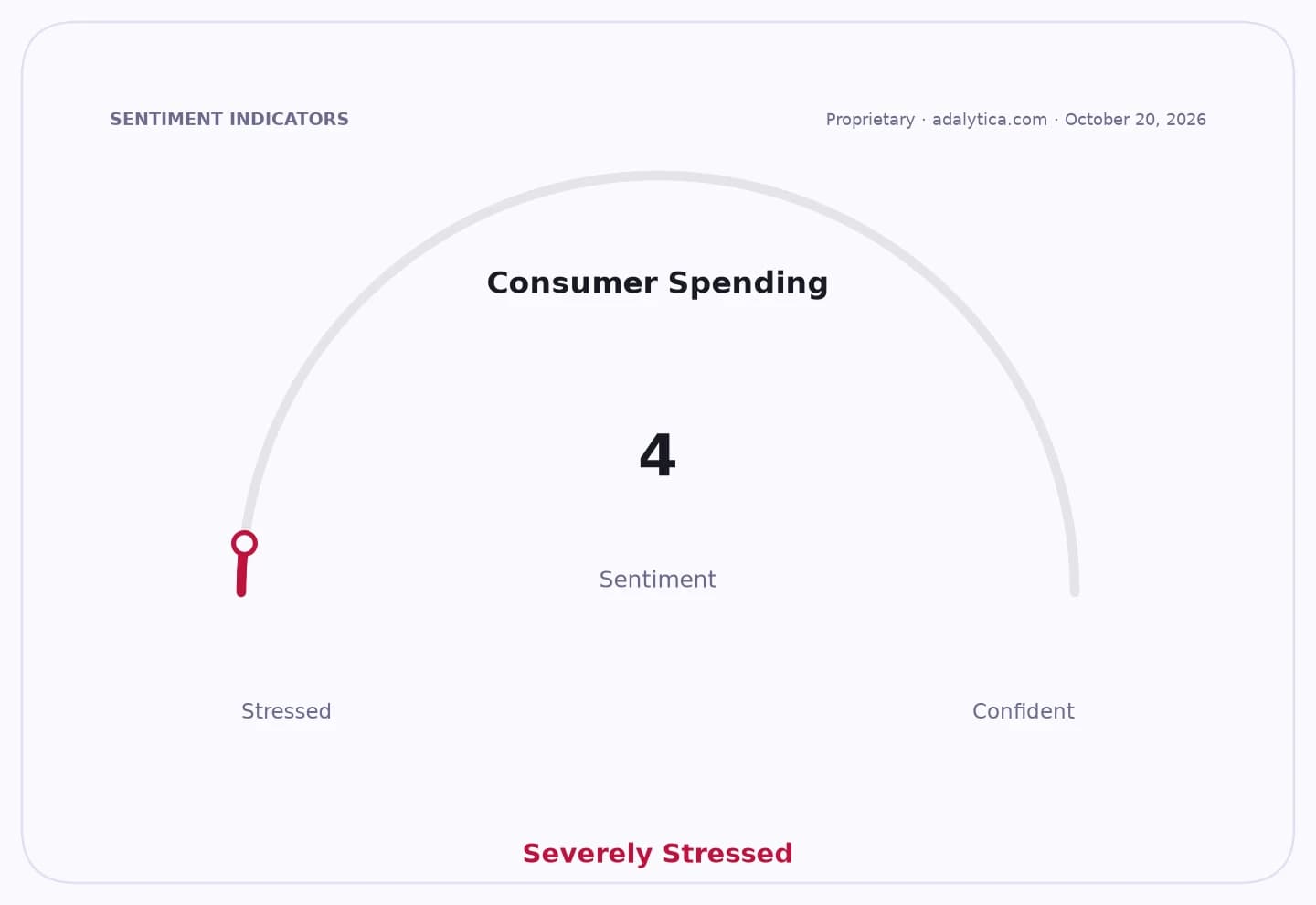
US shoppers are heading into the most important selling season with inflation still elevated, discretionary spending under pressure and retailers bracing for a fourth quarter that the private sector says will be “very hard.”
XLP gains as holiday spending shifts to staples

That matters because the holiday quarter is where retailers make or break the year. With consumer prices up 3.7% in September, the highest in five months, inflation is squeezing real purchasing power just as fuel costs jump and families prioritize essentials over apparel, electronics and other discretionary goods. The warning from the private sector is not about a soft patch; it is about a late-year demand shock that could decide margins, inventory levels and earnings for the entire retail chain.
Sentiment IndicatorsⓘProprietary · adalytica.com · October 22, 2026
This is a snapshot — live sentiment, awareness and momentum for 130+ markets update continuously in the dashboard.Open AlphaPulse
The risk is especially acute for discretionary spending. The sector’s own read is that overall consumption could fall 4% year on year, and that year-end promotions will not rescue the trend because sales of clothing and technology — categories that had been offsetting weaker food traffic — have slumped. Even hypermarkets are seeing the split: the only stores still moving meaningful volume are those in wealthier neighborhoods, underscoring how inflation is widening the gap between affluent households and everyone else.
For investors, that makes the trade more about winners and losers than about “retail” as a single basket. Consumer staples are the defensive refuge, while discretionary names remain vulnerable if holiday traffic disappoints. The Consumer Discretionary Select Sector SPDR Fund, tracked by XLY, has recently been trading above its 50-day moving average and close to its 200-day line, but the broader message from the macro backdrop is that the rally is fragile if spending slows into the quarter that matters most.
By contrast, defensive staples have already drawn interest as investors look for cash flows that can hold up when households trade down. The Consumer Staples Select Sector SPDR Fund, XLP, has outperformed the discretionary fund and is sitting well above both its 50-day and 200-day moving averages, while its relative strength remains elevated. That is the market’s way of saying the consumer is not healthy enough to support broad-based risk-taking.
The inflation data also keeps pressure on the Federal Reserve. A hotter-than-expected price backdrop makes it harder for policymakers to declare victory, and any talk of renewed tightening or even higher-for-longer rates is a headwind for interest-sensitive consumers and retailers alike. In Adalytica’s CPI gauge, sentiment has plunged into “Extreme Fear,” reflecting how quickly the inflation narrative has reawakened market anxiety. The broader S&P 500 trade signal has also shifted into extreme fear, a reminder that investors are already positioning for a tougher macro path.
That leaves a clear playbook. The market is underestimating how much holiday spending can split between essentials and discretionary goods when inflation is still biting. Big-box and grocery chains with scale, traffic and pricing power are better positioned than apparel, electronics and broader discretionary names. If the fourth quarter turns as difficult as the sector fears, the upside sits in the toll roads of the consumer economy — not in the cyclical names trying to force demand out of a strained household budget.
| Entity | Gains | Losses |
|---|---|---|
| XLP / staples retailers | ▲Defensive flows, steady demand | ▼Limited upside if growth rebounds |
| XLY / discretionary retailers | ▲— | ▼Slower holiday traffic, margin pressure |
| Big-box grocers | ▲Trade-down spending, essentials mix | ▼Higher wage and input costs |
| Apparel and electronics sellers | ▲— | ▼Weak demand, deeper discounting |