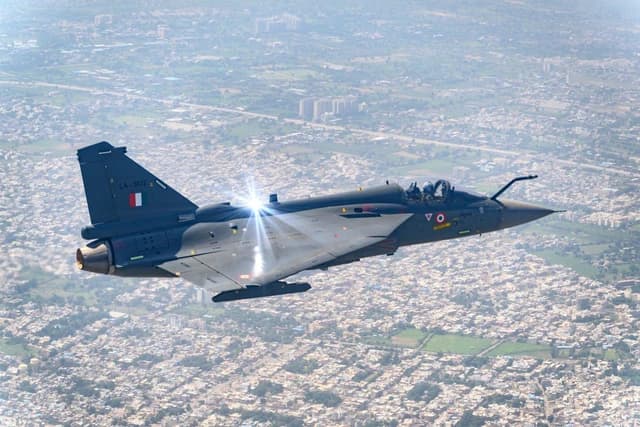
India's push to build a domestically made fighter jet engine is emerging as the next test of Prime Minister Narendra Modi's defense-industry self-reliance agenda, with any pre-Independence Day announcement likely to reinforce New Delhi's drive to cut reliance on foreign suppliers and keep more aerospace spending at home.
India fighter jet engine push lifts HAL to 4,690 rupees

The stakes are economic as much as strategic. Jet engines are among the most technically demanding and expensive pieces of military hardware, and success would strengthen India's attempt to deepen local manufacturing, support a broader defense supply chain and reduce import outflows in a sector that has long depended on overseas technology.
Sentiment IndicatorsⓘProprietary · adalytica.com · August 3, 2026
This is a snapshot — live sentiment, awareness and momentum for 130+ markets update continuously in the dashboard.Open AlphaPulse
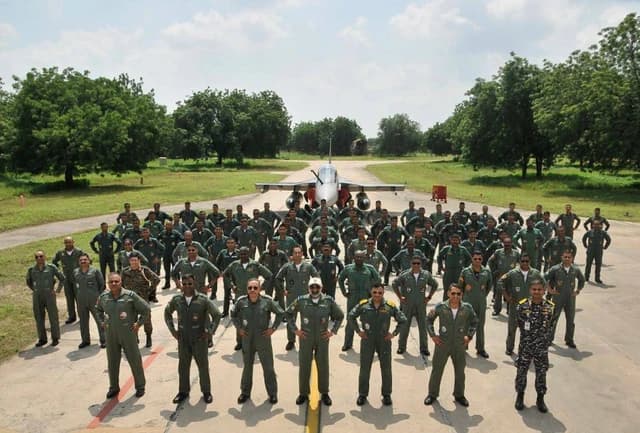
Investors are already treating the theme as a live trade. Hindustan Aeronautics Ltd. has risen to 4,690 rupees from 3,487.20 rupees on March 30, while Bharat Electronics Ltd. is trading at 392.15 rupees, well below its 2026 peak near 468.45 rupees but still above levels seen in late July. HAL's shares have reclaimed both the 50-day and 200-day moving averages, while the RSI has climbed to 78.3, a reading that points to a stretched short-term move. BEL remains below its 200-day average, suggesting the market is still waiting for fresher contract visibility.
The backdrop is a broader state-led defense buildout. Modi has made military-industrial self-reliance a centerpiece of policy, and an Indian engine milestone would fit the government's push to scale up domestic production after years of imports for fighter programs. For suppliers, that could mean more orders, deeper localization and better pricing power over time.
The move also lands in a market that remains confident on risk assets, with Adalytica's S&P 500 trade signal in "Extreme Greed" and the U.S. dollar also flashing "Extreme Greed." That matters for Indian defense names because global liquidity and risk appetite can amplify flows into sectors with strong policy backing and visible earnings momentum.
For investors, the key question is whether any announcement turns into a real procurement and manufacturing roadmap rather than just another policy pledge. The next catalysts are likely to be official details on engine development timelines, partnership structure and whether the program produces measurable orders for HAL, BEL and other defense contractors.
| Entity | Gains | Losses |
|---|---|---|
| HAL | ▲Higher engine-order visibility | ▼Near-term overheating risk |
| BEL | ▲More domestic defense spending | ▼Lower immediate upside than HAL |
| Indian government | ▲Industrial self-reliance boost | ▼Pressure to deliver quickly |
| Foreign engine suppliers | ▲Potentially fewer Indian imports | ▼Loss of future market share |