India’s foreign exchange reserves have dropped about $50 billion from a September peak as the Reserve Bank of India sells dollars and runs FX swaps to slow the rupee’s slide, underscoring how costly it has become for policymakers to cushion the currency.
India FX reserves fall as RBI slows rupee decline
The reserves fell to roughly $735.7 billion from a recent high of $785.71 billion on Sept. 4, according to the data context, as the RBI leaned on spot-market dollar sales and sell/buy swaps to absorb liquidity. Even with that support, the rupee weakened nearly 0.5% to 96.8450 per dollar on Wednesday, leaving it just shy of its all-time low of 96.96.
Sentiment IndicatorsⓘProprietary · adalytica.com · October 8, 2026
This is a snapshot — live sentiment, awareness and momentum for 130+ markets update continuously in the dashboard.Open AlphaPulse
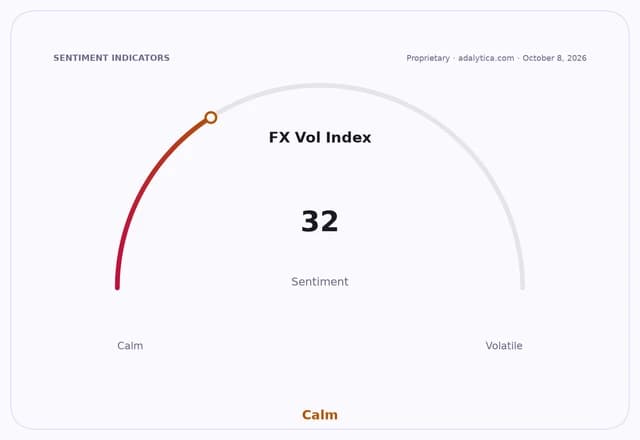
For the economy, the drawdown is a sign that India is spending financial firepower to manage imported inflation and market volatility. A weaker rupee raises the local-currency cost of oil and other imports, and that matters in a country where energy demand is large and foreign portfolio flows can swing quickly on global rate moves.
For investors, the reserves decline is a reminder that the RBI is not defending a fixed level so much as slowing the pace of depreciation. That can cap one-way bets against the rupee in the short term, but it also raises the odds of more volatility if crude prices stay elevated, U.S. Treasury yields keep climbing and foreign equity outflows continue.
The pressure is showing up in India-linked funds as well. The iShares MSCI India ETF, ticker INDA, has fallen to 46.11 from 50.23 in late August and is trading below both its 50-day and 200-day moving averages, while the large China ETF FXI is also softer, reflecting broader risk aversion across emerging markets and Asia.
Traders are watching whether the RBI chooses to keep burning reserves or allows more currency weakness as global conditions stay tight. The next test will be whether dollar demand eases or the rupee retests its record low.
| Entity | Gains | Losses |
|---|---|---|
| RBI | ▲Slower rupee depreciation | ▼Lower reserves cushion |
| Rupee bears | ▲Momentum trade | ▼Intervention risk |
| Indian importers | ▲Less abrupt FX swings | ▼Higher import costs |
| Foreign equity investors | ▲Potential entry levels | ▼Currency losses |