The US dollar’s climb to a two-month high is more than a currency move for Indian investors — it is a direct test of how long domestic stocks can shrug off a stronger greenback, firmer oil prices and the risk of foreign outflows.
Indian stocks face pressure as dollar and oil rise
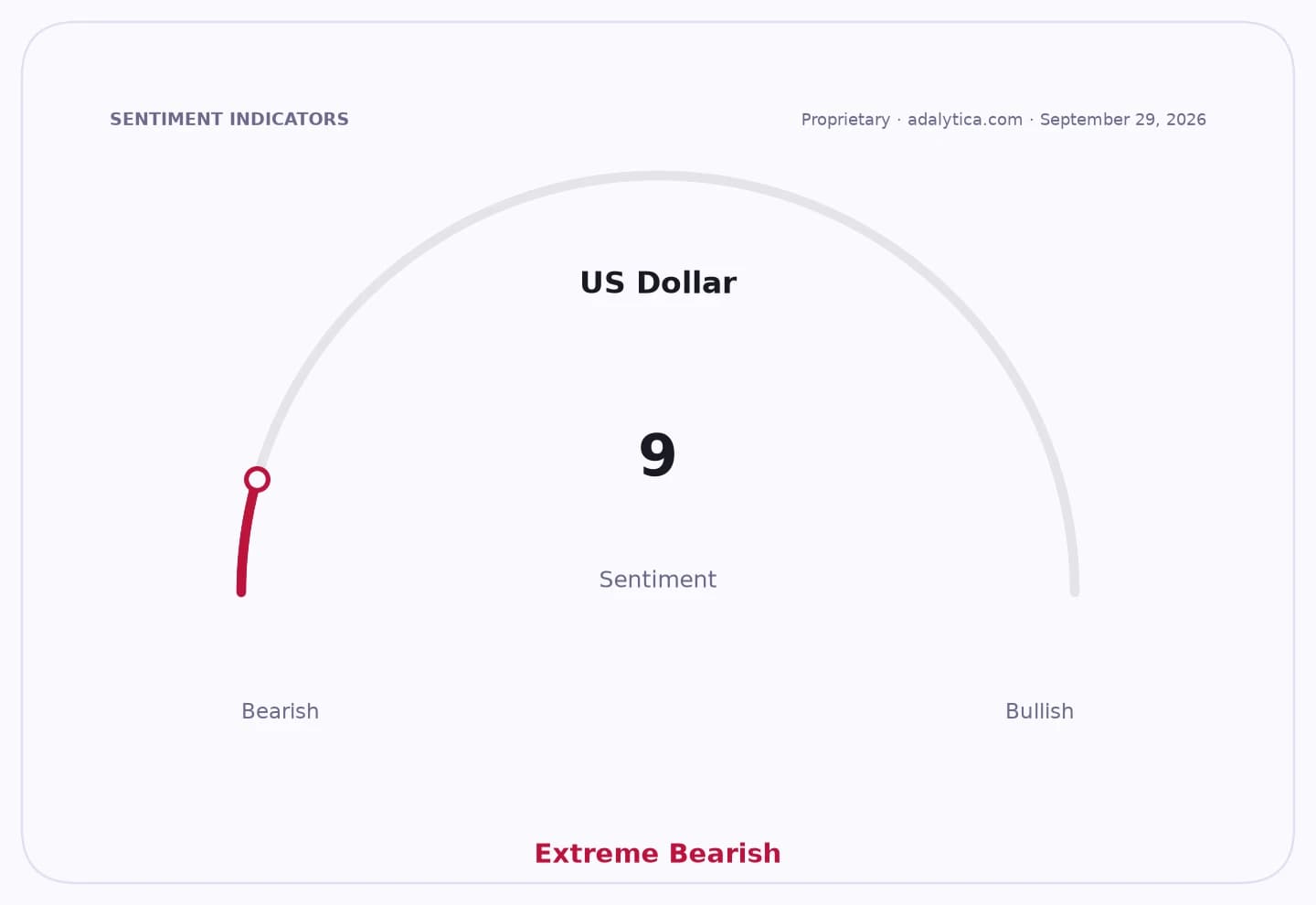
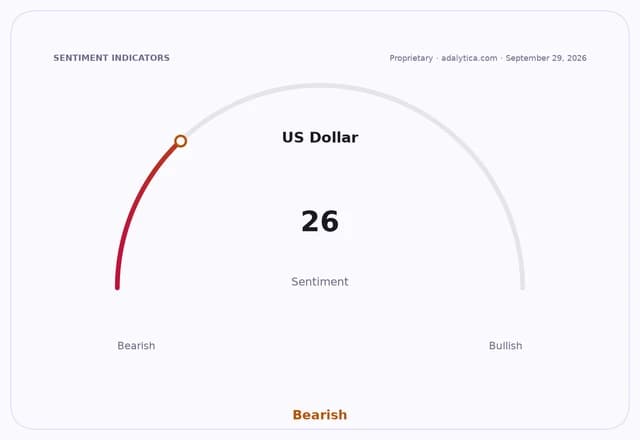
The dollar index rose 0.51% to 101.06 after touching 101.23, its highest level since July 29, as markets leaned toward another Federal Reserve rate hike. That matters because when US rates rise and the dollar strengthens, money tends to move out of emerging markets and back into US assets. For India, that can mean pressure on the rupee, heavier import costs and a more cautious stance from foreign investors in benchmark names such as the Sensex and Nifty 50.
Sentiment IndicatorsⓘProprietary · adalytica.com · September 29, 2026
This is a snapshot — live sentiment, awareness and momentum for 130+ markets update continuously in the dashboard.Open AlphaPulse
The rupee already slipped to 95.73 per dollar, and that weakness is not just a headline for currency traders. India imports more than 80% of its crude oil, so every additional drop in the rupee makes the energy bill more expensive and can widen the current account deficit. If oil also edges higher, inflation can stay sticky just when the Reserve Bank of India would rather have room to ease. That combination can keep borrowing costs elevated for longer and leave equity valuations vulnerable.
For stock investors, the real story is not simply “dollar up, India down.” It is that the market is likely to split into winners and losers. Export-oriented businesses such as information technology and pharmaceuticals usually benefit when the dollar rises because overseas revenue translates into more rupees. Companies that rely on imported inputs, dollar-denominated debt or fuel costs — including autos, FMCG names and oil marketing companies — are more exposed to margin pressure. In other words, a strong dollar tends to reward firms with pricing power and global revenue streams while punishing businesses that live closer to the import bill.
That helps explain why a stronger dollar can feel negative for the broader index even if parts of the market do well. Foreign institutional investors often trim emerging-market exposure when US yields rise, and that can weigh on large-cap stocks that dominate the indices. At the same time, domestic liquidity can tighten if the rupee comes under repeated pressure and the RBI has to stay defensive.
The encouraging part for long-term investors is that currency shocks usually create as many opportunities as risks. A weaker rupee can improve the earnings outlook for exporters, and the pullback in India-focused funds may offer better entry points in quality businesses with durable growth, low leverage and strong free cash flow. The key is not to overreact to one or two sessions of FX volatility, but to focus on companies that can compound through different currency cycles.
For now, investors should expect more volatility in Indian equities if the dollar keeps climbing and crude oil stays firm. The message from this move is simple: in a world of higher US rates, India’s market will still reward select exporters and resilient balance-sheet stories, while import-heavy sectors may need to work harder to protect margins. Worth watching closely, and worth using to sharpen a long-term watchlist.
| Entity | Gains | Losses |
|---|---|---|
| Indian IT exporters | ▲Higher rupee revenues | ▼None in the near term |
| Pharma exporters | ▲Currency translation boost | ▼Import-cost inflation |
| Import-heavy sectors | ▲None | ▼Margin pressure |
| Foreign investors in India | ▲Higher US yield alternatives | ▼Emerging-market exposure |