LG calls for human-centric technology in the AI era as India’s policy conversation sharpens around who should stay accountable when machines are used in decisions affecting jobs, education, health and personal freedom.
India LG calls for human oversight in AI decisions
Lieutenant Governor Manoj Sinha said technology must remain “humanity’s servant, never its master,” arguing that decisions with real-world consequences need “a human behind it” who can be held responsible. The message lands at a time when governments, universities and companies are racing to deploy AI faster than legal and ethical guardrails are evolving.
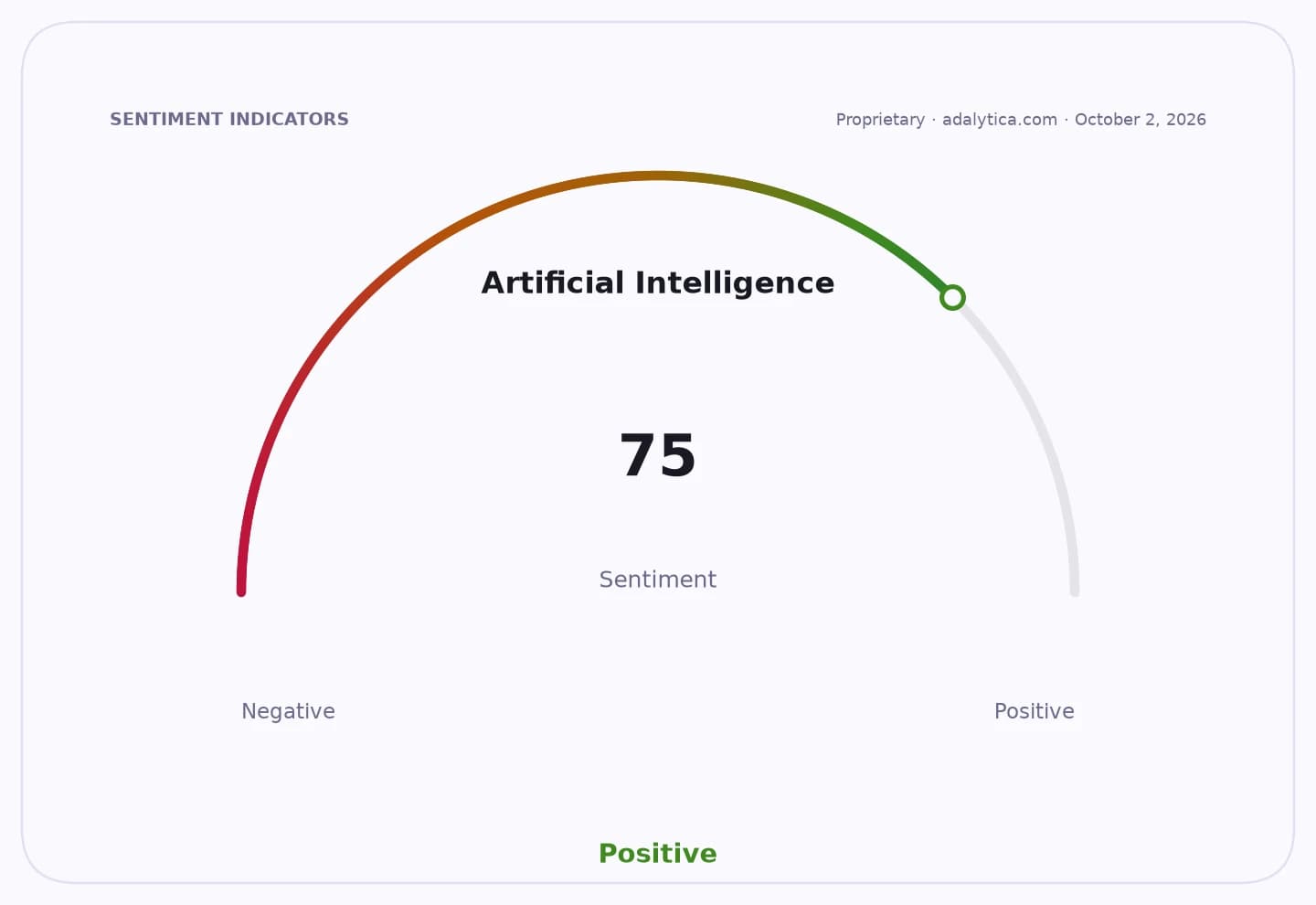
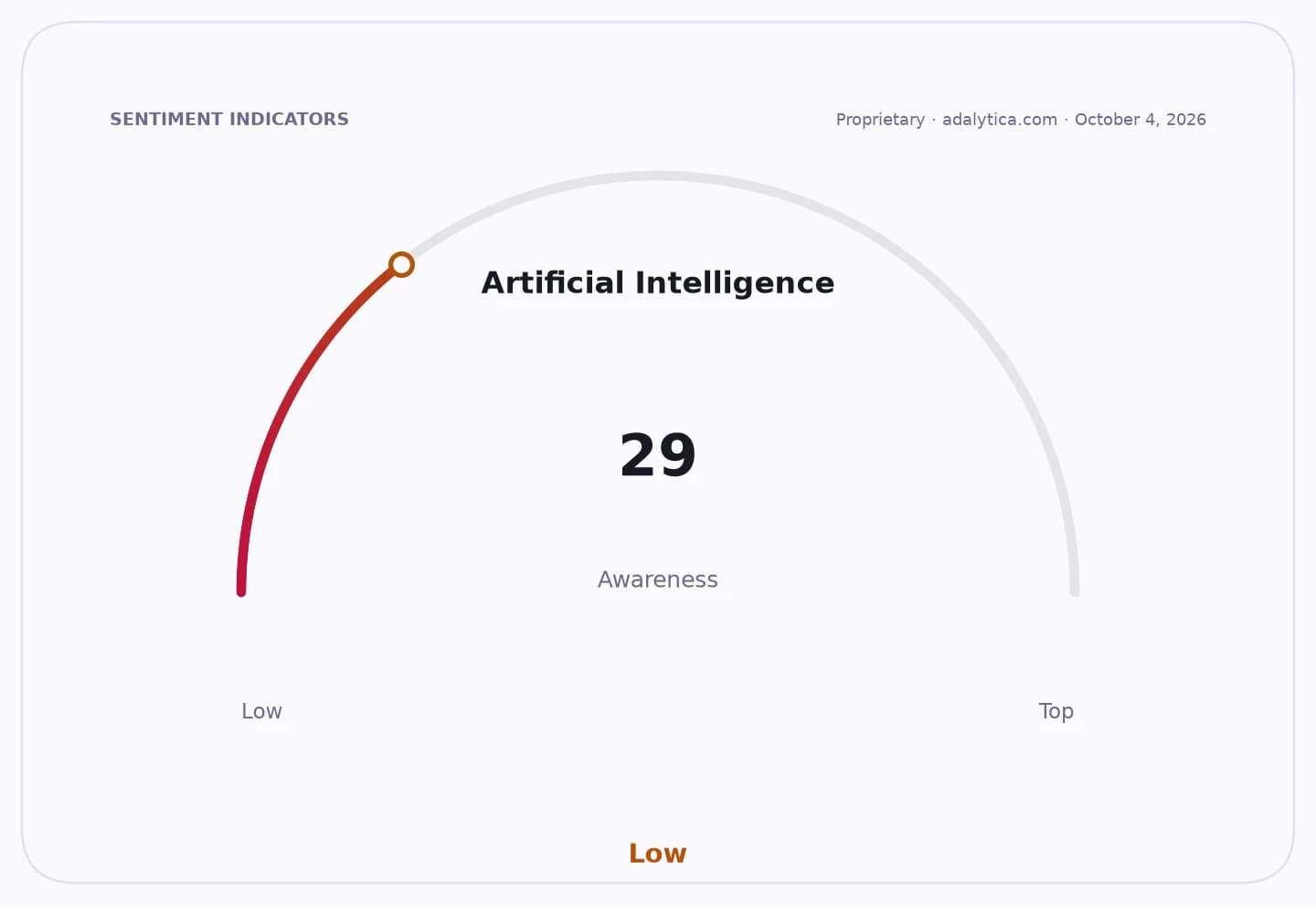
Sentiment IndicatorsⓘProprietary · adalytica.com · September 27, 2026
This is a snapshot — live sentiment, awareness and momentum for 130+ markets update continuously in the dashboard.Open AlphaPulse
That matters economically because AI adoption is moving beyond chatbots and productivity tools into areas that can reshape labor markets, education systems and public services. If regulators and institutions lean toward stricter human oversight, the rollout of AI in sensitive sectors could become slower and more expensive, but also more defensible against legal and reputational risk.
For investors, the speech is another reminder that AI is no longer just a growth story for software and chip makers. The bigger the deployment, the greater the exposure to liability, compliance costs and public backlash — risks already flagged in filings by large technology companies including Microsoft and Apple.
Sinha also used the event at the University of Jammu to push for curricula that keep pace with rapid technological change, urging a shift away from rote learning toward creativity, reasoning and lifelong learning. He said technology should not widen the gap between rural and urban students, framing AI as a tool that can either broaden access or deepen inequality depending on how it is used.
The inauguration of a sports complex, shooting range and other facilities at the university, built at a cost of nearly Rs 10 crore, added a local development angle, but the broader signal was policy-oriented: India’s institutions are being pressed to modernize without surrendering human judgment. That tension is likely to remain central as AI regulation, education reform and enterprise adoption advance in tandem.
| Entity | Gains | Losses |
|---|---|---|
| Students and teachers | ▲Better AI-supported learning | ▼Rote-learning models |
| Universities | ▲Modernized curricula | ▼Outdated teaching methods |
| Tech firms | ▲Broader AI adoption potential | ▼Higher compliance burden |
| Regulators and public institutions | ▲More accountable decision-making | ▼Faster unchecked automation |