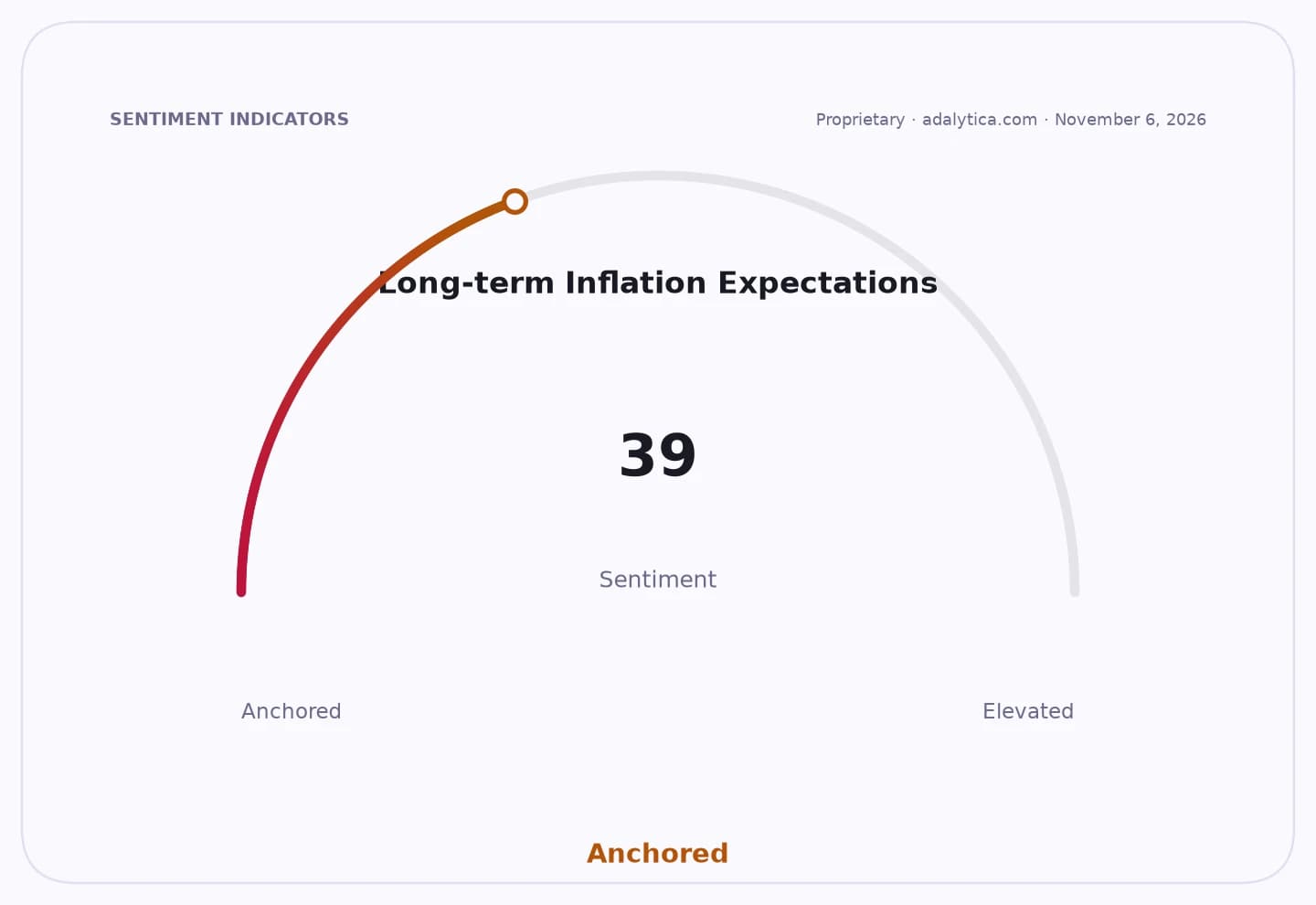
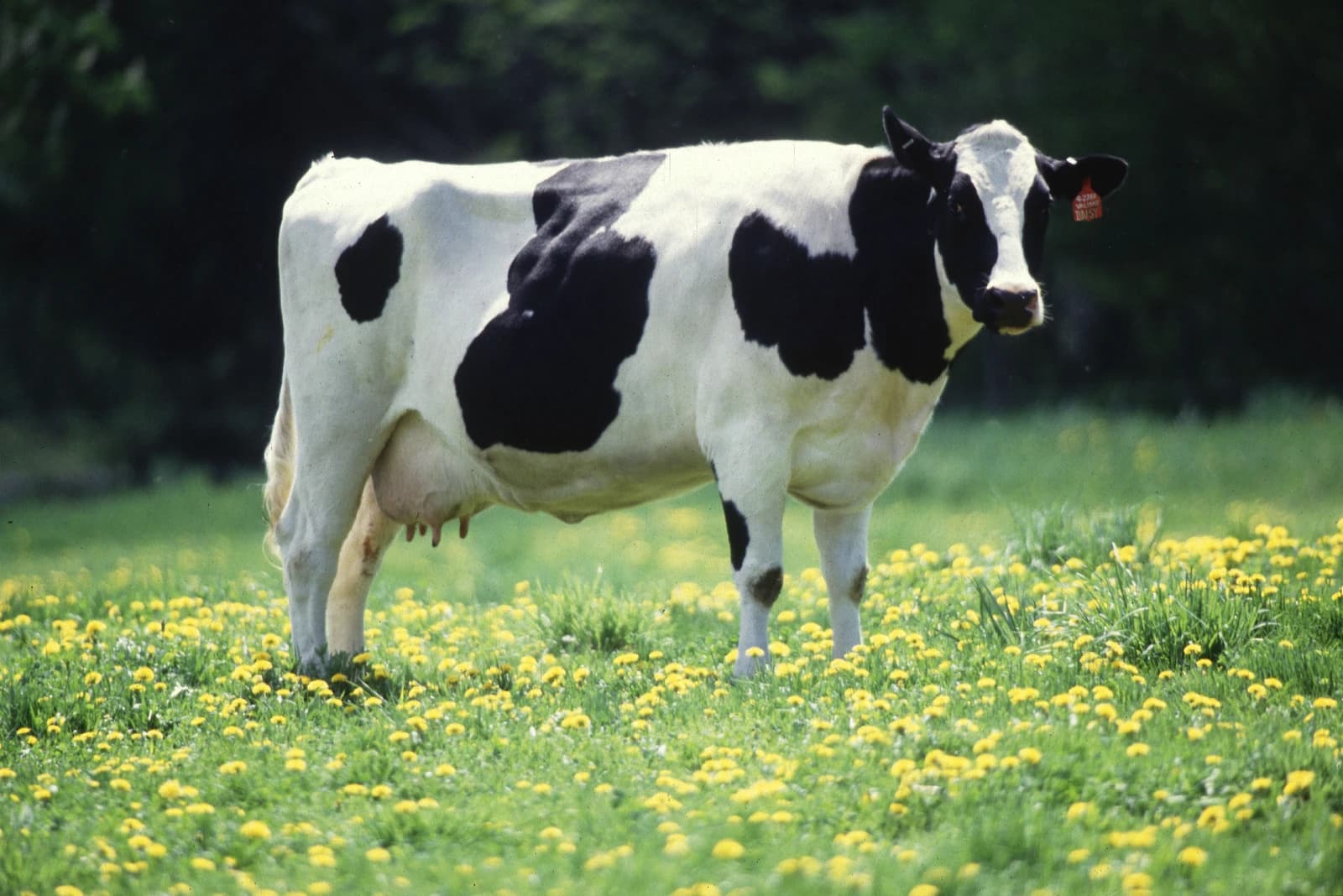
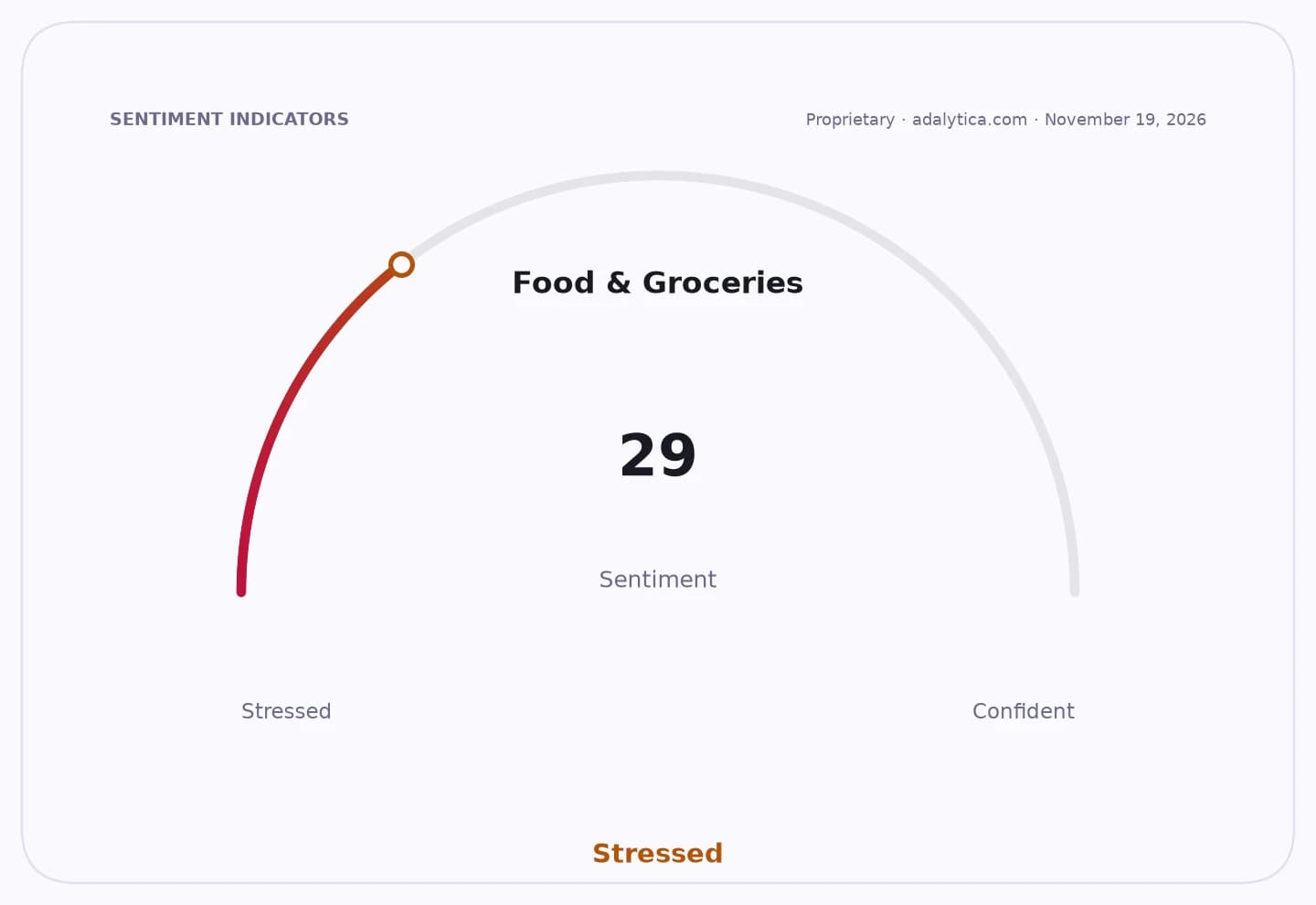
Milk prices in India are still climbing even as the winter flush season begins, a sign that food inflation is proving harder to tame than households and policymakers would like.
India milk prices keep rising in winter flush
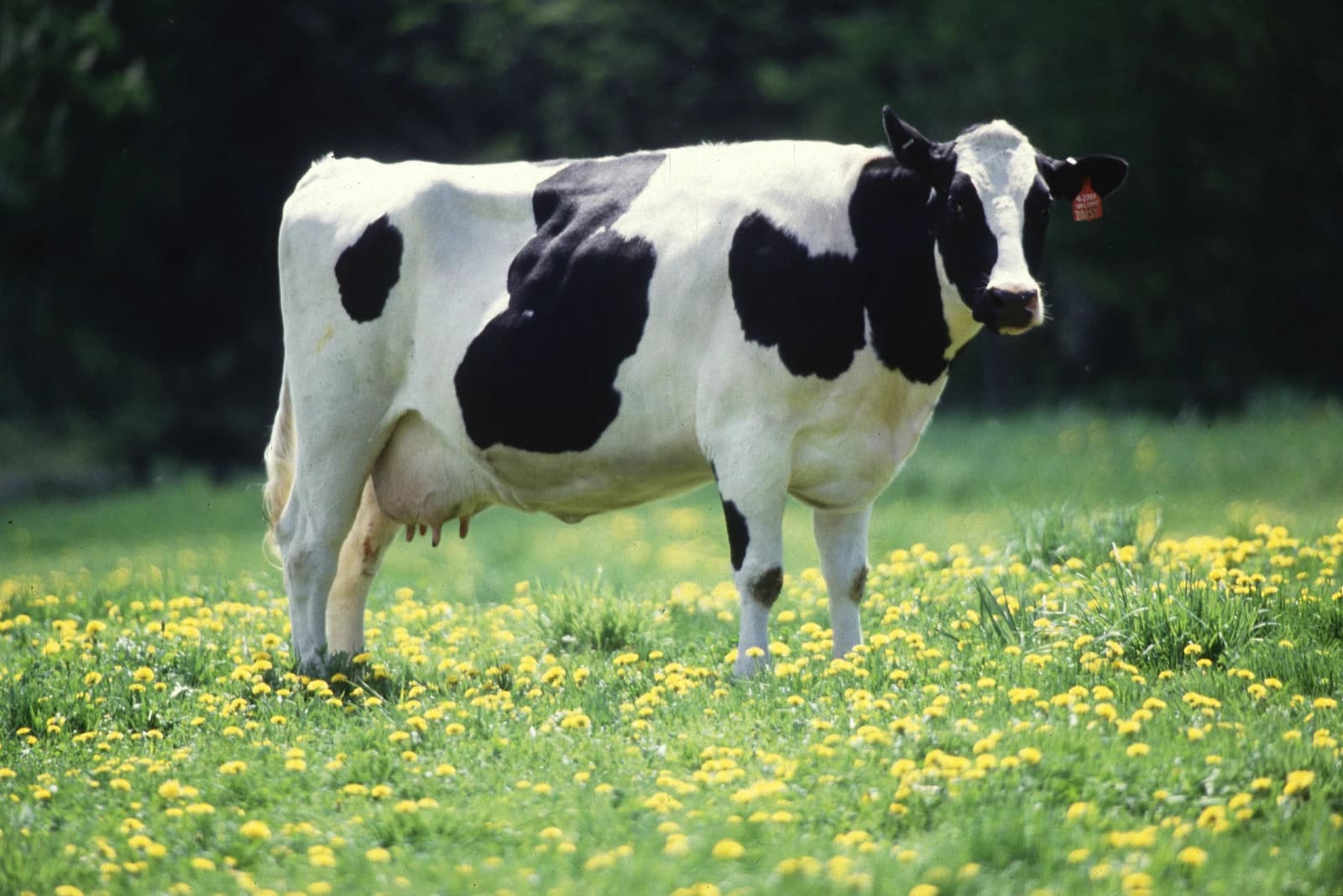
The latest price increases of as much as 4 to 8 rupees per litre across select packaged milk brands underscore a broader squeeze in the dairy supply chain, where higher feed, processing, packaging and logistics costs are overwhelming the usual seasonal boost in supply. That matters because milk is one of the most visible staples in Indian kitchens, and persistent price gains feed directly into consumer inflation, tightening budgets just as winter spending rises.
Sentiment Indicators
CareEdge Ratings said milk availability remains constrained despite the seasonally stronger production period, with prices likely to stay elevated through the rest of the fiscal year. In November alone, some dairy products were repriced by 2 to 6 rupees a litre, following earlier hikes by Amul and Mother Dairy of 2 rupees a litre in May. For certain products, the cumulative increase this year has reached 4 to 8 rupees a litre, a sharp move in a category that usually benefits from cheaper winter procurement.
The economics are straightforward: supply is not keeping pace with demand, and the cost base is moving up. CareEdge said retail milk prices rose from 42.8 rupees per litre in FY19 to 59.1 rupees in FY26, a compound annual growth rate of about 4.7%. In the first half of FY27, the average climbed further to 60.4 rupees. The pressure is also visible in skimmed milk powder, where international prices in October jumped to about $3,850 a ton, roughly 36% higher than a year earlier, while low stocks of SMP and butter are limiting room for price relief.
For investors, the story is less about the consumer pain than the second-order beneficiaries. Dairy companies are responding with more than 15,000 crore rupees of planned investment through FY29 in procurement, processing, cold chain and distribution. That capital spending could unlock more than 40,000 crore rupees in additional revenue over the medium term, according to CareEdge, especially because only 30% to 35% of India’s milk is sold through organized channels while many plants are running at about 80% utilization. That creates a clear operating leverage opportunity for listed and large cooperative dairy players if they can secure enough supply.
The market is missing one important point: higher milk prices are not just an inflation story, they are an industry reshaping story. The winners are companies with procurement networks, branded distribution and value-added product exposure; the losers are consumers, food processors and anyone hoping for an easy disinflation trade in staples. Unless milk output accelerates faster than expected, the next leg is likely to come from more pricing, not less, which keeps dairy margins and dairy capex in focus.
For now, winter is not bringing cheaper milk. It is exposing how tight the system really is. Investors should watch the organized dairy names, feed-cost trends and SMP prices, because the next move in the sector is likely to be driven by supply discipline and pricing power rather than volume alone.
| Entity | Gains | Losses |
|---|---|---|
| Organized dairy companies | ▲Higher realizations | ▼Consumer pushback |
| Milk farmers | ▲Better farm-gate prices | ▼None |
| Households | ▲None | ▼Higher grocery bills |
| Food processors | ▲None | ▼Higher input costs |