India and OPEC are moving to deepen energy cooperation as New Delhi seeks more reliable crude supplies and producers look to preserve demand from one of the world’s fastest-growing importers.
India and OPEC deepen energy cooperation talks
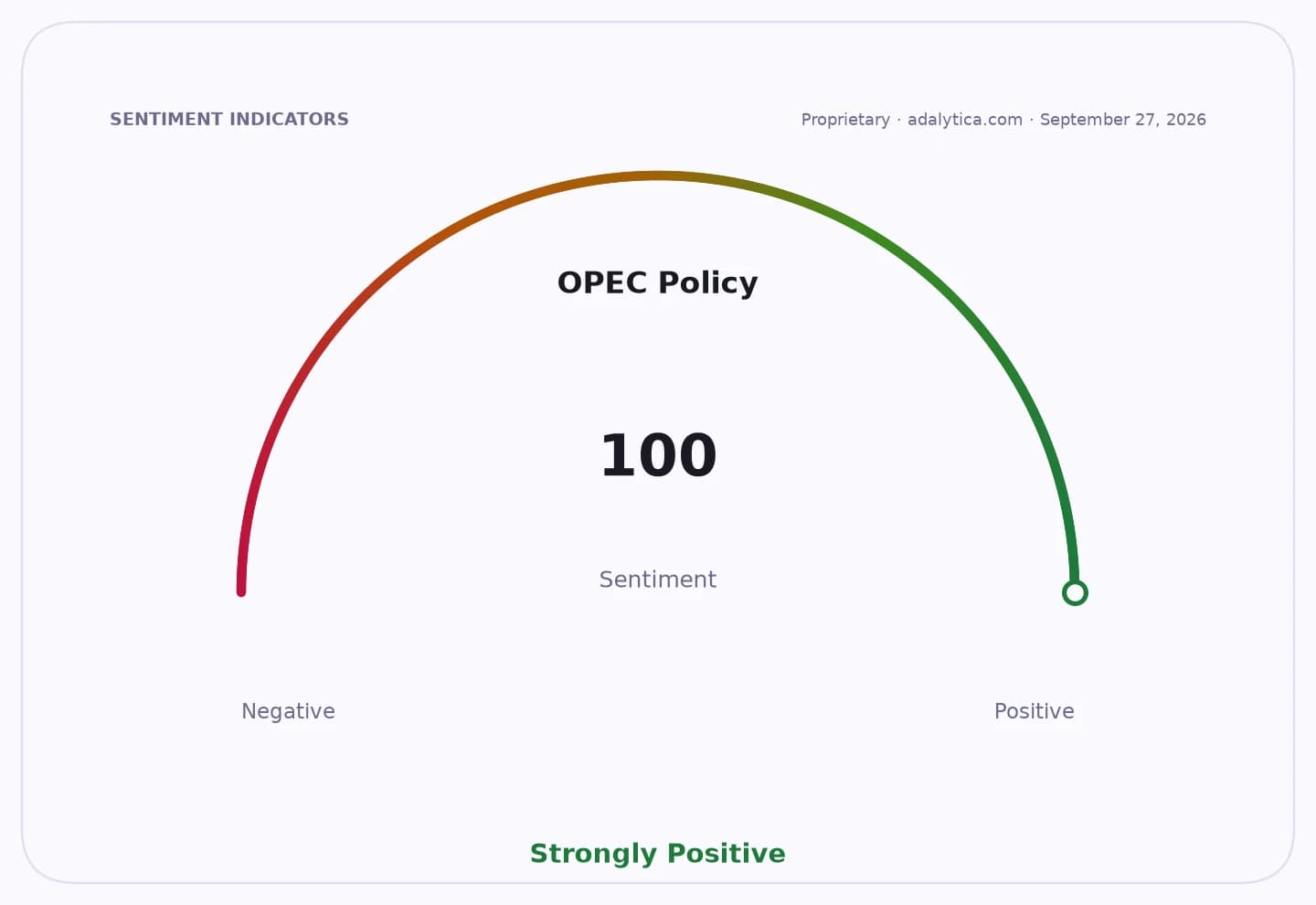
Oil minister Hardeep Puri told the India-OPEC energy dialogue in New Delhi that sustained talks between producers and consumers are essential to support investment, strengthen energy resilience and keep supplies reliable for global growth, according to a joint statement. OPEC Secretary General Haitham Al Ghais said engagement with India is a priority, underscoring the country’s rising weight in the energy market.
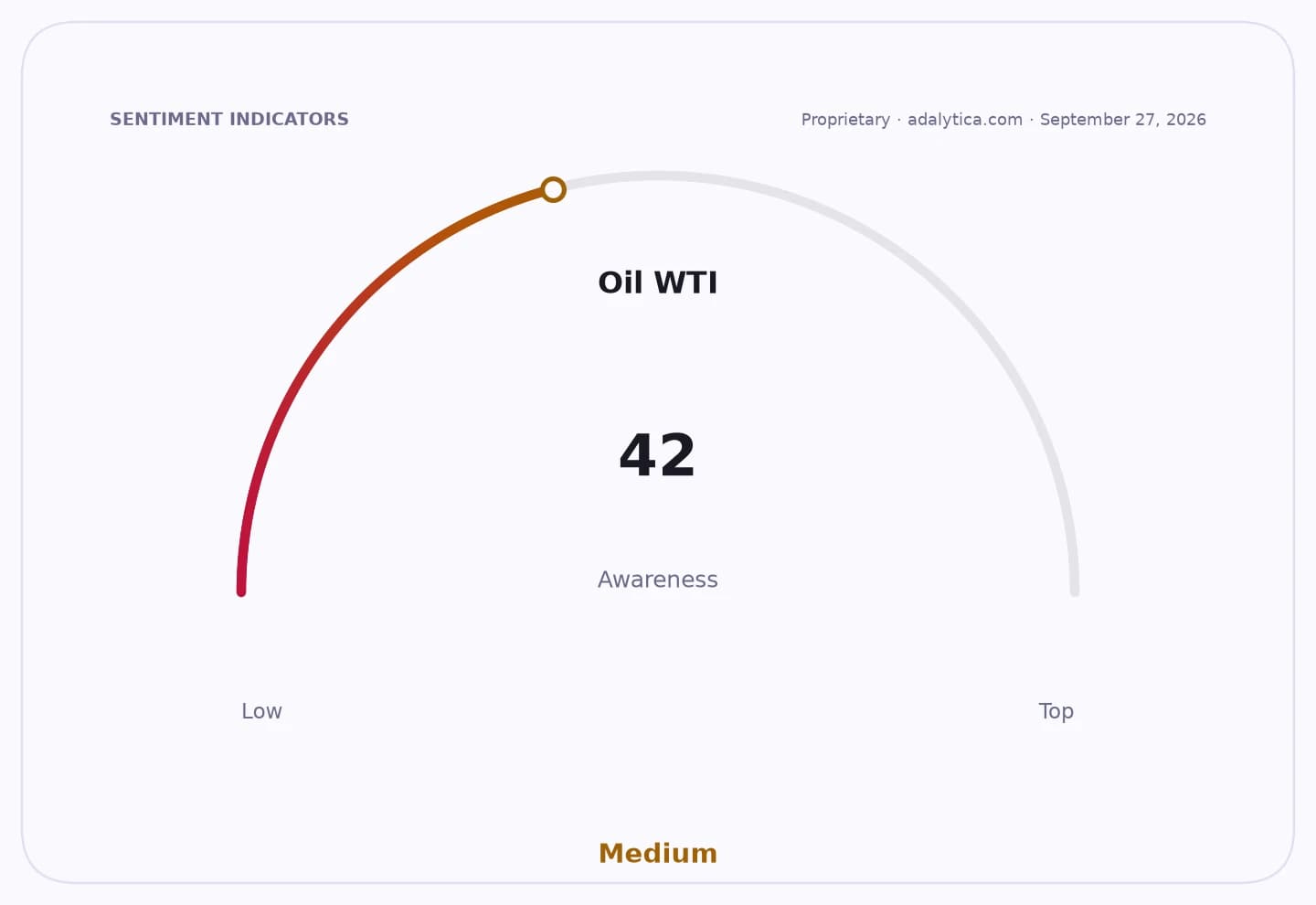
Sentiment IndicatorsⓘProprietary · adalytica.com · September 27, 2026
This is a snapshot — live sentiment, awareness and momentum for 130+ markets update continuously in the dashboard.Open AlphaPulse
The economic stakes are high for both sides. India imports most of its oil and needs stable, predictable pricing to limit pressure on its current account, inflation and fuel subsidies, while OPEC needs long-term demand visibility to justify investment in upstream capacity. The message also lands as the oil market remains sensitive to geopolitical tensions, sanctions risk and uneven investment across the industry.
OPEC accounted for about 20 million barrels a day, or roughly a fifth of global supply in August, the International Energy Agency said, while the wider OPEC+ alliance produced about 33 million barrels a day, or a third of the world total. That scale gives the bloc major influence over crude balances, making India’s outreach economically relevant for refiners, traders and policymakers tracking supply discipline and price stability.
Oil prices have also stayed elevated, with U.S. crude futures recently trading in the low $90s a barrel, and conventional technical indicators show a still-firm market after a sharp run-up this year. Bloomberg- and Reuters-style market signals around oil have stayed constructive, even as volatility remains elevated and the dollar has softened only modestly.
For investors, the dialogue matters because any closer India-OPEC alignment can affect crude procurement patterns, refinery margins, tanker flows and the outlook for energy producers and service companies. It also reinforces the view that Asia’s biggest consumers will keep competing for supply even as producers push for investment and pricing discipline.
The talks follow a 2015 launch of the India-OPEC energy dialogue and mark the seventh meeting in the series, suggesting the relationship is becoming more institutional even as trade politics and sanctions risk complicate the backdrop. Any follow-up on supply cooperation, long-term contracting or investment commitments will be watched for its impact on oil prices and upstream spending.
| Entity | Gains | Losses |
|---|---|---|
| India refiners | ▲supply visibility | ▼price volatility |
| OPEC producers | ▲demand certainty | ▼weaker pricing power |
| Oil investors | ▲investment signals | ▼policy uncertainty |
| Importers | ▲stable flows | ▼higher crude costs |