India’s proposal to blend up to 5% hydrogen into household piped natural gas could trim imported gas dependence over time, but the near-term effect may be higher city-gas costs and, for consumers, larger PNG bills.
India PNGRB proposes 5% hydrogen blend for PNG
The Petroleum and Natural Gas Regulatory Board’s draft guidelines would allow limited hydrogen injection only after legal changes, safety approvals and a trial phase, underscoring that this is as much a network-upgrade and compliance story as an energy-transition one. For city gas distributors such as Indraprastha Gas, Mahanagar Gas and GAIL, the policy creates a new capital-spending burden on safety systems, monitoring and pipeline integrity at a time when margins are already under pressure from volatile LNG prices and weak recent earnings.
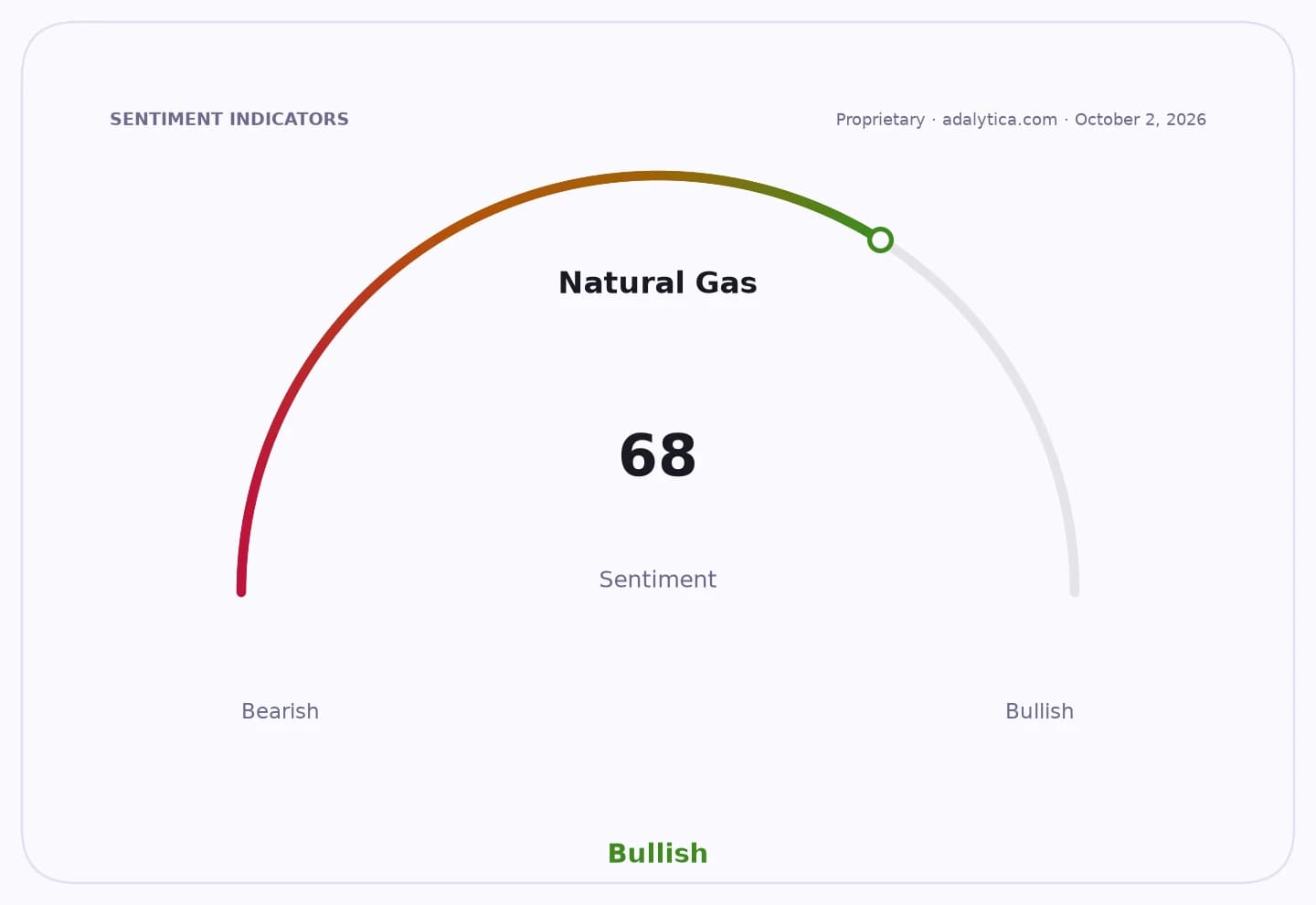
Sentiment IndicatorsⓘProprietary · adalytica.com · October 15, 2026
This is a snapshot — live sentiment, awareness and momentum for 130+ markets update continuously in the dashboard.Open AlphaPulse
The economics are not straightforward. Green hydrogen discovered in government-backed tenders is priced at Rs 387-Rs 397 per kg, while the October domestic natural gas benchmark is about Rs 1,067 per MMBtu. On a comparable energy basis, analysts say green hydrogen works out to roughly Rs 2,880-Rs 2,950 per MMBtu, or around 2.7 times the gas benchmark. That cost gap explains why the draft guidelines say distributors would have to either absorb the extra expense or pass it through to households.
That pass-through risk matters because PNG is already a politically sensitive utility input. In Delhi, households pay Rs 50.59 per standard cubic metre for piped gas, and even a modest increase can affect household energy inflation. It also lands at a difficult moment for distributors: Indraprastha Gas reported a 44% drop in quarterly net profit to Rs 238 crore, while Mahanagar Gas said profit fell 39% to Rs 193 crore. If hydrogen blending is mandated or encouraged before costs fall, it could further squeeze returns on regulated distribution assets.
For investors, the proposal is a classic policy trade-off. Bullish investors will see a potential long-term opening for firms that can secure early regulatory approval, win technology partnerships and build optionality in India’s green-hydrogen ecosystem. Bearish investors will focus on near-term capex, uncertain cost recovery and the fact that the draft is narrowly limited to domestic PNG, excludes CNG and industrial use, and caps blending at 5% by volume. That makes the revenue opportunity limited while the compliance burden is immediate.
Safety is another gating factor. Hydrogen is highly flammable, and the draft requires a detailed readiness dossier, independent technical review, pre-start-up checks and single-point injection into tightly defined sections of the network. PNGRB also retains the power to reduce the blending level or suspend approval if incidents, billing issues or unresolved technical concerns emerge. That suggests rollout will be slow, localized and heavily supervised rather than a broad commercial launch.
The broader significance is strategic. India imports more than 88% of its oil and about half its natural gas, so even a small hydrogen blend fits the government’s push to diversify energy supply and cut import dependence. But the draft also shows the constraints of the energy transition: cleaner fuel does not automatically mean cheaper fuel. For now, the policy looks more likely to add a new layer of cost and engineering complexity to the city-gas business than to deliver immediate savings for consumers.
If the framework is finalized, the key question for markets will be whether distributors can recover the extra cost without losing volume growth. If they cannot, hydrogen blending may become a policy victory with limited commercial reward.
| Entity | Gains | Losses |
|---|---|---|
| India / PNGRB | ▲Lower import dependence | ▼Higher regulatory complexity |
| City gas distributors | ▲Long-term green positioning | ▼Near-term capex and margin pressure |
| Households | ▲Cleaner fuel mix | ▼Higher PNG bills |
| LNG suppliers / gas importers | ▲— | ▼Weaker demand over time |