India’s home-cooked meal inflation picked up again in August, with the cost of a standard thali rising as onion, edible oil, rice and LPG prices climbed, underscoring how quickly kitchen-level price pressure can re-emerge even when some vegetables get cheaper.
India thali costs rise in August as onion prices jump

Crisil’s “Roti Rice Rate” tracker showed the average vegetarian thali cost 1% more than a year earlier and 1% higher than in July at 29.5 rupees, while the non-vegetarian thali rose 5% from a year earlier to 57.5 rupees, even as it dipped 1% month-on-month on weaker chicken prices during the Shravan season. The data point matters because food remains the most visible and politically sensitive part of inflation for Indian households, and because the ingredients in a basic thali often move ahead of, or more sharply than, broader consumer price measures.
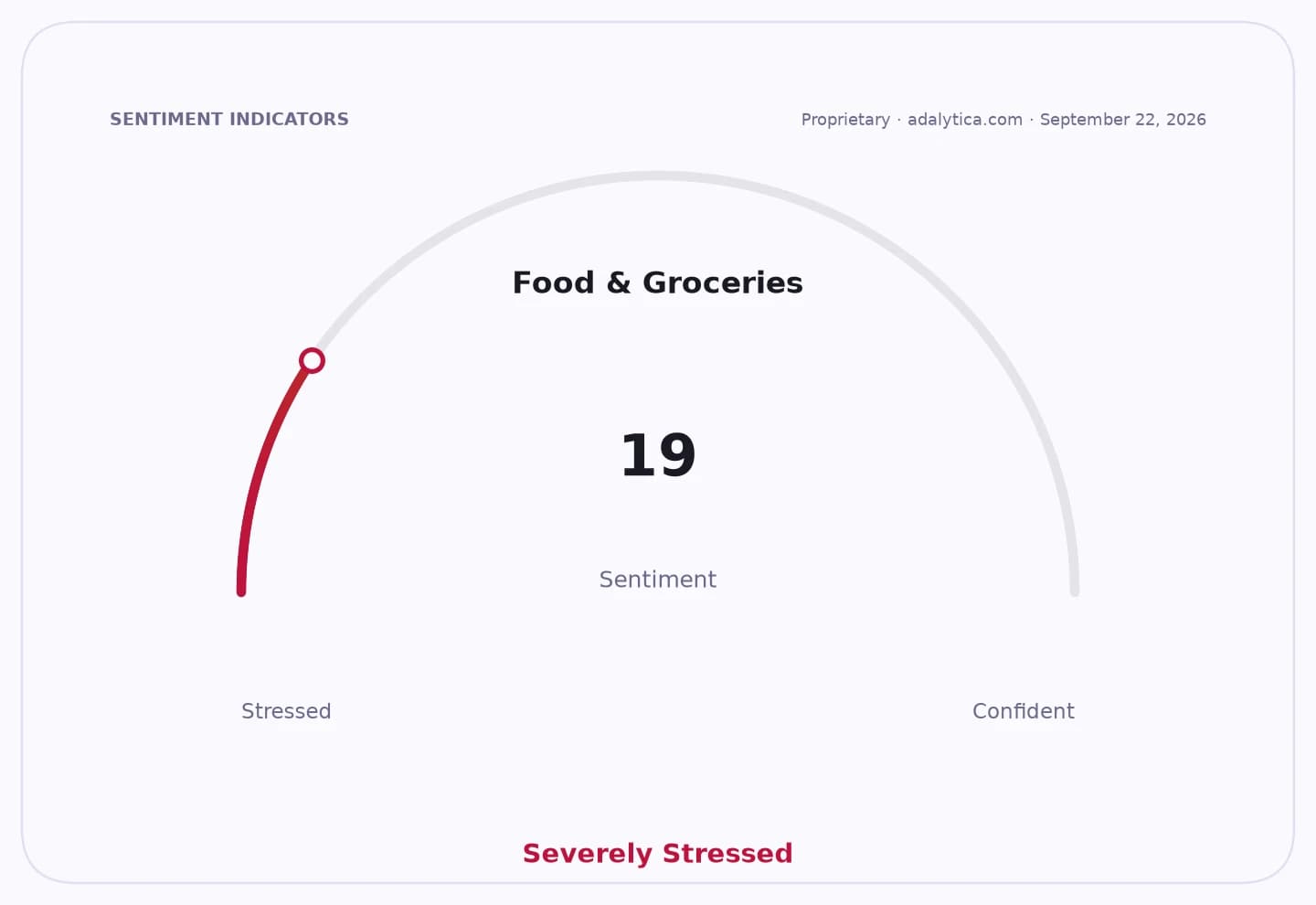
Sentiment IndicatorsⓘProprietary · adalytica.com · September 9, 2026
This is a snapshot — live sentiment, awareness and momentum for 130+ markets update continuously in the dashboard.Open AlphaPulse
The latest increase was driven mainly by onions, whose price jumped 43% from a year earlier to 40 rupees a kilo after unseasonal rain and hailstorms in Maharashtra hit supply in March and April. Edible oil prices were up 11% and LPG 10%, while rice also became more expensive. Those gains more than offset declines in potatoes and tomatoes, which fell 12% and 28% respectively, limiting the overall rise in the vegetarian meal cost.
For policymakers, the thali index is a reminder that disinflation in one part of the food basket can be overwhelmed by shocks in another. For consumers, it means household budgets remain vulnerable to weather-driven volatility in staples that are bought every day and cannot easily be substituted. The read-through is especially important for lower-income families, for whom food takes a larger share of spending and small changes in ingredient prices have an outsized effect on real purchasing power.
Investors tend to view such episodes through the lens of margin pressure and demand mix. Grocers, food retailers and consumer staples firms may have limited room to pass through all input cost increases immediately, while restaurant operators can face a squeeze if they raise menu prices too quickly. At the same time, crop-sensitive suppliers and packaged food companies can see uneven pricing power depending on whether they source ingredients on spot markets or through longer-term contracts.
The message from August is that India’s food inflation story is still being written ingredient by ingredient. If onion prices stabilize over the next two to three months, as the report suggests, the thali inflation pulse may cool again. But with global food prices still elevated and energy costs feeding through to production, investors and policymakers will keep watching whether relief in one crop is enough to offset another supply shock elsewhere.
| Entity | Gains | Losses |
|---|---|---|
| Onion growers / traders | ▲Higher selling prices | ▼Consumers facing costlier meals |
| Vegetable buyers / households | ▲Cheaper potatoes and tomatoes | ▼Higher bills for staples |
| Food retailers / grocers | ▲Pass-through pricing power | ▼Margin pressure if input costs rise faster |
| Restaurant operators | ▲Limited if chicken prices fall | ▼If onion, oil and rice costs stay high |