The BJP on Friday escalated its confrontation with the opposition, accusing the INDIA bloc and activists aligned with Arvind Kejriwal of trying to “destabilize” India, as a protest over alleged voter-roll irregularities forced an unusually heavy security response in central Delhi.
India Protest Over Voter Rolls Raises Risk Concerns
The immediate significance is political rather than electoral: the row has turned a dispute over the voter list and the Election Commission into a broader test of institutional trust, public order and the limits of protest in India’s capital. With police denying permission for the demonstration, shutting metro station exits, suspending mobile internet in central Delhi and canceling trains, the dispute spilled beyond party rhetoric into a security operation that underscored how quickly political friction can impose real economic and logistical costs.
Sentiment IndicatorsⓘProprietary · adalytica.com · October 13, 2026
This is a snapshot — live sentiment, awareness and momentum for 130+ markets update continuously in the dashboard.Open AlphaPulse
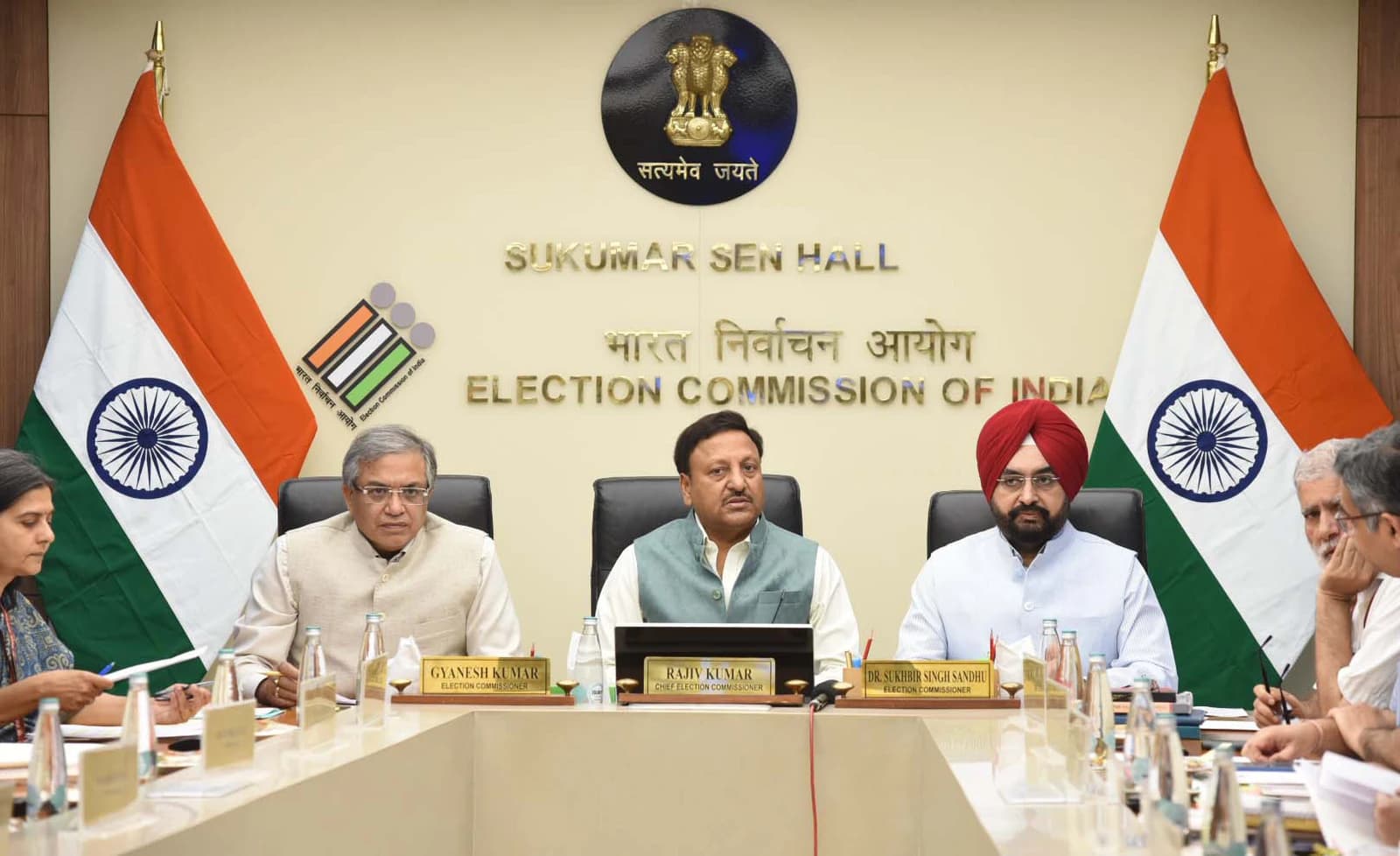
BJP national president Nitin Nabin said the opposition was refusing to accept electoral verdicts and was instead “hatching a plot to destabilize the country,” alleging that the groups were acting at the behest of foreign forces. The remarks were aimed at a protest at Jantar Mantar called by the CJP and others, who accuse the Election Commission of irregularities in the Special Intensive Revision of electoral rolls and want Chief Election Commissioner Gyanesh Kumar to resign.
For investors, the episode matters because sustained political polarization can raise the premium on Indian assets even when the macro backdrop remains constructive. India has been attracting capital on a growth-and-stability narrative, but repeated clashes over institutions, elections and public order can weigh on sentiment toward domestic consumption, transport, telecom and broader market risk appetite if they begin to disrupt commerce or policy continuity. The issue is especially relevant in a market that has already seen bouts of volatility in recent weeks.
That is visible in Indian exchange-traded exposure: the India fund INDA has fallen to $46.36 from $50.23 on Aug. 25, and is trading below both its 50-day and 200-day moving averages. Its RSI near 30 suggests the recent decline has been technically stretched, but the broader trend remains soft. In contrast, the more immediate market mood in the U.S. is still risk-friendly, with the S&P 500 showing “Greed” in Adalytica’s trade signals even as awareness sits at “Extreme Fear,” a mix that suggests investors are still differentiating between local political noise and systemic macro risk.
The standoff also highlights a familiar Indian policy tension: the government’s desire to project institutional firmness versus opposition claims that state power is being used to narrow democratic space. BJP leaders said the Election Commission was merely cleaning up voter rolls, while opposition groups argue the process is being used to remove eligible voters. Those competing narratives matter because they shape confidence in the integrity of the electoral process ahead of future state and national contests.
The near-term risk is not a market shock, but further escalation. If protests broaden, if security restrictions become more frequent, or if the voter-roll dispute turns into a larger legal and political battle, the episode could feed a more persistent risk discount on India-related assets. For now, the bigger story is that a protest over electoral administration has become a proxy fight over legitimacy, and the BJP is framing it as a direct challenge to national stability.
| Entity | Gains | Losses |
|---|---|---|
| BJP | ▲Security narrative | ▼Opposition credibility |
| INDIA bloc / CJP | ▲Protest visibility | ▼Institutional trust |
| Indian government | ▲Control of order | ▼Political calm |
| India-linked investors | ▲Clarity if contained | ▼Risk premium if escalation persists |