Indian equities tumbled on Thursday after the Reserve Bank of India’s first rate hike in nearly four years, a jump in crude above $100 a barrel and heavy foreign selling combined to hit risk appetite, wiping an estimated Rs 8 lakh crore from investor wealth.
Indian equities fall after RBI rate hike and crude surge
The selloff was broad-based and economically important because it tightens financial conditions just as companies face higher funding costs, weaker currency support and rising import inflation. The BSE Sensex fell 1,153.86 points, or 1.59%, to 71,484.84 by mid-afternoon, while the Nifty 50 dropped 399.85 points, or 1.77%, to 22,203.20. The indices had earlier swung sharply lower from intraday highs, underscoring how quickly sentiment reversed once traders digested the RBI’s shift to a “calibrated tightening” stance.
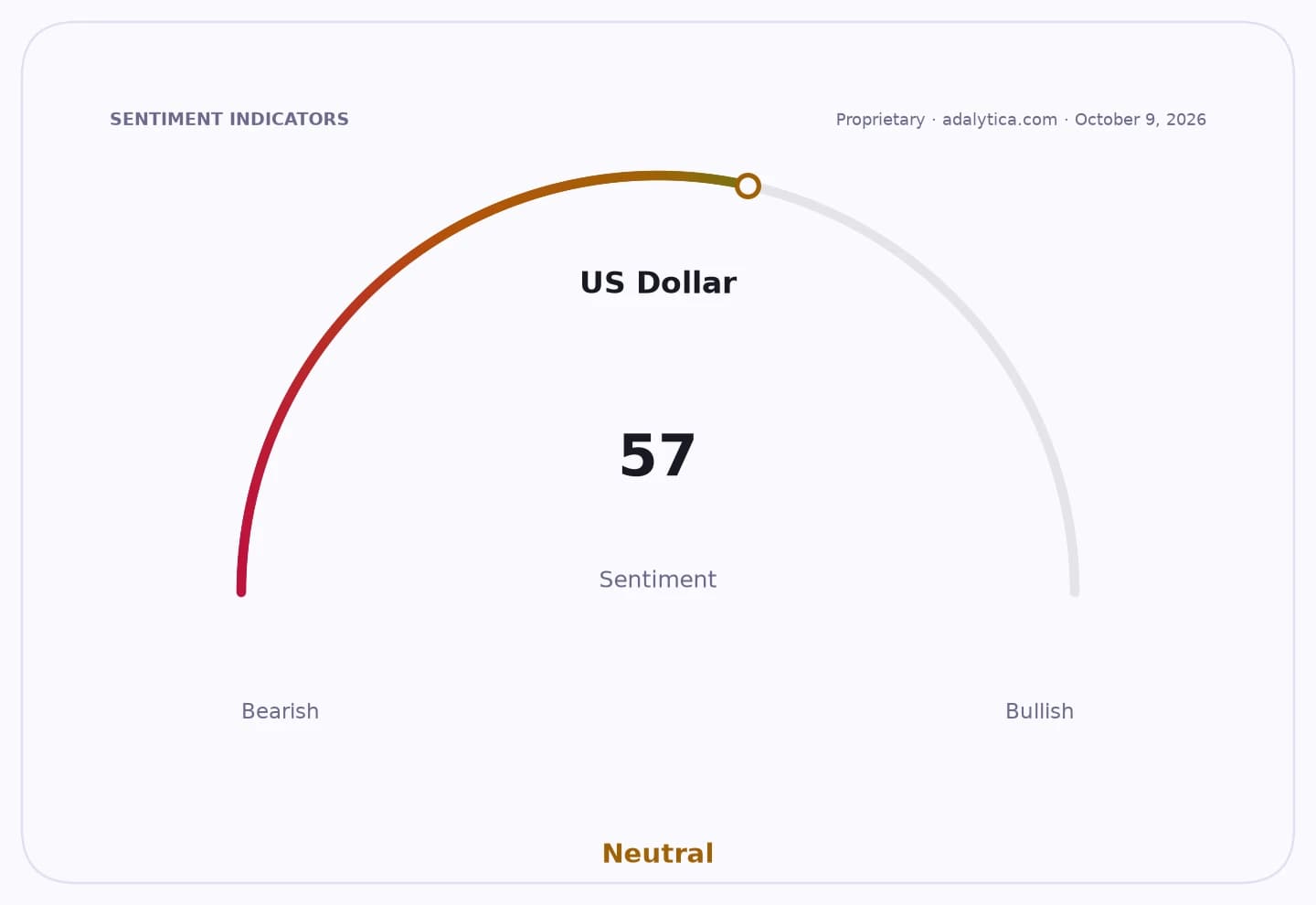
Sentiment IndicatorsⓘProprietary · adalytica.com · October 9, 2026
This is a snapshot — live sentiment, awareness and momentum for 130+ markets update continuously in the dashboard.Open AlphaPulse
The central bank raised the repo rate by 25 basis points to 5.50% and signaled it would no longer remain neutral. That matters for investors because a higher policy rate can compress equity valuations, slow credit growth and weigh on consumption-linked earnings. Borrowing costs are likely to stay elevated longer than markets had been pricing, which can pressure sectors that depend on easy liquidity and steady discretionary spending.
Crude oil added a second macro shock. Brent was trading above $102 a barrel on geopolitical and supply concerns, a level that raises India’s import bill and feeds directly into inflation and the current account. For a large net oil importer, that combination is toxic: it weakens the rupee, raises the cost of transport and manufacturing inputs, and can force policymakers to keep monetary conditions tighter for longer. A weaker currency magnifies those pressures by making every imported barrel more expensive in local terms.

Foreign investor flows added to the damage. Overseas institutions sold Rs 6,121.37 crore worth of Indian equities on Oct. 7, a reminder that the market’s recent resilience depended heavily on external capital. When that capital turns, mid- and small-cap stocks usually absorb the sharpest blow because valuations are richer and liquidity thinner. That pattern held here: the Nifty Midcap 100 fell 2.36%, the Smallcap 50 lost 2.35%, the Smallcap 250 declined 2.25% and the Microcap 250 slid 2.58%.
Sector leadership also reflected the macro stress. Metal stocks dropped 3.22%, oil and gas slipped 2.66% and real estate fell 2.41%, all of which are sensitive either to financing costs or to global commodity and growth conditions. The relative strength in IT was notable but not enough to offset the broader weakness. TCS, Infosys, Tech Mahindra and HCLTech drew buying ahead of quarterly results, and the sector tends to benefit when domestic macro pressure pushes investors toward export earners with dollar revenues.
The market backdrop suggests this is less a single-day panic than a repricing of the earnings and liquidity cycle. Bulls can argue that India’s growth story remains intact and that large IT exporters may cushion portfolios if domestic sectors slow. Bears will counter that the combination of tighter policy, expensive oil and rupee weakness is exactly the sort of mix that can compress margins and keep foreign money on the sidelines.
For investors, the immediate question is whether the move is a buying opportunity or the start of a broader de-rating. The answer will depend on whether oil stays above $100, how far the rupee weakens, and whether more FII outflows follow. Upcoming quarterly results, especially from financials, consumer names and exporters, will show how much of the macro stress is already filtering into profits.
| Entity | Gains | Losses |
|---|---|---|
| RBI | ▲Inflation control | ▼Market sentiment |
| Oil exporters | ▲Higher realizations | ▼Indian importers |
| IT exporters | ▲Relative earnings support | ▼Domestic cyclical stocks |
| Foreign sellers | ▲Lower exposure risk | ▼Indian equity valuations |