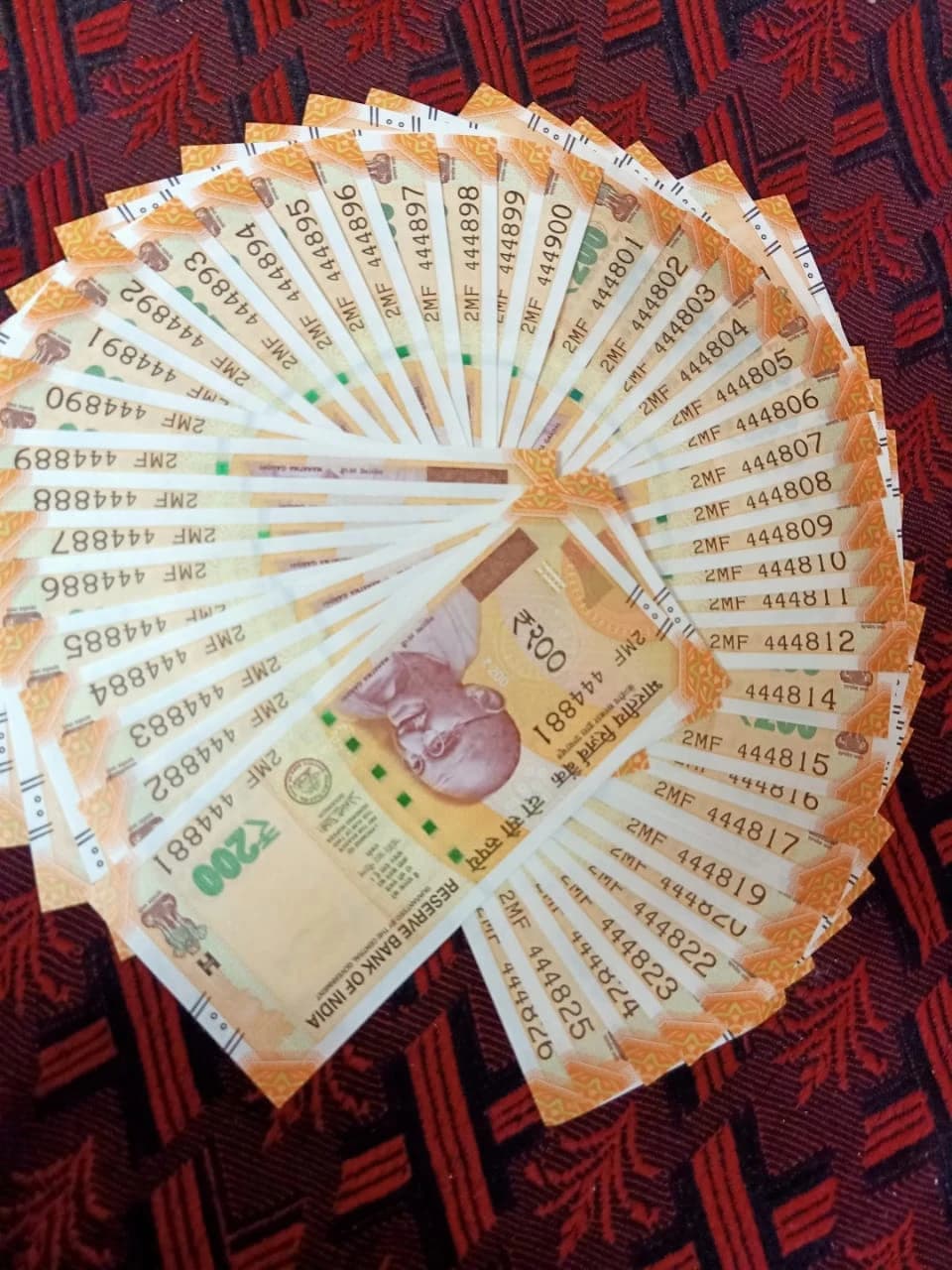
The rupee edged up 10 paise to 96.65 against the US dollar in early trade, but the move did little to change the broader picture of pressure from a strong greenback, higher crude prices and sustained foreign selling.
Rupee Edges Up to 96.65 as Dollar Stays Firm
The opening recovery came after the unit started at 96.71 and briefly strengthened, even as traders said state-run banks stepped in to limit losses in the interbank market. The rupee had closed at 96.75 on Wednesday.
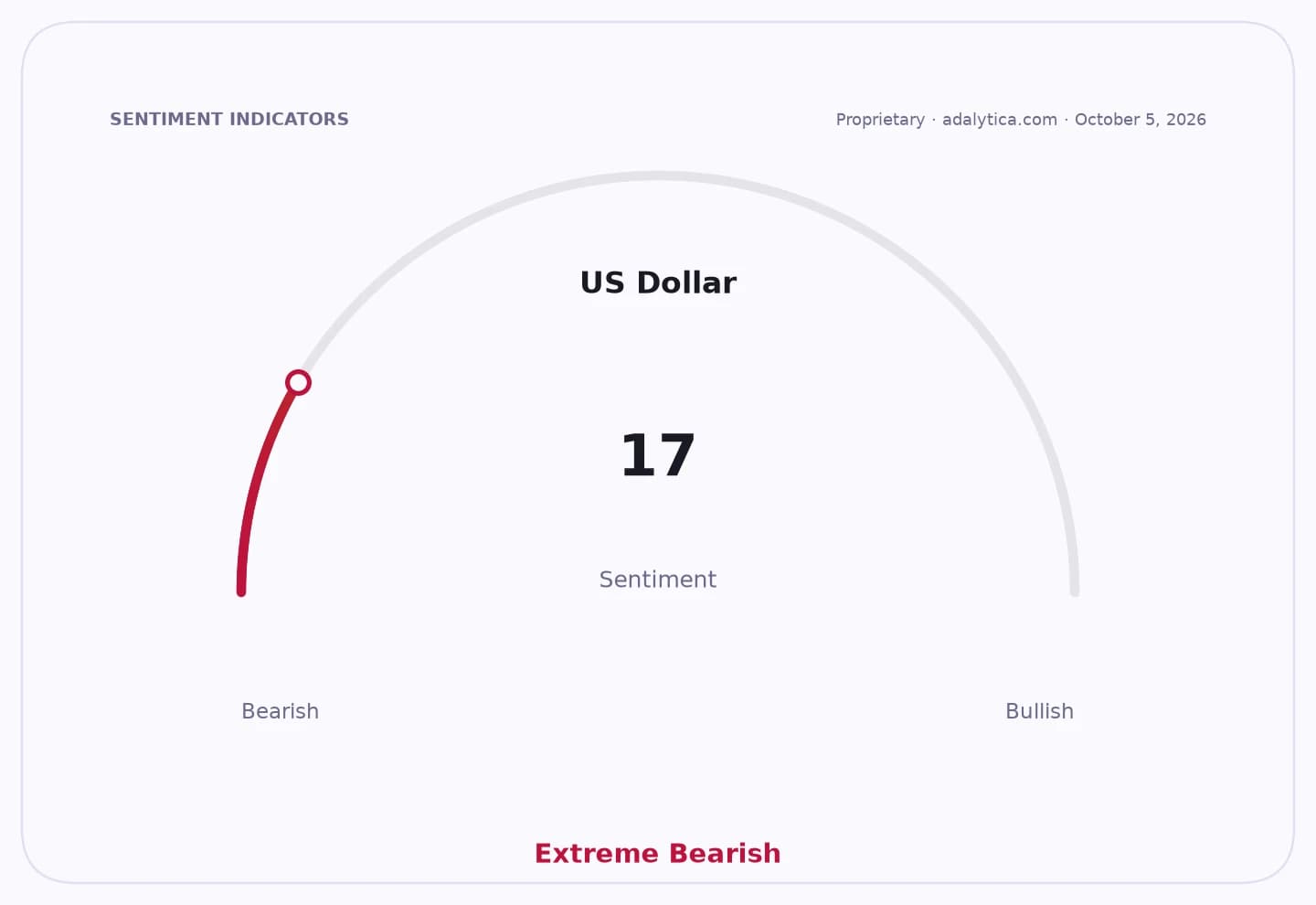
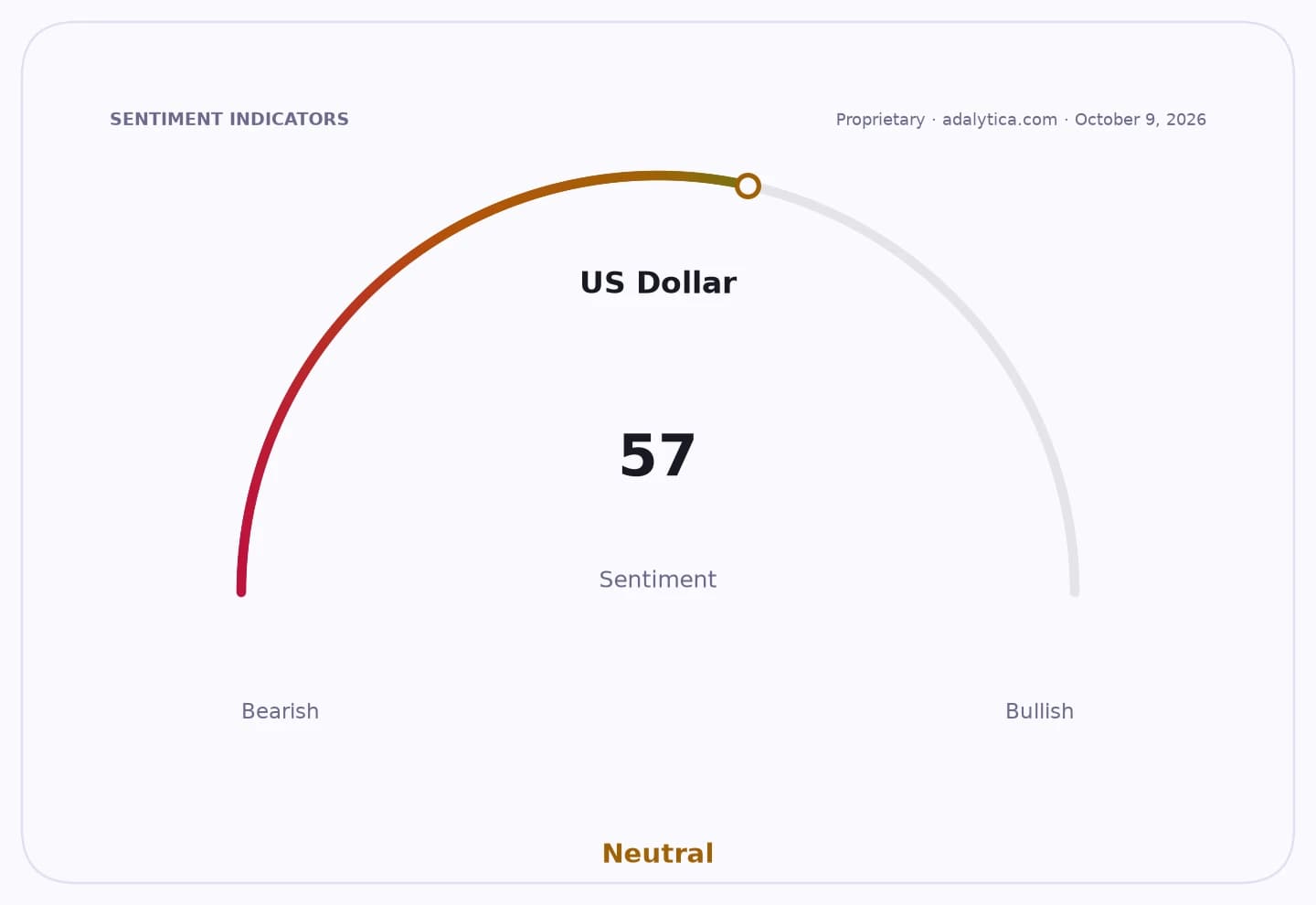
Sentiment IndicatorsⓘProprietary · adalytica.com · October 9, 2026
This is a snapshot — live sentiment, awareness and momentum for 130+ markets update continuously in the dashboard.Open AlphaPulse
The currency remains pinned by macro headwinds: the dollar index is near multi-month highs, Brent crude is trading above $102 a barrel, and foreign investors continue to pull money out of Indian equities. Exchange data showed foreign institutional investors sold shares worth Rs 6,121.37 crore on Wednesday, while forex reserves have fallen by about $50 billion in just three weeks from a September peak of $786 billion.
That combination matters for the economy because a weaker rupee raises import costs, especially for oil, and can feed inflation just as elevated energy prices are already straining the trade balance. It also keeps pressure on the Reserve Bank of India, which is having to smooth volatility through bank intervention rather than allowing the currency to move freely.
For investors, the immediate read-through is negative for importers, fuel-sensitive sectors and companies with dollar-denominated bills, while exporters and IT firms typically get a partial hedge from a softer rupee. The move also reinforces the appeal of the US dollar versus emerging-market currencies as long as US yields and crude stay firm.
Equity markets were under strain alongside the currency, with the Sensex down 264.97 points and the Nifty off 87.50 points in early trade. Brent futures rose 2.17% to $102.37 a barrel on supply concerns tied to the Middle East and shipping disruptions around the Strait of Hormuz.
The near-term focus is on whether intervention can keep the rupee from testing fresh lows, or whether persistent capital outflows and energy prices force another leg of weakness.
| Entity | Gains | Losses |
|---|---|---|
| State-run banks | ▲Slower rupee declines | ▼Bigger intervention burden |
| Exporters | ▲Better rupee realization | ▼Imported input costs |
| Importers | ▲— | ▼Higher dollar costs |
| Foreign sellers | ▲— | ▼Indian equity exposure |